
Desserts
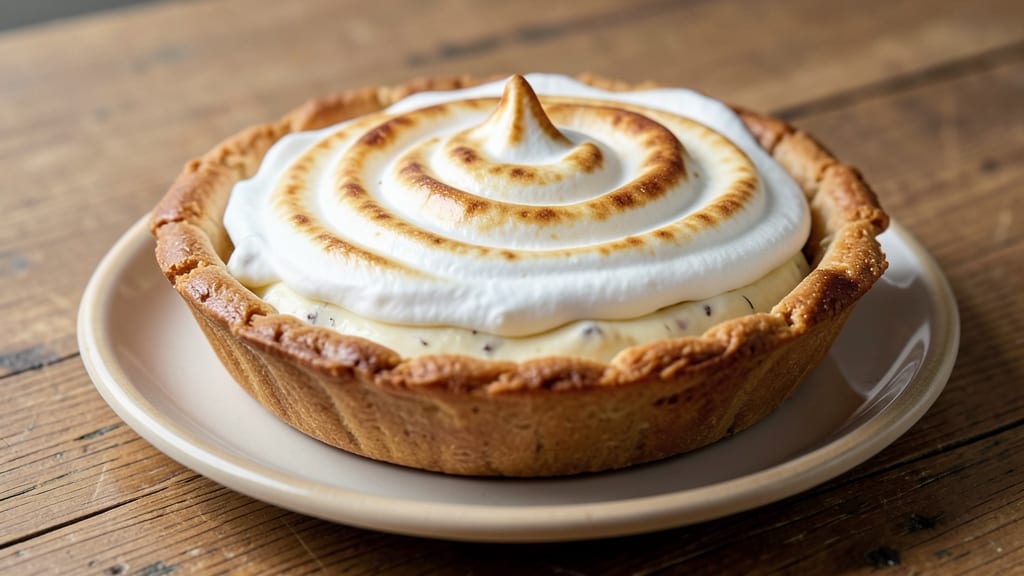
This 1587 Restaurant Atlantic Beach pie recipe captures the restaurant’s signature buttery crust and luscious vanilla-caramel swirls in every slice. 🌟 The secret lies in a flaky, golden crust that encases a creamy custard base, all infused with warm vanilla and rich caramelized sugar for that signature touch.
I’ve recreated their signature dessert with precision, ensuring the same melt-in-your-mouth texture and sweet-tangy balance that makes it legendary.
The recipe begins with a classic pie crust, rolled out to perfection and baked just until it’s set—never overdone, so it stays tender beneath the filling. The custard filling is where the magic happens: a blend of eggs, cream, and sugar, swirled with caramel and vanilla for depth.
The key is baking it low and slow, allowing the filling to set smoothly while keeping the crust crisp at the edges.
What you’ll end up with is a pie that’s as visually stunning as it is delicious—golden crust contrasting with creamy, swirled layers of vanilla and caramel. The aroma alone will have everyone gathering around the table, and the first bite delivers that perfect balance of sweetness and buttery richness.
This is the kind of dessert that feels like a hug, especially when served warm with a scoop of vanilla ice cream.
The beauty of this recipe is its versatility. Serve it at family gatherings, holiday dinners, or as a special treat for loved ones. The techniques are straightforward, but the results are undeniably restaurant-quality. Let’s get started on recreating this Atlantic Beach classic in your own kitchen.
Ingredients for 1587 restaurant atlantic beach pie
Buttery crust meets velvety custard—just like the Atlantic Beach original. Eight ingredients, restaurant magic.
| Ingredient | Amount | Notes |
|---|---|---|
| All-Purpose Flour 🌾 | 2 ½ cups | Unbleached, for flaky crust |
| Unsalted Butter 🧈 | 1 cup | Cold, cubed, for crust |
| Granulated Sugar 🍚 | ¼ cup | Plus 1 tbsp for sprinkling |
| Salt 🧂 | 1 tsp | Fine sea salt preferred |
| Ice Water 💧 | ½ cup | Chilled for crust handling |
| Large Eggs 🥚 | 4 whole | Room temperature for custard |
| Heavy Cream 🥛 | 1 ½ cups | Full-fat for richness |
| Whole Milk 🥛 | ½ cup | Warmed slightly for custard |
| Granulated Sugar 🍚 | 1 ¼ cups | For custard filling |
| Vanilla Extract 🌿 | 2 tsp | Pure, high-quality extract |
| Store-Bought Caramel Sauce 🍯 | 1 cup | Or homemade caramel |
| Cornstarch 🌾 | 2 tbsp | For thickening custard |
The crust is everything. Use European-style butter—it has more fat for flakiness. King Arthur or Bob’s Red Mill flour works best if you’re picky, but any all-purpose will do. Chill your butter cubes for at least 30 minutes before mixing, and don’t overwork the dough. The key is keeping everything cold until it hits the oven. I always use a food processor for 6-8 pulses—just until it comes together, not until it looks like playdough. And trust me, skip the ice water if your kitchen’s humid—it’ll make the dough sticky.
No vanilla extract? Vanilla bean paste works too, but pure extract is non-negotiable for that restaurant-quality flavor. Running short on caramel? Brown sugar + 1 tbsp butter in a saucepan (simmer until bubbly) makes a quick substitute. The custard needs to be thick but pourable—if it’s too thin, mix 1 tsp cornstarch with cold cream and whisk it in. For the crust, if you don’t have a pie dish, a 9-inch glass pie plate works perfectly. And if you’re feeling fancy, brush the baked crust with egg wash before adding filling.
The crust keeps 2 days at room temp wrapped in plastic, or 3 months frozen between parchment. The custard filling? 3 days max in the fridge—it’s best served fresh. I always bake the crust a day ahead and refrigerate it. The filling can be prepped in advance too—just reheat gently before assembling. And if you’re making this for a crowd, double the crust recipe—it’s worth it for seconds.
Why You'll Love This Recipe
- No-Fuss Dough Magic: This pie starts with a simple flour-butter-sugar mix and ice water—no fancy techniques, just a quick toss and chill. I swear, the cold butter cuts in like butter (literally), and the dough comes together faster than my coffee brews.
- Sweet Crust Perfection: That sugar in the dough? It’s not just for show—it caramelizes into a golden, buttery crust with a subtle sweetness that pairs amazingly with fillings. Honestly, the first time I bit into it, I thought, “Wait, this is dessert and pie crust?”
- Weeknight Crowd-Pleaser: Between us, this is the crust I pull out for potlucks, game days, or when my mom-in-law drops by unannounced. It’s sturdy enough for savory pies but sweet enough for fruit—no one ever asks what’s in it, they just ask for seconds.
Step-by-step instructions for buttery crust and vanilla-caramel swirls
This classic Atlantic Beach pie delivers a perfect balance of flaky crust and luscious custard.
👨🍳 Step 1: Make the Perfect Pie Crust
In a large bowl, combine the 2.5 cups all-purpose flour, 1 tsp salt, and 0.25 cup granulated sugar. Cut in the 1 cup cold unsalted butter using a pastry cutter or your fingers until the mixture resembles coarse crumbs with pea-sized butter pieces. This texture is crucial—it ensures flaky layers rather than a tough crust.
Gradually add the 0.5 cup ice water, 1 tablespoon at a time, mixing gently with a fork until the dough just comes together. Be careful not to overmix—you want to avoid developing gluten, which makes the crust tough. Once combined, turn the dough onto a lightly floured surface and knead it just 3-4 times until smooth. Here's the thing—don't overwork it, or you'll end up with a dense bottom crust instead of the delicate, flaky layers we're after.
🥘 Step 2: Assemble the Crust and Prepare the Filling
Divide the dough in half and shape each piece into a disk. Wrap both in plastic wrap and refrigerate for at least 30 minutes (up to 2 hours). Chilling relaxes the gluten and makes rolling easier. While the dough rests, preheat your oven to 375°F. Roll out one dough disk to fit a 9-inch pie dish, leaving a 1-inch overhang. Gently fold the overhang under and crimp the edges with your fingers or a fork to create a decorative border.
For the filling, whisk together the 4 whole large eggs, 1.5 cups heavy cream, 0.5 cup whole milk, 1.25 cups granulated sugar, 2 tsp vanilla extract, and 2 tbsp cornstarch in a medium bowl until smooth and well combined. The mixture should be pale yellow and slightly thickened. Here's a pro tip—I like to warm the milk slightly (just until it's comfortable to touch) before adding it to the egg mixture. This helps create a silky custard rather than a grainy one.
🔥 Step 3: Bake the Crust and Add the Filling
Line the prepared pie crust with parchment paper and fill it with pie weights or dried beans. Bake for 15 minutes until the edges begin to set. Remove the weights and bake for another 5 minutes to pre-bake the crust. This step prevents a soggy bottom—trust me, it makes all the difference. While the crust bakes, warm the 1 cup store-bought caramel sauce in the microwave for 20-30 seconds until it's pourable but not hot.
Once the crust is pre-baked, carefully pour the custard mixture into the crust, then use a spoon to drizzle the caramel sauce in swirls across the top. The contrast of the creamy custard with the rich caramel is what makes this pie special. Return the pie to the oven and bake for 45-50 minutes until the custard is set but still slightly jiggly in the center. A toothpick inserted in the center should come out clean, but with a few moist crumbs clinging to it.
⏰ Step 4: Cool and Set the Pie
Remove the pie from the oven and let it cool on a wire rack for 2 hours. This cooling period is crucial—it allows the custard to fully set and develop its rich, creamy texture. I know it's tempting to cut into it right away, but patience here ensures the perfect slice. Once cooled, refrigerate the pie for at least 4 hours (overnight is even better) before serving. The flavors meld beautifully during this time, and the custard becomes even more velvety.
To serve, run a sharp knife around the edges to loosen the pie, then slice into wedges. Each bite should deliver that perfect combination of flaky crust, creamy custard, and rich caramel swirls. And here's the best part—this pie tastes even better the next day, so you can make it ahead for a special gathering or just to enjoy a homemade treat.
Pro Tips For Making 1587 Restaurant Atlantic Beach Pie
- CHILL THE BUTTER FIRST: I learned this the hard way—trying to cut cold butter into flour when it’s still fridge-chilled is like wrestling a brick. Let the unsalted butter sit at room temperature for 20-30 minutes before mixing, but don’t let it get soft. You want it pliable, not greasy. This ensures even distribution in the dough and prevents a tough crust.
- WEIGH YOUR FLOUR: Scooping flour from the bag into measuring cups packs it too tightly, and that’s a recipe for a dense, heavy pie crust. Use a kitchen scale instead—this recipe works best with 350 grams of all-purpose flour. The slight variation in volume makes a real difference in texture.
- STOP WHEN IT’S SHAGGY: The dough should look messy, not smooth. Overworking it develops gluten, and that’s the fast track to a chewy crust instead of the flaky, tender one you want. Once the butter and flour come together in pea-sized clumps, stop mixing—even if it looks like a science experiment.
- PRESS NOT ROLL: Rolling pie dough stresses it out, leading to shrinking and tearing. Instead, press the chilled dough into the pan with your fingertips, using a glass to smooth it out. This keeps the layers intact and gives you that signature crisp edge. I know, it’s not the prettiest method, but it’s the tastiest.
Common mistakes when making perfect results
Overworking the Dough
The biggest mistake with pie crust is overworking the dough. When you knead or mix too much, you develop gluten, which makes the crust tough instead of flaky. I’ve ruined more crusts than I’d like to admit by trying to "perfect" the texture.
Stick to 3-4 kneads when shaping, and use a light touch when rolling. The dough should hold together but still feel cool and slightly crumbly. If it starts to warm up or feel sticky, it’s time to chill it again. 🧈
Skipping the Chill
Never skip chilling the dough before rolling or baking—this is non-negotiable. I once tried to rush a pie crust straight from mixing to rolling, and it was a disaster. The dough stuck to everything, tore easily, and ended up dense.
Always refrigerate the dough for at least 30 minutes (up to 2 hours) before rolling. If your kitchen is warm, chill it longer or even freeze it for 15 minutes to firm it up. Patience here ensures a light, flaky result.
Underbaking the Crust
Pre-baking the crust is crucial, but many people either skip it or don’t bake it long enough. A soggy bottom is the result of an underbaked crust. I learned this the hard way when my first attempt had a filling that turned to soup.
Pre-bake the crust with weights for 15 minutes, then bake without weights for another 5 minutes. This step is what keeps the crust crisp and prevents a mushy texture. Don’t rush it—your crust will thank you. 🔥
Overmixing the Filling
The custard filling needs to be smooth but not overmixed. If you whisk it too vigorously, you’ll incorporate too much air, which can cause the filling to puff up and crack during baking. I’ve seen this happen more times than I’d like to admit.
Whisk just until the ingredients are combined—you should see a pale yellow mixture with no lumps. For extra insurance, strain the mixture through a fine-mesh sieve to remove any unintentional lumps. This ensures a silky, creamy texture every time.
Adding Hot Caramel
Never pour hot caramel directly into the custard or onto the crust. The temperature shock can cause the custard to curdle or the crust to crack. Always warm the caramel in the microwave for just 20-30 seconds until it’s pourable but not hot.
I like to test it by drizzling a small amount onto the back of my hand—it should feel warm, not scalding. This gentle approach keeps the filling smooth and the crust intact. 🌟
Not Cooling Properly
Cutting into the pie too soon is a recipe for disaster. I’ve seen custard pies turn to pudding when sliced too early. After baking, let the pie cool on a wire rack for 2 hours to set the custard properly.
Then, refrigerate it for at least 4 hours (overnight is ideal). This step is what transforms a good pie into a restaurant-quality masterpiece. The custard will firm up beautifully, and the flavors will meld into harmony. Trust the process—your taste buds will thank you later.
Nutrition facts
Frequently asked questions about 1587 restaurant's signature pie
Can I make this pie without a food processor?
For the crust, use a pastry cutter or two forks to cut the cold butter into the flour until you get pea-sized pieces. Work quickly to avoid warming the butter. For the filling, a whisk works perfectly—just be gentle to avoid incorporating too much air. The key is patience and gentle mixing throughout.
What's the secret to the caramel swirls?
The magic is in the temperature and technique. Warm the caramel just until pourable (20-30 seconds in microwave), then use a spoon to create gentle swirls across the custard. The contrast between the creamy custard and rich caramel is what makes this pie special. For extra flair, use a piping bag with a star tip to create decorative patterns.
Can I substitute store-bought pie crust?
Yes, but with a few adjustments. Use a high-quality pre-made crust (like Pillsbury's refrigerated) and blind-bake it for 10 minutes longer than homemade to ensure it's fully set. The texture won't be quite as flaky, but it will still hold up beautifully. For best results, choose an all-butter crust if available.
How do I make this pie ahead of time?
This pie actually tastes better the next day! Assemble the pie (unbaked) and refrigerate for up to 24 hours before baking. For the baked version, it keeps well for 3 days at room temperature (covered) or 1 week refrigerated. Reheat slices in a 350°F oven for 5-7 minutes to restore the custard's creamy texture.
What's the best way to serve this pie?
Serve warm or at room temperature for the best texture. The classic presentation is with a scoop of vanilla bean ice cream on the side. For a restaurant-style touch, dust with powdered sugar and garnish with a few fresh berries. It's also perfect with a dollop of whipped cream or a drizzle of extra caramel sauce for those who love extra richness.