
Desserts
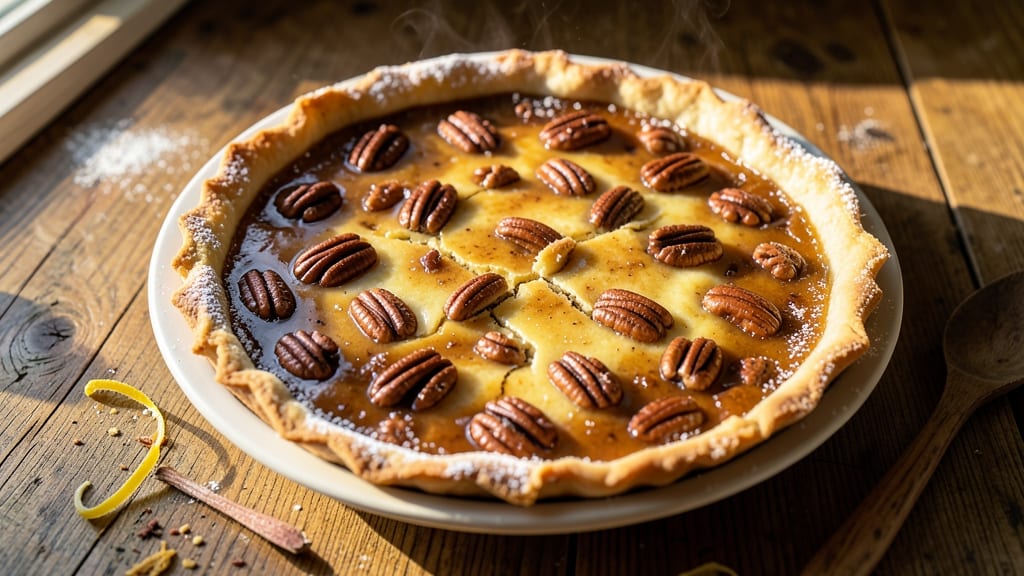
This 1910-style pecan pie recipe brings old-world charm to your kitchen with a buttery crust and caramelized nut filling that tastes like a slice of history. Back in 1910, pecan pies were simpler—less sugar, more butter, and a focus on letting the pecans shine through natural sweetness.
The crust was often made with lard or a mix of butter and lard, giving it that signature flaky, golden texture that still defines the best pecan pies today.
The filling relies on a rich syrup made from corn syrup and molasses, creating a deep caramel flavor that coats each pecan. Eggs bind everything together, while vanilla and salt balance the sweetness.
Unlike modern recipes that often include heavy corn syrup, this version uses a more traditional approach that still delivers that signature gooey, nutty center we all love. The key to success is baking it just long enough to set the filling without burning the edges.
What you'll end up with is a pie that looks and tastes like it came straight from a 1910 family cookbook—golden crust, crisp edges, and a caramelized pecan filling that's rich but not overly sweet.
The aroma alone will transport you to a cozy kitchen a century ago, while the taste reminds you why this dessert has stood the test of time. Perfect for holidays, family gatherings, or when you just want a taste of nostalgia.
Ready to bring this classic back to life? The instructions are designed to keep the historical authenticity while making it accessible for modern home cooks. Let's get started!
Ingredients for 1910 pecan pie
Buttery crust meets caramelized pecan filling—just like 1910 family kitchens made it.
| Ingredient | Amount | Notes |
|---|---|---|
| All-Purpose Flour 🌾 | 2 ½ cups | Sifted for flaky crust |
| Unsalted Butter 🧈 | 1 cup | Cold, cubed for crust |
| Granulated Sugar 🍚 | 1 ½ cups | For crust and filling |
| Light Corn Syrup 🍯 | 1 ¼ cups | Traditional 1910 sweetener |
| Molasses 🍯 | ½ cup | Dark molasses preferred |
| Large Eggs 🥚 | 2 whole | Room temperature |
| Pure Vanilla Extract 🌿 | 1 tbsp | High-quality preferred |
| Salt 🧂 | ½ tsp | Fine sea salt |
| Pecans 🌰 | 2 ½ cups | Chopped, toasted |
| Lard 🧈 | ½ cup | Optional for traditional crust |
| Ice Water 💧 | ½ cup | For crust binding |
The crust is where the magic starts. Butter and lard give that signature flaky texture—skip the lard if you're avoiding it, but trust me, it makes a difference. Crisco or vegetable shortening works in a pinch, but nothing beats the real deal. For the best flour, grab King Arthur or Gold Medal from the grocery store. I always sift mine (yes, it's extra work) because it keeps the crust light. The pecans? Raw, shelled pecans from Trader Joe's are my go-to—they're cheaper than the fancy name brands and just as good when toasted.
No molasses? Dark brown sugar plus a splash of coffee gets you close. Running out of corn syrup? Honey or maple syrup works, but the flavor will be slightly different. The eggs need to be room temperature—cold ones make the crust tough. Toasting the pecans is non-negotiable (trust me, it's worth the 10 minutes in a dry pan). For the crust, if you're nervous about handling cold butter, microwave it for 20 seconds to soften slightly—just don't melt it. And if you're feeling fancy, add a pinch of cinnamon to the filling for that old-timey warmth.
This pie tastes even better the next day—honestly, the filling sets up perfectly overnight. Store leftovers in an airtight container in the fridge for up to 5 days. Freezing? Wrap tightly in plastic wrap and foil, then thaw at room temperature for 2-3 hours. The crust stays crisp if you reheat slices in a 350°F oven for 5-7 minutes. Make a double batch if you can—it disappears fast, especially around holidays.
Why You'll Love This Recipe
- No-Fuss Crust: I’ll admit, the flaky crust here is my favorite part—just butter, flour, and a pinch of salt. No rolling, no fuss, and it’s ready in 10 minutes while the filling bakes. Honestly, the first time I skipped the store-bought crust, I never went back.
- Molasses Magic: That deep, caramelized molasses twist? It’s what makes this pie stand out. The corn syrup keeps it silky, but the molasses adds this rich, almost spiced sweetness that lingers. Between us, it’s the secret weapon—no one guesses it’s in there until they take the first bite.
- Holiday or Weeknight: Serve it warm with vanilla ice cream at Thanksgiving, or slice it up for a lazy Sunday breakfast with coffee. I’ve even packed it in lunches—trust me, pecan pie for lunch is a mood. The corn syrup filling stays gooey for days, so it’s always a win.
- Budget-Friendly Staples: This pie costs me less than $5 to make, and the ingredients last forever. Butter, sugar, molasses? Pantry basics that don’t break the bank. Plus, the leftovers? They’re my go-to for quick dessert fixes or even a sweet snack when I’m craving something rich. No waste, all flavor.
Step-by-step instructions for 1910-Style pecan pie
Here's how to make a pie that tastes like a slice of Southern nostalgia.
Prepare the Classic Pecan Pie Crust
In a large bowl, combine the 2.5 cups All-Purpose Flour and 0.5 tsp Salt. Cut in the 1 cup Unsalted Butter (cold and cubed) using a pastry cutter or two forks until the mixture resembles coarse crumbs with pea-sized butter pieces. If using, add the 0.5 cup Lard and cut it in as well—this creates that signature flaky texture.
Gradually sprinkle in the 0.5 cup Ice Water, one tablespoon at a time, mixing gently with a fork until the dough just comes together. Be careful not to overmix—this can make the crust tough. Form the dough into a disk, wrap it in plastic, and chill in the refrigerator for at least 30 minutes (up to 24 hours). This resting time is crucial for developing the crust's flakiness.
Assemble the Filling with Caramelized Pecans
In a medium saucepan, combine the 1.5 cups Granulated Sugar, 1.25 cups Light Corn Syrup, and 0.5 cup Molasses. Stir over medium heat until the mixture begins to bubble, then add the 2.5 cups Pecans and 1 tbsp Pure Vanilla Extract. Bring to a gentle boil, stirring constantly to prevent burning, and cook for 5-7 minutes until the mixture thickens slightly and the pecans begin to darken—this is where the deep caramelized flavor develops.
Remove from heat and let cool for 5 minutes. In a separate bowl, whisk the 2 whole Large Eggs until frothy, then gently fold them into the warm filling mixture. This step is delicate—don't overmix or you'll create a tough pie. The filling should be thick but pourable, with a glossy sheen from the eggs.
Roll and Line the Crust
On a lightly floured surface, roll out the chilled dough to about 12 inches in diameter—just enough to fit a standard 9-inch pie dish with some overhang. Transfer the dough to the pie dish and trim the edges, leaving about ½ inch extra. Crimp the edges decoratively using your fingers or a fork. Preheat your oven to 375°F while you prepare the filling.
Pour the pecan filling into the prepared crust, spreading it evenly. The filling should come about ¾ of the way up the crust's sides. For that classic pecan pie look, sprinkle the remaining pecans (if any) on top, pressing them lightly into the filling. This creates a beautiful lattice pattern when baked.
Bake to Golden Perfection
Place the pie on the middle rack of your preheated oven and bake for 50-55 minutes. The pie is done when the filling is set (it should jiggle slightly in the center but not be liquid) and the crust is golden brown all over. If the edges brown too quickly, cover them loosely with aluminum foil after 30 minutes to prevent burning.
Here's the thing—don't overbake! The pie will continue to set as it cools. When you remove it from the oven, let it cool completely on a wire rack for at least 2 hours before slicing. This resting time allows the filling to fully set and the flavors to meld together perfectly. The contrast between the warm, gooey filling and the crisp crust is what makes this pie legendary.
Pro Tips For Making 1910 Pecan Pie
- Bake at 325°F—Not Hotter: I learned this the hard way—cranking the oven to 350°F makes the crust burn before the filling sets. The 1910 recipe counts on a slow, steady bake to let the corn syrup and molasses caramelize properly. If your kitchen runs hot, drop the temp to 300°F and add 15 minutes.
- Toast Pecans Low and Slow: Skip the high-heat pan toasting—it burns the edges and leaves them bitter. Instead, spread pecans on a baking sheet at 300°F for 8–10 minutes, stirring once. You want them fragrant but still slightly raw in the center, so they soften perfectly in the filling.
- Mix Syrup and Molasses First: This isn’t just about dissolving sugar—combining the corn syrup and molasses before adding sugar prevents grainy spots. Stir them together until smooth, then slowly incorporate the sugar. I used to add sugar first and ended up with a filling that looked like sand through molasses.
- Press Crust Evenly—Then Dock: A thick crust puffs and cracks. Press the flour-butter crust firmly into the pan, then dock it with a fork every ½ inch. This keeps it flat while the filling bubbles. If you’re lazy (like me), use a rolling pin to press down—just don’t skip the docking.
Perfect pairings for these flavors
Classic Southern Sides
Serve this 1910-style pecan pie with creamy mashed potatoes—their buttery richness balances the pie's caramelized sweetness. I like to make mine with sour cream and chives for extra depth.
For a lighter option, try cornbread with a touch of honey—its crumbly texture contrasts beautifully with the pie's gooey filling. 🥣
Creamy Vanilla Ice Cream
Nothing beats a warm slice of pecan pie with a scoop of homemade vanilla ice cream. Look for high-fat cream in your recipe (like 36% or higher) for that ultra-creamy texture.
Brands like Blue Bell or Breyers work in a pinch, but nothing compares to homemade. The cold ice cream cuts through the pie's richness while enhancing its nutty flavors. 🍦
Spiced Whipped Cream
For a sophisticated touch, top your pie with spiced whipped cream made by folding ½ tsp cinnamon and ¼ tsp nutmeg into 1 cup heavy whipping cream.
Sweeten it lightly with 1 tbsp powdered sugar if desired. This adds a warm, aromatic contrast that feels straight out of a 1910 dessert menu. 🌿
Warm Bourbon Coffee
Pair your pecan pie with a bourbon-infused coffee—just add 1 oz bourbon (like Maker's Mark) to a cup of hot coffee and stir. The caramel notes in the bourbon complement the pie's molasses and pecans perfectly.
For a non-alcoholic option, try chai tea with a dash of cinnamon. ☕
Fresh Fruit Salad
A light citrus salad with mandarin oranges, grapefruit, and berries cleanses the palate between bites of rich pecan pie. Toss with 1 tbsp honey and a squeeze of lime for brightness. The acidity helps reset your taste buds, making each slice of pie taste even more decadent. 🍊
Buttery Shortbread Cookies
Finish the meal with crisp shortbread cookies—their buttery crunch pairs perfectly with the pie's creamy filling. Use a 9-inch round cutter for easy serving. The simplicity of the cookies lets the pecan pie shine as the star of the dessert course. 🍪
Nutrition facts
Frequently asked questions
Why does this 1910 recipe use molasses instead of just sugar?
Molasses adds that deep, caramelized depth that was signature in early 20th-century desserts. The 0.5 cup creates complex flavors that plain sugar can't match—think of it as the secret ingredient that makes this pie taste authentically old-fashioned. It also helps balance the richness of the pecans and butter.
Can I make this pie without lard in the crust?
The recipe works perfectly with just 1 cup unsalted butter—it's what makes the crust flaky and golden. If you're avoiding butter, use ½ cup butter + ½ cup vegetable shortening for a similar texture. Just know that lard (or butter) gives that classic "old-time" flakiness that's hard to replicate.
How do I know when the pecan pie is fully baked?
The filling should be set but still slightly jiggly in the center—like 2-3 minutes of wobble when gently shaken. The crust should be golden brown all over. Overbaking makes the filling dry, so pull it out when it's just barely set. The pie will firm up more as it cools.
Can I substitute pecans with other nuts?
While pecans are traditional, you can use walnuts or hickory nuts for a similar texture. Walnuts work best in a pinch, but the flavor won't be identical—their earthiness pairs differently with the molasses. For a true 1910 taste, pecans are non-negotiable!
Why does the recipe say to rest the pie before slicing?
Resting for 2 hours lets the filling set properly and prevents a runny slice. The heat continues to work through the pie as it cools, transforming the filling from gooey to perfectly firm. Skipping this step means a messy, soupy texture—patience pays off with that classic pecan pie experience!