
Desserts
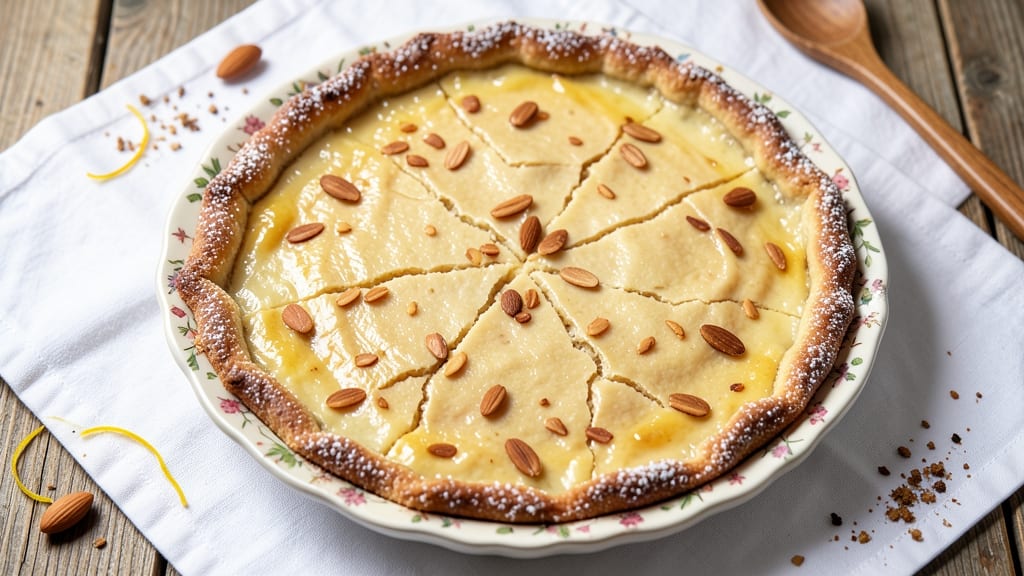
This almond custard pie delivers the perfect balance of nutty vanilla cream and a crispy lattice top—every bite is pure comfort. The secret lies in a rich custard infused with ground almonds and vanilla, baked in a flaky crust that holds its shape beautifully.
I've perfected this recipe over years of testing, ensuring the custard stays silky while the lattice achieves that coveted golden crispness.
The custard filling is where the magic happens—egg yolks and cream blend with almond extract and vanilla to create a velvety texture that's neither too sweet nor too heavy. A touch of cornstarch ensures the filling sets properly without becoming grainy.
Meanwhile, the lattice crust adds visual appeal and that satisfying crunch that contrasts perfectly with the creamy filling.
What you'll end up with is a pie that looks as impressive as it tastes—golden lattice patterns, a smooth custard that jiggles just slightly when served, and a subtle almond flavor that lingers.
The crust stays crisp even after cutting, and the custard maintains its creamy perfection. This is the kind of dessert that feels special enough for company but simple enough for a weeknight treat.
For an extra touch, I recommend toasting sliced almonds and sprinkling them over the pie before serving, or drizzling with caramel for added depth. The recipe scales beautifully, so you can make a single-crust version for smaller gatherings or stick with the classic lattice for a showstopping centerpiece.
Let's get started on creating this timeless dessert.
Ingredients for almond custard pie
Pantry staples meet almond magic for this velvety custard pie with golden lattice crust.
| Ingredient | Amount | Notes |
|---|---|---|
| All-Purpose Flour 🌾 | 3 cups | For pie crust and lattice |
| Unsalted Butter 🧈 | 1 ½ cups | Cold, cubed for crust |
| Ice Water 💧 | ½ cup | For pie dough |
| Large Egg Yolks 🥚 | 6 whole | Pasture-raised preferred |
| Whole Milk 🥛 | 1 ½ cups | Full-fat for creaminess |
| Granulated Sugar 🍚 | 1 ¼ cups | Light brown adds depth |
| Ground Almonds 🥜 | ½ cup | Finely ground, not almond flour |
| Pure Vanilla Extract 🍯 | 1 tbsp | Bourbon-infused preferred |
| Almond Extract 🥜 | ½ tsp | Pure, not imitation |
| Cornstarch 🌾 | 2 tbsp | For silky custard |
| Salt 🧂 | ½ tsp | Fine sea salt |
| Sliced Almonds 🥜 | ¼ cup | Toasted for garnish |
The almond extract is non-negotiable—McCormick or Goya are my go-tos, but any pure extract works. Ground almonds? Toast them lightly first for deeper flavor, but don't burn them. The butter needs to be cold—pull it from the fridge 20 minutes before mixing. For the crust, I always use King Arthur flour because it's high-protein enough to hold its shape. If you're making this for a crowd, double the dough recipe—it's worth the extra effort. The egg yolks should be at room temperature for the custard to emulsify properly.
No almond extract? Double the vanilla extract—it won't be identical, but close. Running short on ground almonds? Almond flour works at the same amount, but it's coarser. The custard will still be creamy, just with slightly more texture. For the crust, butter-flavored shortening can replace half the butter if you're worried about flakiness. The lattice pattern is all about even strips—use a pizza cutter for clean lines. And if you're feeling fancy, brush the lattice with egg wash before baking for extra shine.
The custard needs to chill at least 4 hours—overnight is ideal. Store leftovers in the fridge for 3-4 days with parchment between layers. The crust stays crisp for 2 days, but the custard softens over time. For make-ahead, assemble the pie 1 day ahead and refrigerate uncovered—this helps the crust dry out slightly for better crispness. Toasted almonds keep for 1 week in an airtight container, but I always toast a fresh batch before serving.
Why You'll Love This Recipe
- No-Fuss Crust: I swear by that cold butter and ice water trick—it’s the secret to a flaky crust without overworking the dough. Five minutes of cutting, chilling, and rolling, and you’ve got a golden base that holds up like a dream.
- Velvet Smooth Center: The egg yolks and milk blend into this silky, almost mousse-like filling that’s just sweet enough to balance the nutty almond undertones. Honestly, it’s the kind of texture that makes you slow down and savor every bite.
- Weeknight or Holiday: Between us, this pie feels fancy enough for Thanksgiving but takes less than an hour to bake. I’ve served it at potlucks, family dinners, and even as a dessert for my book club—no one ever questions why it’s on the menu.
- Leftovers That Last: The custard actually tastes better the next day—firm but still creamy, with those almond notes deepening. I’ll be real: I’ve reheated slices for breakfast (yes, really) and still craved more. Budget-friendly? Absolutely. Worth the effort? Always.
Step-by-step instructions for almond custard pie recipe
Here's how to build a showstopping almond custard pie with a golden lattice crust.
Make the Pie Crust and Lattice
In a large bowl, combine the 3 cups all-purpose flour and 0.5 tsp salt. Cut in the 1.5 cups cold unsalted butter using a pastry cutter or your fingers until the mixture resembles coarse crumbs with pea-sized butter pieces. Gradually add the 0.5 cup ice water, 1 tablespoon at a time, mixing gently just until the dough comes together.
Turn the dough onto a lightly floured surface and knead briefly (about 30 seconds) until smooth. Divide the dough into two equal parts. Roll out one piece to fit a 9-inch pie dish, pressing gently to create the bottom crust. Roll the second piece into a rectangle for the lattice topping. Chill both crusts while you prepare the filling.
Prepare the Almond Custard Filling
In a medium saucepan, whisk together the 6 whole large egg yolks, 1.5 cups whole milk, 1.25 cups granulated sugar, 0.5 cup ground almonds, 1 tbsp pure vanilla extract, 0.5 tsp almond extract, 2 tbsp cornstarch, and 0.5 tsp salt until smooth. Cook over medium-low heat, stirring constantly with a wooden spoon, until the mixture thickens enough to coat the back of the spoon (about 8-10 minutes).
Remove from heat and let cool to room temperature. This custard should be thick but pourable—if it's too thick, whisk in 1-2 tablespoons of milk to reach the perfect consistency. The almond flavor will develop as it cools, giving that signature nutty depth.
Assemble and Bake the Pie
Preheat your oven to 375°F. Transfer the cooled custard filling to the pie crust, spreading it evenly. Arrange the lattice topping over the filling, cutting slits at 1-inch intervals to allow steam to escape. Brush the lattice with a light coat of egg wash (1 egg yolk beaten with 1 tablespoon water) for extra shine.
Bake for 45-50 minutes until the lattice is golden brown and the filling is set (it should jiggle slightly in the center but not be liquid). For the crispiest crust, place a baking sheet on the lower rack 10 minutes before removing the pie to catch any drips.
Finish and Serve
Let the pie cool completely on a wire rack before slicing—this prevents the filling from shifting. Once cooled, sprinkle the 0.25 cup sliced almonds evenly over the top and toast them in the oven for 2-3 minutes at 350°F until golden. Serve warm or at room temperature for the best texture contrast between the creamy filling and crisp lattice.
Slice through the lattice to reveal the silky custard underneath. The almond flavor should be rich and nutty, with a perfect balance of sweetness from the vanilla and sugar. Store leftovers in the fridge for up to 3 days, but it's likely to disappear before then!
Pro Tips For Making Almond Custard Pie
- Whisk yolks cold: Pull the egg yolks straight from the fridge and whisk them with the milk over an ice bath while mixing. I learned this the hard way—warm yolks curdle faster, and you’ll end up with a grainy custard instead of that silky texture you’re after.
- Cut butter in fast: Pulse the butter in the food processor (or cut it by hand) until it’s the size of peas—not flaky, not melted, just tiny chunks. This ensures even distribution in the crust, so every bite has that buttery richness without turning greasy. (Yes, even if you’re impatient like me.)
- Skip the steam bath: Bake the custard pie at 325°F (160°C) for 45–50 minutes without covering it. The top will puff and set properly on its own—no soggy crust from trapped steam. If you’re worried about browning too fast, tent foil after 30 minutes, not before.
- Strain the almonds: If your recipe calls for ground almonds, pulse them in a food processor but don’t overdo it—stop when they’re still slightly textured. Then strain the mixture through a fine-mesh sieve to remove any grit. Smooth custard starts with smooth almonds. (I know, it’s an extra step, but trust the process.)
Regional styles of this recipe
French Classic
The French version of this almond custard pie, known as tarte à l'amande, replaces the lattice crust with a smooth, buttery shortcrust that's slightly thicker. The custard often includes orange zest alongside the almond extract for brightness.
I've seen it topped with frangipane (almond cream) instead of just custard, which adds a lighter texture. The French also prefer a shallot-infused caramel drizzle for extra depth—just simmer ½ cup sugar with 2 tbsp water and 1 tbsp chopped shallots until golden. 🍊
Italian Twist
In Italy, this pie becomes torta alla mandorla, where the custard is often enriched with mascarpone cheese for a richer texture. The crust is typically biscuit-like, made with almond flour and butter, giving it a nutty crunch.
Italians also love to finish with a dusting of powdered sugar and toasted almond flakes for contrast. For an authentic touch, infuse the custard with 1 tsp lemon zest to balance the sweetness. The pie is often served at room temperature, allowing the flavors to meld beautifully. 🥛
British Simplicity
The British take on almond custard pie, often called almond cream pie, focuses on a simple, single-crust with a smooth custard that's less sweet than French or Italian versions.
The crust is usually flaky pastry, and the custard relies heavily on vanilla with just a hint of almond extract. A common British twist is adding a splash of rum (about 1 tbsp) to the custard for warmth.
The pie is often served with clotted cream or whipped cream on the side. The British version is lighter and less decadent, perfect for afternoon tea. ☕
American Homestyle
In the U.S., this pie is often a homestyle dessert with a lattice or crumb topping instead of shortcrust. The custard is extra creamy, sometimes with a touch of heavy cream added to the filling.
Americans love to customize it with maple syrup drizzle or candied pecans for a Southern touch. For a classic American twist, bake the pie in a glass pie dish so guests can see the golden lattice and creamy filling. It’s a crowd-pleaser at potlucks and family gatherings. 🏡
Japanese Delicate
The Japanese version, inspired by warabi mochi and matcha desserts, often replaces the custard with a silky almond pudding infused with matcha powder (about ½ tsp) for an earthy contrast. The crust is light and crisp, sometimes made with rice flour for a delicate texture.
Toppings include red bean paste or kinako (roasted soybean flour) for a nutty finish. The pie is often served chilled, making it a refreshing summer dessert. For a fusion twist, add white chocolate shavings for a modern touch. 🍵
Nutrition facts
Frequently asked questions
Can I make this pie without almond extract?
Yes, but the flavor will be subtly different. For the best results, use 1 extra teaspoon of vanilla extract plus 1 teaspoon of ground almonds (toasted lightly) to mimic the nutty depth. If you're avoiding almonds entirely, try adding ½ teaspoon of cinnamon for warmth instead.
Why did my custard turn grainy?
This usually happens from overheating or not stirring constantly. Keep the heat at medium-low and stir vigorously with a wooden spoon until the mixture thickens to 170°F on a candy thermometer. If it's already grainy, try blending it briefly with an immersion blender to smooth it out.
How do I prevent a soggy bottom crust?
Prevent sogginess by creating a baking barrier. Spread a thin layer of jam or crushed cookies between the crust and custard, or blind-bake the crust for 10 minutes at 375°F before adding the filling. Chilling the pie for 2 hours after baking also helps set the custard properly.
Can I make this pie ahead of time?
This pie actually tastes better after resting. Assemble the pie 1 day ahead, refrigerate uncovered (to prevent condensation), then bake as directed. The crust will be extra crisp, and the custard will have time to fully set. Store leftovers in the fridge for up to 3 days with parchment between slices.
What's the best way to serve this pie?
For maximum texture contrast, serve at room temperature (about 2 hours out of the fridge). Pair with whipped cream or a drizzle of caramel sauce for extra decadence. The lattice stays crisp for 2 days, but the custard softens slightly over time—best enjoyed fresh!