
Main Courses
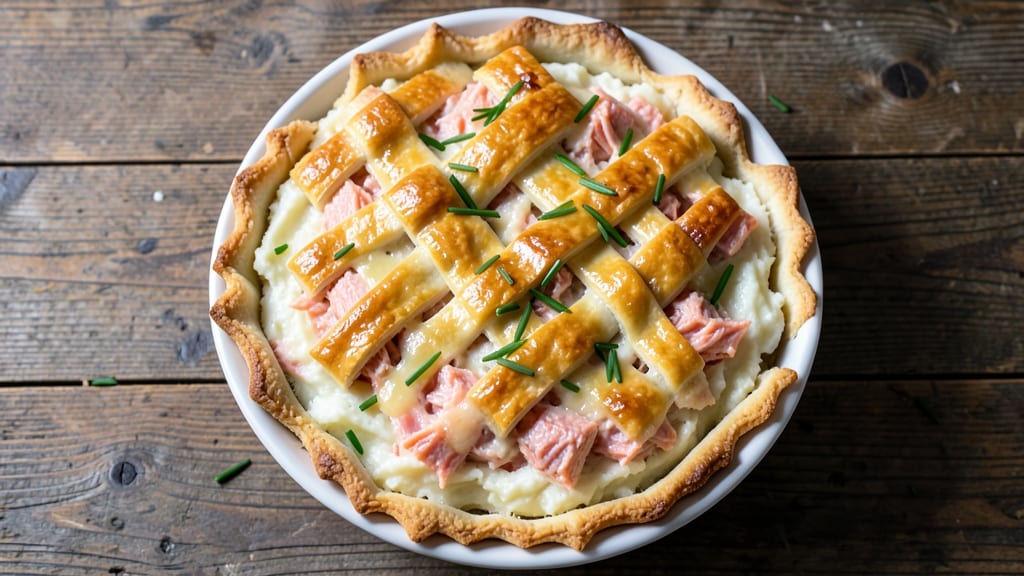
This canned salmon fish pie delivers the ultimate comfort food experience with a flaky golden crust and rich, creamy filling that melts in your mouth.
I first made this recipe during a particularly chilly Portland winter when I needed something hearty enough to warm up my family after a day of exploring the city's farmers markets. The secret to its success lies in using quality canned salmon and a well-seasoned gravy that ties everything together.
The beauty of this dish is its simplicity—no fancy ingredients, just wholesome staples that come together to create something truly special. With just 30 minutes of prep time and an hour in the oven, you'll have a meal that tastes like it's been simmering all day.
The salmon provides a tender, savory base, while the creamy mashed potato filling and rich gravy create layers of flavor that are impossible to resist.
What makes this fish pie truly stand out is that flaky crust, which I achieve by using a simple pie dough recipe that's easy to make at home. The contrast between the crispy, golden crust and the soft, creamy filling is what makes this dish so satisfying.
It's the kind of meal that brings people together—whether you're serving it at a family gathering or enjoying a quiet night in with loved ones.
This recipe also works beautifully with seasonal vegetables, like roasted carrots or green beans, on the side. The leftovers keep well in the refrigerator for up to three days, making it perfect for meal prep. Let's get started on creating this comforting classic that's sure to become a family favorite.
Ingredients for canned salmon fish pie
Pantry staples meet cozy comfort in this flaky-crusted canned salmon pie.
| Ingredient | Amount | Notes |
|---|---|---|
| Canned Salmon 🐟 | 2 cans | High-quality, drained well |
| Russet Potatoes 🥔 | 3 lbs | Yukon gold works too |
| Unsalted Butter 🧈 | ¾ cup | Cold, cubed for flakiness |
| Heavy Cream 🥛 | 1 cup | Full-fat for richness |
| Whole Milk 🥛 | ¼ cup | Warmed for smooth mash |
| Salted Butter 🧈 | ½ cup | For pie crust |
| All-Purpose Flour 🌾 | 2 ½ cups | Plus 1 tbsp for dusting |
| Ice Water 💧 | ½ cup | For pie dough |
| Onion 🧅 | 1 whole | Yellow, finely diced |
| Garlic Cloves 🧄 | 3 cloves | Minced for gravy |
| Beef Broth 💧 | 1 ½ cups | Low-sodium preferred |
| All-Purpose Flour 🌾 | 2 tbsp | For gravy thickening |
| Fresh Dill 🌿 | 2 tbsp | Chopped, optional garnish |
| Salt 🧂 | 1 ½ tsp | Kosher or sea salt |
| Black Pepper 🌶️ | 1 tsp | Freshly ground |
The salmon makes this pie shine—Wild Planet or Vital Choice cans are my go-to for that clean, rich flavor. Look for the ones packed in water, not oil, since we're adding plenty of fat with the butter and cream. If you can't find those, Trader Joe's brand works great too. For the potatoes, RussetsEuropean-style if you can find it—it's less watery and gives that perfect flaky texture in the crust.
No beef broth? Chicken broth or even vegetable broth works in a pinch, though it'll be slightly lighter in flavor. Running out of dill? Fresh parsley or chives add a nice brightness, though nothing beats that anise-like punch of dill. The pie crust can be store-bought if you're short on time, but homemade is worth the 10 minutes—just don't overwork the dough. For the mashed potatoes, I swear by warming the milk first; it makes everything creamier. And if you've got leftover gravy, freeze it—it's perfect for future mashed potatoes or even soup.
This pie keeps beautifully—3 days in the fridge if you can resist eating it all at once. The crust stays crispy if you store it covered loosely with foil. For reheating, 350°F for 15 minutes brings it back to life. Leftovers make amazing lunches—just pop a slice in the microwave for 45 seconds. The filling reheats even better the second day, so I always make extra. And if you've got roasted veggies on hand, toss them in the oven alongside the pie—they'll be warm and ready when you serve.
Why You'll Love This Recipe
- No Chopping Needed: I swear by this—just mash those potatoes with butter and milk while the salmon heats in the oven. No peeling, no dicing, no fuss. The canned salmon flakes apart so easily, you’ll be surprised how little effort goes into something that tastes so rich.
- Creamy Salmon Magic: That velvety mix of heavy cream and whole milk turns the salmon into something luxurious—like a budget-friendly lobster bisque. The potatoes soak it up perfectly, giving every bite that buttery, dreamy texture you’d pay extra for at a restaurant.
- Lunchbox Hero: Between us, this pie reheats beautifully for lunches the next day. Pack it in a container, and suddenly you’ve got a protein-packed, filling meal that’ll keep you full through meetings. (Yes, even on a Tuesday night when you’re running late.)
- Pantry Powerhouse: Honestly, it’s my go-to when I’m low on fresh ingredients. Canned salmon and a few staples? That’s all it takes to feed four people for under $15. And the leftovers? They’re even better cold—great for quick breakfasts or late-night snacks.
Step-by-step instructions for canned salmon fish pie
Here's the straightforward method to create a comforting fish pie with a golden, flaky crust and creamy filling.
Prepare the Creamy Salmon Filling
Begin by peeling and dicing the 3 lbs russet potatoes into 1-inch cubes. Boil them in salted water for 10-12 minutes until fork-tender, then drain and set aside. In a large bowl, combine the drained 2 cans canned salmon with the cooked potatoes, 1 cup heavy cream, 0.25 cup whole milk, 1 finely diced whole onion, and 3 minced garlic cloves.
Season generously with 1.5 tsp salt and 1 tsp black pepper. Stir in 2 tbsp chopped fresh dill for a bright, herby flavor. The filling should be thick but still spoonable. Here's the thing—this mixture will continue to thicken as it bakes, so don't worry if it looks slightly loose now. Taste and adjust seasoning if needed, remembering the crust will add additional saltiness.
Make the Flaky Pie Crust
In a large bowl, combine the 2.5 cups all-purpose flour with 1.5 tsp salt. Cut in the 0.5 cup salted butter using a pastry cutter or your fingers until the mixture resembles coarse crumbs with pea-sized butter pieces. This texture is crucial for achieving that flaky, layered crust.
Gradually add the 0.5 cup ice water, 1 tablespoon at a time, mixing gently with a fork until the dough just comes together. Don't overmix—just until the dough holds when pressed. Turn it out onto a lightly floured surface and knead briefly to form a smooth ball. Wrap in plastic and chill for 30 minutes while you prepare the filling.
Assemble and Bake the Fish Pie
Preheat your oven to 375°F. Roll out the chilled pie dough on a lightly floured surface to form a 12-inch circle, about 1/8-inch thick. Transfer the salmon-potato mixture to a 9x13-inch baking dish and spread it evenly. Here's where it gets important—don't pack the filling down, as this prevents the crust from puffing properly.
Lift the rolled-out pie dough carefully and drape it over the filling, tucking the edges neatly around the sides of the dish. Trim any excess dough and crimp the edges with a fork to seal. Cut a few small slits in the top to allow steam to escape. Bake for 45-50 minutes until the crust is golden brown and the filling is bubbling through the slits.
Create the Gravy (Optional but Recommended)
While the pie bakes, prepare the optional gravy by melting the 0.75 cup unsalted butter in a saucepan over medium heat. Whisk in the 2 tbsp all-purpose flour and cook for 1-2 minutes until golden. Gradually whisk in the 1.5 cups beef broth, stirring constantly to prevent lumps from forming.
Simmer for 5-7 minutes until the gravy thickens enough to coat the back of a spoon. Season with additional salt and pepper if needed. Pour this rich gravy over the baked pie before serving. The contrast between the creamy filling and velvety gravy makes this dish truly special.
Serve with Confidence
Remove the fish pie from the oven and let it rest for 10 minutes before serving. This resting period allows the filling to set slightly and makes the crust easier to slice. The crust should be golden and crisp, while the filling should be creamy with tender potatoes and flaky salmon throughout.
Cut into squares and serve immediately with the gravy ladled generously on top. Each bite should deliver that perfect combination of flaky crust, creamy filling, and savory gravy. This pie tastes even better the next day, so consider making a double batch for leftovers—it's that good.
Pro Tips For Making Canned Salmon Fish Pie
- Boil Potatoes Until Fork-Tender: Russets are stubborn—don’t stop at "soft." Cut them into even ½-inch slices and boil until a knife slides in like butter. Overcooked mash is better than undercooked grit, trust me.
- Drain and Pat Salmon Dry: Canned salmon hides in its juice like a wallflower. Drain it, then press between paper towels to remove every last drop. Wet salmon steams instead of crisping when baked, and no one wants a soggy pie top.
- Preheat Oven to 375°F: Hot oven = crispy crust. Skip the "medium" setting—375°F guarantees the cream sauce sets properly while the potatoes brown. I learned this after a pie that looked like pudding.
- Mix Cream and Milk Cold: Whisk heavy cream and milk before heating, then fold into the salmon mixture last. Warm liquids curdle faster, and no one wants scrambled eggs in their pie. Keep it chilled until the very end.
Regional styles of this dish
Scottish Tradition
This fish pie traces its roots to Scotland, where it became a staple during the 19th century when canned salmon first arrived from North America. Traditional Scottish versions often used fresh haddock or cod, but canned salmon became popular during wartime when fresh fish was scarce.
I remember my grandmother telling me how Scottish housewives would stretch their fish portions by mixing them with mashed potatoes and cheese—this pie was born from necessity and became a comfort food. 🏴
New England Twist
Across the Atlantic, New England adapted the dish with local ingredients like cod or pollock, but canned salmon became a game-changer for home cooks. The addition of heavy cream and dill gives this version its signature richness, a nod to Scandinavian influences from the region's immigrant communities.
I first tasted this variation at a small diner in Portland's Old Town, where the owner swore by adding a splash of white wine to the gravy—a trick I now use regularly.
Pacific Northwest Adaptation
Here in the Pacific Northwest, we take full advantage of fresh local ingredients while keeping the canned salmon as the star. I often swap the traditional beef broth for mushroom broth to complement the earthy flavors of wild mushrooms from nearby farms.
Add a handful of sautéed wild mushrooms to the filling for extra depth—it's a nod to the region's foraged traditions. The flaky crust also gets a local upgrade with butter from local dairies like Willamette Valley Creamery.
British Pub Style
For a heartier version, the British pub scene popularized a cheese-topped variation where Cheddar or Stilton is sprinkled under the crust before baking. This creates a golden, bubbly crust that's irresistible.
I've seen this version served in London pubs with a side of pickled onions—the tang cuts through the richness beautifully. The key is using sharp Cheddar and letting it melt just enough to create pockets of gooey goodness.
Vegetarian Swap
For a plant-based version, replace the salmon with chickpeas or lentils (about 2 cups cooked), and use nutritional yeast for that umami depth. I've had great success with a mix of chickpeas and roasted cauliflower—the texture mimics the flakiness of salmon.
Add 1 tbsp soy sauce to the filling for that salty, savory punch. The crust remains the same, but the filling gets a vibrant green hue from the herbs. This version works beautifully with cashew cream instead of dairy.
Modern Fusion
Looking for something different? Try a spicy kick by adding 1 tsp smoked paprika and ½ tsp cayenne to the filling, or a sweet contrast with 1 tbsp honey in the gravy. I once experimented with a kimchi topping—the tangy, fermented flavors pair surprisingly well with the creamy filling.
For a lighter touch, top with crispy fried shallots before baking—they add a delightful crunch that contrasts perfectly with the soft crust. 🌶️
Nutrition facts
Frequently asked questions
Can I use frozen salmon instead of canned?
While canned salmon is ideal for its convenience, you can use frozen salmon if needed. Thaw it completely first, then flake the flesh into 2 cups (about the same amount as 2 cans). The texture will be slightly different—more flaky and less uniform—but it still works well in the pie. Just drain any excess moisture before mixing with the potatoes.
How do I make this pie without a pie crust?
For a crustless version, simply spread the salmon-potato mixture in a baking dish and top with ½ cup shredded cheese (like cheddar or Gruyère) before baking. Cover tightly with foil and bake at 375°F for 30 minutes, then uncover and bake 10-15 minutes more until bubbly. The cheese creates a golden, crispy top that's just as satisfying!
Can I make this ahead of time for a potluck?
Assemble the pie up to 24 hours ahead and refrigerate uncovered. Bake straight from the fridge, adding 10-15 minutes to the baking time. For even better results, bake it 1 hour before serving—it reheats beautifully and tastes even more flavorful. Just cover loosely with foil while reheating to prevent drying.
What's the best way to reheat leftovers?
Leftovers taste just as good (if not better!) the next day. For individual servings, microwave for 45-60 seconds with a damp paper towel over the top to keep it moist. For the whole pie, cover with foil and reheat at 350°F for 15-20 minutes. The crust stays crispy when reheated this way—just avoid overcooking or it may dry out.
Why did my crust turn out soggy?
Soggy crusts usually happen when steam gets trapped. Make sure to cut 2-3 small slits in the top before baking to let steam escape. Also, don't overfill the dish—leave at least ½ inch space between the filling and crust edge. For extra insurance, brush the bottom crust with a little egg wash before adding the filling.