
Desserts
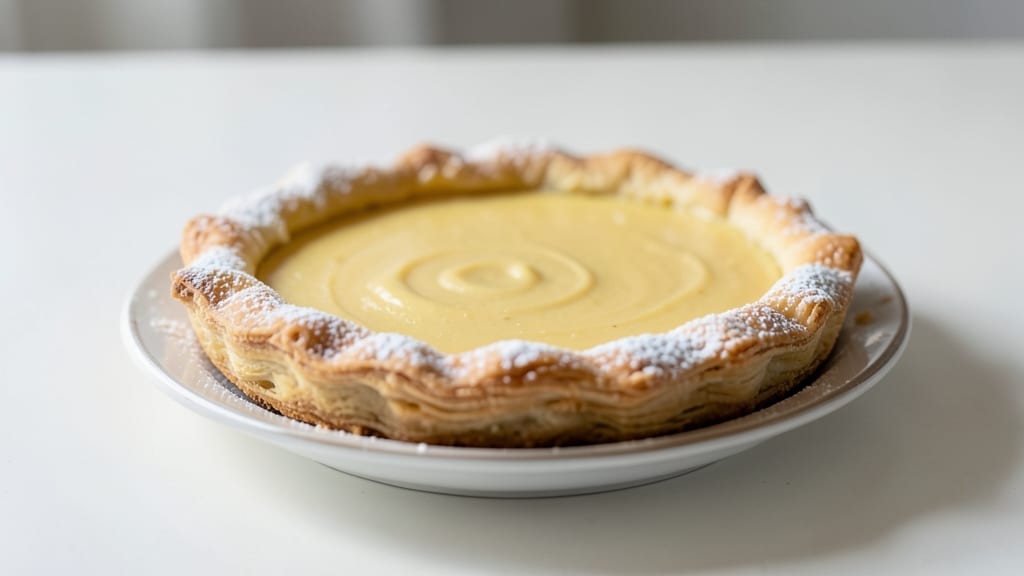
This Grandma's custard pie recipe delivers the perfect balance of creamy, velvety filling and a golden, crispy lattice top that makes every slice unforgettable. The secret lies in a slow-cooked custard that sets just right, with a delicate vanilla flavor that transports you straight to Grandma's kitchen.
I've perfected this recipe over years of baking, ensuring the custard never curdles and the crust stays flaky.
The lattice top isn't just decorative—it creates that satisfying contrast between tender filling and crispy edges. A classic pie dough crust forms the sturdy base, while the custard filling blends eggs, milk, and sugar into a silky texture that's neither too runny nor grainy.
The key is baking at the right temperature to achieve that signature creamy yet firm consistency.
What you'll end up with is a pie that's rich enough to satisfy dessert cravings but light enough to enjoy as a breakfast treat. The custard has that perfect wobble when cut, and the lattice top adds a rustic charm that makes it look as good as it tastes.
Serve it warm with a dollop of whipped cream or a scoop of vanilla ice cream for the full experience.
This recipe works beautifully for family gatherings, holiday desserts, or when you simply want to recreate Grandma's famous pie at home. The lattice technique might seem intimidating at first, but I'll guide you through every step to ensure your pie looks as impressive as it tastes. Let's get baking!
Ingredients for grandma's custard pie
Classic pantry staples plus a few special touches for that Grandma-approved custard perfection.
| Ingredient | Amount | Notes |
|---|---|---|
| All-Purpose Flour 🌾 | 2 ½ cups | For pie crust and lattice top |
| Unsalted Butter 🧈 | 1 cup | Cold, cubed for crust |
| Ice Water 💧 | ½ cup | For pie dough |
| Large Eggs 🥚 | 3 whole | Room temperature for custard |
| Granulated Sugar 🍚 | 1 ¼ cups | For custard sweetness |
| Whole Milk 🥛 | 2 ½ cups | Full-fat for creaminess |
| Pure Vanilla Extract 🍯 | 2 tsp | High-quality for flavor |
| Allspice Berries 🌿 | ¼ tsp | Crushed for subtle warmth |
| Salt 🧂 | ½ tsp | Kosher or sea salt |
| Cornstarch 🌾 | 2 tbsp | For thick custard texture |
| Granulated Sugar (for lattice) 🍚 | ¼ cup | For sprinkling on top |
The flour and butter are the foundation—King Arthur flour if you can find it, but any all-purpose works. For the butter, Plugrá or Land O'Lakes are reliable, but grab the salted version since we're adding our own salt later. The lattice top is where the magic happens, so make sure your butter is cold enough to hold its shape when cutting the dough. Whole Foods or Trader Joe's often have the best prices for high-quality butter. If you're nervous about the lattice, practice cutting strips on parchment paper first—it's easier than it looks.
No vanilla extract? Vanilla bean paste works just as well, or scrape seeds from a vanilla bean if you've got one. The allspice berries are optional but add that classic Grandma touch—Penzeys sells them whole, and you can crush them in a coffee grinder. For the milk, whole milk is non-negotiable—the custard won't be as creamy with skim. If you're short on cornstarch, arrowroot powder at the same amount works too. And trust me on the cornstarch—it's what keeps the custard from getting grainy.
The pie dough keeps best wrapped in plastic for 3 days in the fridge, or freeze it for up to 3 months for when you're ready to bake. The custard filling can be made a day ahead and stored in the fridge—just give it a good stir before pouring into the crust. The lattice top? Assemble it right before baking so it stays crispy. If you're making this for a crowd, double the lattice strips—they're easy to cut extra and freeze for later use.
Why You'll Love This Recipe
- No-Fuss Crust: I swear by the ice water trick—just toss in the flour, butter, and a splash of ice water, then fold it like you’re making a snow angel. The result? A flaky, buttery crust that actually holds together without overworking it.
- Silky Smooth Magic: That egg custard? It’s where the real love happens—just eggs, sugar, and a touch of creaminess from the butter. No weird stabilizers, no overcomplicating it. It’s the kind of filling that makes you pause mid-bite because it’s that good.
- Potluck Hero: This pie travels like a champ—no soggy bottoms, no messy drips. Bring it to a picnic, holiday dinner, or even a last-minute office party. Honestly, I’ve seen people fight over slices at family gatherings, and it’s never been the prettiest but always the most requested.
- Budget-Friendly Luxury: Five ingredients, zero shortcuts. The eggs give it richness, the sugar balances the tang, and the butter? Well, let’s just say it makes everything taste like a hug. You’ll end up with leftovers, but trust me—no one complains when seconds are on the table.
Step-by-step instructions for Grandma's custard pie
Here's how to build a classic custard pie with a golden crust and velvety filling.
Make the Pie Crust
In a large mixing bowl, combine the 2.5 cups all-purpose flour and 0.5 teaspoon salt. Cut in the 1 cup unsalted butter using a pastry cutter or your fingers until the mixture resembles coarse crumbs with pea-sized butter pieces. This texture is crucial for flaky layers.
Gradually add the 0.5 cup ice water, one tablespoon at a time, mixing gently just until the dough comes together. Be careful not to overwork it—handle only enough to form a smooth ball. Wrap the dough in plastic wrap and refrigerate for at least 1 hour. Chilling prevents shrinking and makes rolling easier.
Prepare the Custard Filling
In a medium saucepan, whisk together the 2.5 cups whole milk, 1.25 cups granulated sugar, 2 tablespoons cornstarch, 0.25 teaspoon crushed allspice berries, and 0.5 teaspoon salt. Place the saucepan over medium heat and stir constantly until the mixture thickens enough to coat the back of a spoon—about 5-7 minutes. Remove from heat and stir in the 2 teaspoons pure vanilla extract and 3 whole large eggs, one at a time, whisking well after each addition.
This step is where the magic happens. The custard should be smooth and slightly thicker than heavy cream. If you see any lumps, strain the mixture through a fine-mesh sieve for a silky texture. Let it cool completely before pouring into the crust.
Assemble the Pie
Preheat your oven to 350°F. On a lightly floured surface, roll out half of the chilled pie dough to fit a 9-inch pie dish, leaving a 1-inch overhang. Transfer the dough to the pie dish and trim the edges. Roll out the remaining dough for the lattice top.
Pour the cooled custard filling into the crust, filling it to about ½ inch from the top. Cut the remaining dough into ½-inch wide strips and arrange them in a lattice pattern, leaving a ½-inch border around the edges. Sprinkle the 0.25 cup granulated sugar (for lattice) evenly over the top for extra crunch.
Bake to Golden Perfection
Place the pie on a baking sheet to catch any drips and bake for 45-50 minutes, until the crust is deep golden brown and the filling is set but still slightly jiggly in the center. The lattice should be crisp with just a hint of caramelization.
Let the pie cool completely at room temperature before slicing. This resting period allows the filling to fully set and prevents a runny center. Serve warm or at room temperature for that classic custard pie experience.
Pro Tips For Making Grandma'S Custard Pie
- CHILL THE BUTTER FIRST: Take that unsalted butter straight from the fridge and cut it into cubes—no need to soften it at room temp. Cold butter creates flakier layers in the crust, and I’ve learned this the hard way after making a greasy mess when it melted too soon.
- WHISK EGGS LIKE YOUR LIFE DEPENDS ON IT: Beat those large eggs until the yolks and whites are completely smooth—no streaks, no lumps. I used to rush this, but a fully emulsified custard fills the pie shell evenly and sets like a dream. A fork won’t cut it; grab a whisk and go slow.
- SKIP THE HOT WATER TRAP: Never pour boiling water over the hot custard filling to speed up setting—it’ll curdle faster than you can say "burnt custard." Instead, let it bake at 350°F until the center just wobbles (about 45-50 minutes). Patience here keeps the texture silky.
- USE ICE WATER, NOT JUST WATER: The ice water in the crust dough isn’t just for moisture—it keeps the butter from melting too fast during mixing. Toss in 1-2 ice cubes while combining flour and butter, then add the rest gradually. The crust stays crisp without turning into a sad, greasy blob.
Make-ahead tips for this recipe
Custard Prep Ahead
Make the custard filling 24 hours ahead and store it in an airtight container in the fridge. The flavors meld beautifully overnight, and it's one less thing to worry about on baking day.
When ready to assemble, give it a thorough whisk to redistribute any settled cornstarch. I always double-check the temperature before pouring—it should be completely cool to prevent melting the crust. 💡
Crust Prep Shortcut
Roll out the pie crust and line the dish the night before, then wrap it tightly in plastic. This prevents sogginess and makes morning assembly a breeze. If you're short on time, use store-bought Pillsbury pie crust—just blind-bake it for 10 minutes at 375°F before adding the custard.
The lattice still needs homemade dough for that perfect texture, though. 🍞
Lattice Assembly Hack
Cut all lattice strips at once using a pizza cutter or sharp knife, then stack them on parchment paper. This keeps them organized and prevents warping. For extra crispiness, brush the strips lightly with egg wash before baking.
I've found that pre-assembling the lattice on a separate board and then transferring it to the pie makes the process much cleaner. 🌟
Overnight Baking Plan
For holiday gatherings, bake the pie the night before and store it at room temperature. The custard will firm up beautifully, and the lattice stays crisp. Reheat individual slices in the oven at 350°F for 5-7 minutes to restore the creamy texture.
This works especially well for large pies—just cover tightly with foil to prevent drying. ⏰
Freezer-Friendly Crust
Assemble the pie completely (including lattice) and freeze it unbaked for up to 1 month. Thaw overnight in the fridge before baking. The crust handles freezing better when fully assembled, and the custard won't separate.
I like to wrap the pie tightly in plastic wrap followed by aluminum foil for extra protection. 🧊
Make-Ahead Toppings
Prepare whipped cream or ice cream toppings the day before and store them in the fridge.
For a showstopper presentation, make a simple vanilla bean ice cream with 1 cup heavy cream, 1 cup milk, and 3 tbsp sugar—churn it for 20 minutes in an ice cream maker. The pie will taste just as good the next day with these prepped accompaniments. 🍦
Nutrition facts
Frequently asked questions
Why does my custard pie filling sometimes get grainy?
The most common causes are overcooking the custard or not whisking the eggs properly. Always cook the milk mixture over medium heat until it thickens enough to coat the back of a spoon, then remove from heat before adding eggs. Whisk each egg thoroughly after adding to prevent lumps. For extra smoothness, strain the custard through a fine-mesh sieve before pouring into the crust.
Can I make this custard pie without a lattice top?
If lattice seems challenging, cover the pie with a full top crust instead. Cut a few slits in the top crust to allow steam to escape, or brush it with egg wash for a golden finish. The custard will set just as beautifully, and you'll still get that comforting pie experience without the intricate design.
How do I prevent my pie crust from shrinking during baking?
Chill the dough for at least 1 hour before rolling, and handle it as little as possible. When transferring the dough to the pie dish, gently press it into place rather than stretching it. The key is to keep the dough cold—if it warms up, it will shrink. Also, avoid overfilling the crust with custard to prevent pressure from causing the edges to puff up.
What's the best way to reheat leftover custard pie?
For individual slices, warm them in the oven at 350°F for 5-7 minutes until the custard is just set. To reheat the whole pie, cover it loosely with foil and bake at 325°F for 15-20 minutes. Never microwave custard pie—it can make the filling rubbery. The gentle oven heat restores that silky texture perfectly.
Can I substitute cornstarch with arrowroot powder?
Yes, you can use arrowroot powder in a 1:1 ratio as a thickener. It creates a slightly clearer custard but works beautifully. Just remember that arrowroot sets more quickly than cornstarch, so you might need to reduce the baking time by 5 minutes to avoid an over-set filling. Both work well for that classic creamy texture.