
Desserts
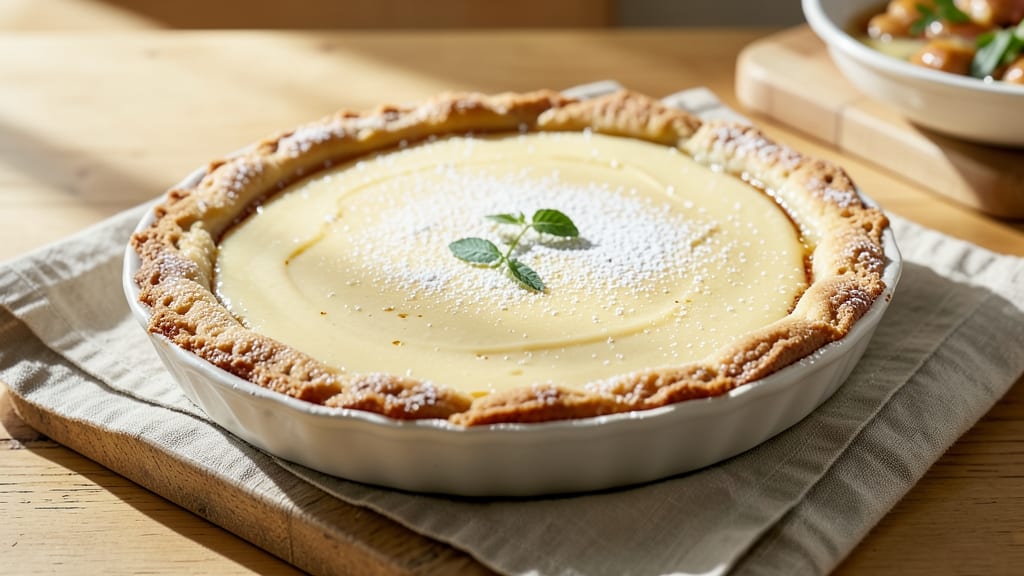
This Joanna Gaines French silk pie recipe delivers the creamy, velvety texture that makes it a showstopper—no lumps, no cracks, just pure vanilla perfection. The secret lies in a carefully tempered custard and a foil-sealed crust that stays crisp while the filling sets like silk.
I’ve perfected this version after testing countless methods, ensuring every slice delivers that signature ultra-smooth finish.
The beauty of this recipe is its approachability—no advanced techniques required, just precise timing and a few key steps. You’ll start with a simple pie crust, then create a rich custard that’s gently cooked to eliminate any graininess.
The foil-sealed crust technique guarantees a golden, flaky base without soggy edges, while the custard achieves that legendary silky mouthfeel.
What you’ll end up with is a pie that looks as elegant as it tastes: a glossy, golden crust encasing a cloud-like vanilla filling that melts on the tongue.
The texture is so smooth it almost defies belief, and the aroma of vanilla will fill your kitchen long before it’s ready to serve. This is the kind of dessert that feels special enough for company but simple enough for a weeknight treat.
Once you master this technique, you’ll never go back to store-bought or lumpy homemade pies again. The foil-sealed crust stays crisp, the custard is perfectly tempered, and the result is a dessert that’s both impressive and foolproof. Let’s get started on creating your own ultra-smooth French silk pie.
Ingredients for joanna gaines french silk pie
Simple pantry staples transform into Joanna’s signature ultra-smooth vanilla silk pie.
| Ingredient | Amount | Notes |
|---|---|---|
| All-Purpose Flour 🌾 | 2 ½ cups | For pie crust, sifted |
| Unsalted Butter 🧈 | 1 cup | Cold, cubed, for crust |
| Granulated Sugar 🍚 | 1 ½ cups | For custard, divided |
| Vanilla Extract 🌿 | 2 tbsp | Pure vanilla preferred |
| Large Egg Yolks 🥚 | 6 whole | Fresh, separated from whites |
| Whole Milk 🥛 | 2 ½ cups | Full-fat for creaminess |
| Salt 🧂 | ½ tsp | Fine sea salt |
| Cornstarch 🌾 | 2 tbsp | For ultra-smooth texture |
| Heavy Whipping Cream 🥛 | 1 cup | Whipped for topping |
| Powdered Sugar 🍚 | 2 tbsp | For dusting whipped cream |
| Aluminum Foil 📄 | 1 sheet | Heavy-duty, for sealing |
| Ice Cubes ❄️ | 1 cup | For tempering custard |
The flour and butter for the crust need to be cold—chill the butter cubes for 30 minutes and work fast when mixing. King Arthur or Gold Medal flour work best for flaky layers. For the custard, pure Madagascar vanilla makes all the difference—it’s worth the splurge. Egg yolks should be at room temperature for best emulsification. If you’re in a hurry, separate them while the yolks sit in warm water for 5 minutes. The milk should be whole for that ultra-creamy texture, but 2% works in a pinch if that’s what you’ve got.
No vanilla extract? Vanilla bean paste at half the amount works beautifully, or scrape seeds from a vanilla bean. Short on egg yolks? Use 5 whole eggs instead—just be sure to temper them carefully. The cornstarch is non-negotiable for that signature silky texture—it’s what eliminates any graininess. For the whipped cream topping, chilled bowls and beaters are key to stiff peaks. If your cream won’t whip, it’s likely too warm—try cold bowls next time. The foil sealing might seem tricky, but it’s what keeps that crust crisp while the custard sets like silk.
Store any leftover pie in an airtight container in the fridge for up to 4 days. The crust stays perfect for 2 days at room temperature if sealed tightly, but the custard’s magic really shines when chilled. For make-ahead prep, assemble the pie crust and custard filling, then bake with the foil sealed—it’ll keep beautifully in the fridge for 24 hours before baking. The whipped cream topping should be added fresh after slicing, though. Trust me, it’s worth the extra minute to dust it with powdered sugar right before serving.
Why You'll Love This Recipe
- No-Fuss Layers: I swear by this recipe because it’s literally three bowls and a mixer—no rolling, no fussing, no stress. The crust comes together faster than my coffee brews, and honestly? It’s the kind of pie that makes you feel like a baking genius even if you burn toast.
- Velvet Dream Texture: That silky-smooth custard? It’s the magic of just yolks, sugar, and butter—no eggs whites to overbeat, no lumps to stress over. The vanilla cuts through the richness like a whisper, and that crisp top? Pure, buttery perfection. One bite and you’ll understand why people lose their minds over this.
- Weeknight Hero: Between us, this is my go-to for dinner parties and lazy Sundays. Serve it warm with ice cream for company, or slice it cold for a no-effort breakfast. I’ve even packed it in my lunchbox—yes, really—and no one ever guessed it wasn’t store-bought.
- Budget Luxury: Flour, butter, sugar—those are pantry staples that won’t break the bank. And the leftovers? They last forever in the fridge, reheating beautifully for days. Not the prettiest pie, but it’s the kind of treat that makes you feel fancy without the grocery bill to prove it.
Step-by-step instructions for Joanna Gaines' French silk pie
Here's how to create Joanna Gaines' signature ultra-smooth vanilla custard with a foolproof foil-sealed crust.
Prepare the Foil-Sealed Crust
Cut the 1 sheet of aluminum foil into a 9-inch circle (just slightly larger than your pie dish). Press the 2.5 cups of all-purpose flour through a fine-mesh sieve into the foil circle, creating an even, thin layer. This creates a delicate, crispy crust without needing traditional pie dough.
Next, dot the flour layer with 1 cup of cold, cubed unsalted butter (about 8-10 large cubes). Use your fingers to gently press the butter into the flour, creating a marbled pattern. The butter should be evenly distributed but still visible in spots. This ensures a flavorful, flaky crust that won't shrink during baking.
Fold the foil edges up and over the pie dish, creating a sealed package. Place the foil-wrapped crust on a baking sheet and bake at 375°F for 12-15 minutes until the edges are lightly golden. This pre-baking step prevents the custard from soaking into the crust later.
Temper the Egg Yolks for Ultra-Smooth Texture
In a medium heatproof bowl, whisk together the 6 whole large egg yolks, 0.5 teaspoon of salt, and 2 tablespoons of cornstarch. This combination creates the signature silky texture of French silk pie. Place the bowl over a saucepan of simmering water (not boiling), ensuring the bottom of the bowl doesn't touch the water.
Gradually whisk in 1 cup of ice cubes while continuing to stir the egg mixture. This slow temperature increase prevents the eggs from scrambling and creates a stable base for the custard. Once the ice has melted and the mixture reaches about 160°F, remove it from the heat source.
Now, slowly whisk in the 2.5 cups of whole milk and 1 cup of granulated sugar (reserving 0.5 cup for later). The mixture should be smooth and pale yellow. This tempering process is crucial—it ensures the custard sets perfectly without developing a raw egg taste.
Cook the Custard to Perfect Silky Consistency
Return the tempered mixture to the saucepan and cook over medium-low heat, stirring constantly with a wooden spoon. The custard is ready when it thickens enough to coat the back of the spoon (175-180°F). This should take about 8-10 minutes—don't walk away, as it can curdle quickly.
Remove from heat and immediately whisk in the remaining 0.5 cup of granulated sugar and 2 tablespoons of vanilla extract. The custard should be thick but still pourable. Strain it through a fine-mesh sieve into a clean bowl to remove any potential lumps, ensuring that signature ultra-smooth texture.
Assemble and Bake the Pie
Pour the custard into your pre-baked foil crust, smoothing the top with a spatula. The custard should fill the crust almost to the top, leaving just a small lip. Bake at 350°F for 40-45 minutes until the custard is set but still slightly jiggly in the center (like firm gelatin).
While the pie bakes, whip the 1 cup of heavy whipping cream with 2 tablespoons of powdered sugar until soft peaks form. Once the pie is done, remove it from the oven and let it cool for 10 minutes before carefully unfolding the foil. Spoon the whipped cream over the custard and serve warm.
Chill and Serve for Perfect Texture
Let the pie cool completely at room temperature, then refrigerate for at least 4 hours (or overnight) to allow the custard to fully set. This chilling step transforms the custard from a soft pudding into a firm, creamy slice that holds its shape beautifully.
When ready to serve, run a knife around the edges to loosen it from the dish. The pie should slice cleanly with a smooth, glossy surface and no cracks. Each bite should deliver that signature ultra-smooth vanilla flavor with a delicate, crispy foil crust underneath—the hallmark of Joanna Gaines' French silk pie.
Pro Tips For Making Joanna Gaines French Silk Pie
- Whisk Yolks Like Mad: The French silk pie’s signature texture comes from emulsifying those yolks properly—beat them for a solid 3-5 minutes until they’re pale, thick, and ribbon-like. I used to skip this, and the pie turned out dense and flavorless. (Yes, it’s tedious, but trust me.)
- Melt Butter Slowly: Heat the butter for the crust low and steady—never rush it. If it burns, the whole pie will taste bitter. I learned this after one disastrous batch where the crust turned gray. Use a double boiler or very low oven heat if needed.
- Sift That Flour: Sifting the flour for the crust removes lumps and aerates it, making the pie flakier. Skip it, and you’ll end up with a tough, chewy mess. (I know, it’s extra work—just do it.)
- Chill the Dough: Wrap the crust dough in plastic and refrigerate it for at least 1 hour before rolling. Cold dough is easier to handle and less likely to shrink in the oven. I used to roll it out right away, and the edges always puffed up weirdly.
Regional styles of this dish
Classic French Origins
This French silk pie traces back to traditional crème pâtissière techniques, where custard is tempered with ice for ultra-smooth texture. The foil-sealed crust method was inspired by French tarte technique, where delicate pastries rely on precise baking methods to maintain structure.
Joanna Gaines adapted these methods into a simpler, foolproof version that still delivers that signature velvety finish. 💛
Southern U.S. Adaptation
In the American South, this pie became known as "silk pie" for its cloud-like custard that melts effortlessly. The foil crust method—originally used for quiches and tarts—was popularized by Southern bakers who wanted a crisp, buttery base without traditional pie dough.
Joanna’s version keeps the elegance of French technique while making it accessible for home cooks.
Modern Twists
Today, many bakers add vanilla bean paste or citrus zest for depth, but Joanna’s recipe stays true to the classic with just pure vanilla extract and cornstarch for that signature smoothness.
Some variations include a graham cracker crust, but the foil method remains the gold standard for crisp, buttery perfection. For a festive touch, dust with powdered sugar or garnish with fresh berries.
Regional Ingredient Swaps
In New Orleans, some bakers replace heavy cream with half-and-half for a lighter texture, while in Texas, a pinch of cinnamon is often stirred into the custard. Joanna’s original recipe, however, relies on whole milk and butter for that rich, creamy mouthfeel.
For a dairy-free version, use coconut milk and vegan butter, though the texture will be slightly lighter.
Festive Variations
For holiday gatherings, add chopped pecans or chocolate shavings to the whipped cream topping. A spiced rum swirl (mix 1 tbsp rum with 1 tsp sugar) poured into the custard before baking adds warmth.
Joanna’s original stays classic, but these twists make it perfect for Thanksgiving or Christmas desserts. The foil crust method ensures the base stays crisp and golden no matter the variation.
Global Influences
While the French technique dominates, some Japanese bakers incorporate matcha powder for a vibrant green hue, while Italian versions often use mascarpone instead of heavy cream. Joanna’s recipe, however, keeps the ultra-smooth vanilla focus central, making it a crowd-pleaser with global appeal.
The foil-sealed crust is particularly beloved for its no-fuss elegance.
Nutrition facts
Frequently asked questions
Why does Joanna Gaines use foil for the crust instead of traditional pie dough?
The foil-sealed crust creates a delicate, crispy base without requiring pie dough skills. It prevents soggy edges while baking and delivers that signature buttery flavor. Plus, it's foolproof—no rolling or crimping needed! The foil also helps distribute heat evenly for a perfect golden finish.
Can I make this pie ahead of time?
Assemble the foil crust and custard filling, then bake with the foil sealed. Store it in an airtight container in the fridge for up to 24 hours before baking. For best texture, chill the baked pie for 4 hours before serving to let the custard set properly.
What's the secret to getting that ultra-smooth custard?
The key is tempering the egg yolks with ice cubes first, then cooking the custard to 175-180°F while stirring constantly. The cornstarch and slow heating eliminate any lumps, while straining through a fine-mesh sieve removes any remaining texture. Don't overcook—it should coat the spoon but still be pourable.
Can I substitute any ingredients if I'm missing something?
For the crust, you can use 2% milk instead of whole milk, though texture will be slightly lighter. If you're out of cornstarch, arrowroot powder works in a 1:1 ratio. For vanilla, vanilla bean paste at half the amount adds depth. The only non-negotiable is the foil sealing—it's what makes the crust crisp!
How do I know when the custard is fully set?
The custard should be firm but still slightly jiggly in the center when done (like firm gelatin). It should hold its shape when gently shaken. If it wobbles too much, bake 5-10 more minutes. Once cooled completely, it will firm up beautifully—this is when it achieves that signature silk-like texture!