
Main Courses
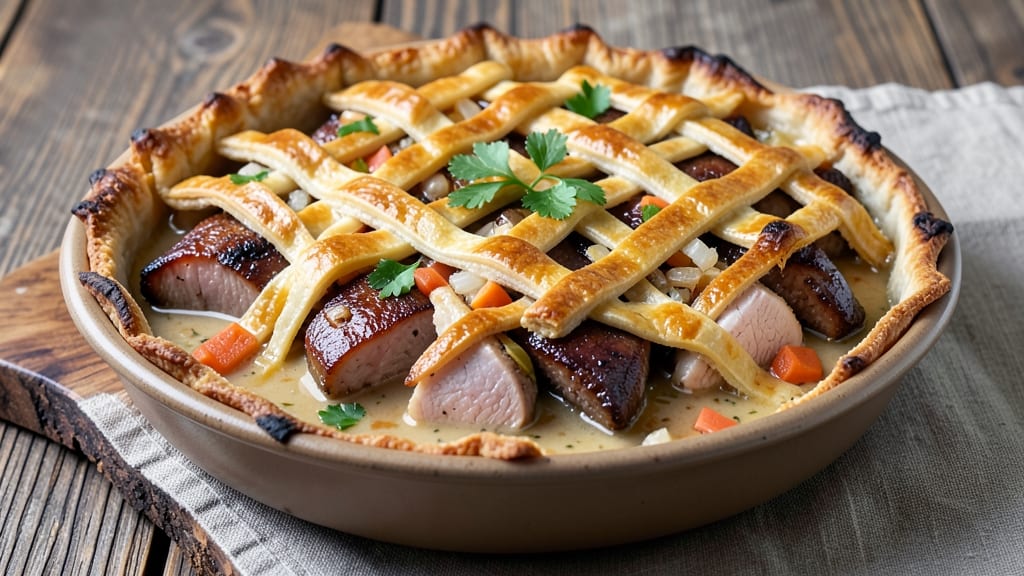
This pork and chicken meat pie recipe delivers the kind of hearty, comforting meal that feels like a hug from your grandmother—just with a professional chef's touch. 🔥 The secret lies in perfectly cooked meats layered with rich gravy, all encased in flaky pastry that's crisp at the edges and tender beneath.
I developed this recipe after years of perfecting meat pies in my Atlanta restaurant kitchen, where we served hundreds of these every week.
What sets this apart is the balance of textures and flavors: tender chunks of pork and chicken, savory gravy that clings to every bite, and pastry so light it practically melts in your mouth. The key technique?
Cooking the meats separately to control doneness, then combining them with a homemade gravy that's rich but not heavy. We're talking restaurant-quality results with a method that's simpler than you'd expect.
By the time you pull this pie from the oven, you'll have a golden, bubbling masterpiece that smells like home. The pastry will be perfectly browned, the filling will be hot and juicy, and the gravy will have thickened just enough to coat every bite.
It's the kind of dish that disappears quickly—so make sure you've got seconds ready. This pie pairs beautifully with a simple green salad or buttery mashed potatoes, making it perfect for family dinners, holiday gatherings, or when you want to impress guests without spending hours in the kitchen.
Let's get started on creating this savory masterpiece.
Ingredients for pork and chicken meat pie
Perfectly seasoned meats, rich gravy, and flaky pastry—this pie delivers restaurant-quality comfort food at home.
| Ingredient | Amount | Notes |
|---|---|---|
| Boneless Pork Shoulder 🐖 | 1 ½ lb | Cut into 1-inch chunks |
| Boneless Chicken Breast 🍗 | 1 ½ lb | Cut into 1-inch chunks |
| All-Purpose Flour 🌾 | 4 cups | For pastry and gravy |
| Unsalted Butter 🧈 | 1 cup | Cold, cubed for pastry |
| Ice Water 💧 | ½ cup | For pastry dough |
| Salt 🧂 | 1 ½ tsp | Kosher or sea salt |
| Black Pepper 🌶️ | 1 tsp | Freshly ground |
| Onion Powder 🧅 | 1 tsp | For seasoning |
| Garlic Powder 🧄 | 1 tsp | For seasoning |
| Chicken Broth 💧 | 2 cups | Low-sodium preferred |
| Heavy Cream 🥛 | ½ cup | For gravy richness |
| Yellow Onion 🧅 | 1 whole | Diced for filling |
| Carrot 🥕 | 1 whole | Diced for filling |
| Fresh Thyme 🌿 | 1 tbsp | Chopped, or dried |
| All-Purpose Flour 🌾 | 2 tbsp | For gravy thickening |
The meats make or break this pie. Pork shoulder stays juicy when cooked low and slow, while chicken breast needs careful timing to avoid dryness. I grab mine from Costco for bulk savings, but any grocery store's butcher section works. Look for well-marbled pork—fat equals flavor. For chicken, boneless, skinless breasts are easiest, but thighs add richness if you've got them. The key? Cut everything into even 1-inch chunks so it cooks uniformly. If you're short on time, pre-cook the meats ahead—they reheat beautifully.
No chicken broth? Vegetable broth with a pinch of soy sauce works in a pinch. Fresh thyme is ideal, but dried at 1/3 the amount saves you a trip to the store. The pastry dough calls for cold butter—cut it into tiny cubes and toss with flour before adding ice water. This keeps the layers flaky. For gravy, low-sodium broth is a must—you don't want to over-salt the filling. If you're feeling fancy, add a splash of dry sherry to the gravy for depth. And trust me on the heavy cream—it's what makes the gravy velvety smooth.
This pie is all about prep ahead. Assemble the filling and refrigerate overnight for deeper flavors—2 days max before baking. The dough can be made 1 day ahead and kept wrapped in plastic. Once baked, it reheats beautifully—350°F for 15 minutes with foil over the top. Store leftovers in the fridge for 3 days or freeze for 3 months. The gravy thickens as it cools, so thin with a splash of broth if needed. And if anyone asks, the secret to flaky pastry? Cold butter and minimal handling—don't overwork the dough!
Why You'll Love This Recipe
- No Fuss Filling: The pork shoulder and chicken breast combo cooks down into a rich, tender pile with almost no effort—just brown the meat, shred it, and mix in a splash of broth. Honestly, the hardest part is deciding whether to use more butter in the crust.
- Double-Meat Magic: That crispy, flaky top hides a filling so savory you’ll forget it’s basically just meat and seasoning. Between us, the pork adds depth while the chicken keeps it light—like a hug for your taste buds.
- Weeknight to Potluck: Make it for yourself or double it for a crowd. The crust holds up perfectly for meal prep, and it’s the kind of dish that disappears at gatherings. (Yes, even on a Tuesday night.)
- Budget-Friendly Feast: Pork shoulder and chicken breast stretch farther than you’d think, plus the simple butter crust costs pennies. I’ll be real: this pie feeds four for under $15 and still feels like a restaurant meal.
Step-by-step instructions for pork and chicken meat pie
Here's how to create that perfect golden crust and rich filling—layer by layer.
👨🍳 Step 1: Prepare the Meat Filling
Cut the 1.5 lb boneless pork shoulder and 1.5 lb boneless chicken breast into 1-inch chunks—this size ensures even cooking without drying out. In a large skillet, heat 2 tablespoons of the 1 cup unsalted butter over medium-high heat until melted. Add the meat in batches to avoid crowding, and sear for 5-6 minutes until browned on all sides.
Transfer the seared meat to a bowl and set aside. In the same skillet, add the diced 1 whole yellow onion and diced 1 whole carrot. Cook for 5-6 minutes until softened. Stir in 1 tbsp fresh thyme, 1 tsp onion powder, and 1 tsp garlic powder, cooking for another 1 minute until fragrant. Return the meat to the skillet, pour in 2 cups chicken broth, and simmer for 10-12 minutes until the liquid reduces by half. Season with 1.5 tsp salt and 1 tsp black pepper. This filling should be moist but not soupy—it’s the heart of your pie!
🍳 Step 2: Make the Flaky Pastry Dough
In a large bowl, combine 4 cups all-purpose flour and 1.5 tsp salt. Cut in the 1 cup cold, cubed unsalted butter using a pastry cutter or your fingers until the mixture resembles coarse crumbs with pea-sized butter pieces. Gradually add the 0.5 cup ice water, mixing gently until the dough just comes together. Avoid overworking—this keeps the pastry tender and flaky.
Shape the dough into a disk, wrap in plastic, and chill in the refrigerator for 30 minutes. This resting time is crucial—it relaxes the gluten and makes rolling easier. While it chills, preheat your oven to 375°F. Here’s the thing—don’t skip the chilling. Warm dough shrinks when baked, and you’ll end up with a sad, uneven pie crust.
🥘 Step 3: Assemble and Bake the Pie
Roll out ¾ of the chilled pastry dough on a floured surface to fit a 9-inch pie dish, leaving a ½-inch overhang. Transfer the dough to the pie dish and trim the edges, leaving the overhang. Pour the meat filling into the crust, pressing down gently to settle it. Roll out the remaining dough to fit the top, seal it to the bottom crust with a fork, and trim any excess.
Cut 4-5 slits in the top crust to allow steam to escape—this prevents a soggy bottom. Brush the top crust with a beaten egg (optional, for extra shine) and bake for 45-50 minutes until the crust is deep golden brown and the filling is bubbling. If the edges brown too quickly, cover them with foil to prevent burning. The filling should be heated through and slightly thickened.
🍽️ Step 4: Make the Rich Gravy
While the pie bakes, prepare the gravy. In a saucepan, melt the remaining 2 tablespoons butter over medium heat. Whisk in the 2 tbsp all-purpose flour and cook for 1-2 minutes until golden. Gradually whisk in 0.5 cup heavy cream and ½ cup of the reserved pan juices from the meat filling, stirring constantly to avoid lumps. Simmer for 3-4 minutes until the gravy thickens to a smooth, velvety consistency.
Season with additional salt and pepper if needed, then ladle the gravy over the pie before serving. The contrast of the flaky crust, tender meat, and velvety gravy is what makes this pie unforgettable. Serve warm with a side of steamed green beans or a crisp salad to balance the richness.
Pro Tips For Making Pork And Chicken Meat Pie
- Trim That Chicken First: Chicken breast stays dry when braised—cut off any fat or silver skin before cooking. I learned this the hard way when my pie filling turned out more like a sad, rubbery glaze than tender meat.
- Brown the Pork Hard: Don’t rush this step—get the pork shoulder deeply browned in batches before adding liquids. The crusty edges add flavor that no amount of seasoning later can match.
- Chill the Dough: Roll out your pie crust after resting it in the fridge for at least 30 minutes. Warm dough shrinks like a scared cat, and you’ll end up with a lumpy mess.
- Vent the Top Crust: Cut a few small slits in the top crust before baking—yes, even if it’s not a traditional lattice. Steam builds up fast with two meats, and you’ll end up with a soggy bottom if you don’t.
Essential equipment for this dish
Must-Have Pie Dish
You'll need a 9-inch deep-dish pie pan for this recipe—I recommend Ceramic Pro or Corelle for their even heat distribution. Avoid glass if you're baking at high temperatures, as it can crack.
If you're making a single-serving version, a 6-inch tart pan works perfectly. For extra flair, use a cast-iron skillet—it retains heat beautifully and gives a rustic crust. 🔥
Pastry Tools
For the dough, a pastry cutter (like the OXO Good Grips) or your fingers work great for cutting butter into flour. A rolling pin is essential—look for one with wood or marble for even rolling.
I also keep a bench scraper handy for trimming excess dough. If you're short on time, a stand mixer with a dough hook can handle the dough mixing for you.
Meat Prep Essentials
Sharp knives are non-negotiable—use a 8-inch chef's knife for chopping meat and veggies. A meat mallet helps tenderize tougher pork cuts if needed. For searing, a 12-inch cast-iron skillet (like Lodge) is my go-to—it distributes heat perfectly.
A fine-mesh strainer comes in handy if you want to clarify the gravy for extra smoothness.
Baking Gear
An oven thermometer is worth its weight in gold—ovens run hot or cold, and you want 375°F accuracy for that perfect crust. A pie bird (or DIY version with foil and beans) helps with blind baking if you prefer pre-cooking the crust.
For gravy, a whisk and heatproof spatula are must-haves. I also keep a small saucepan dedicated to gravy-making—it makes clean-up easier.
Budget-Friendly Swaps
No fancy tools? No problem. Use a fork instead of a pastry cutter (just press down hard). A rolling pin substitute? A soda can wrapped in plastic wrap works in a pinch.
For measuring, standard measuring cups are fine—just level them off with a knife. The most important tool? Patience—this pie rewards careful prep more than expensive gadgets. 💪
Nutrition facts
Frequently asked questions
Can I make this pie with ground meat instead of chunks?
You can absolutely use ground meat, but the texture will be different. For best results, combine 1 lb ground pork and 1 lb ground chicken to maintain moisture. Ground meat cooks faster, so reduce the simmering time to 5-7 minutes after adding broth. The gravy will absorb differently, so you may need to add 1-2 tablespoons extra broth if it becomes too thick.
How do I prevent a soggy bottom crust?
There are three key tricks: blind-bake the bottom crust for 10 minutes at 375°F before adding filling, use a thin layer of crushed cookies or pre-cooked rice as a barrier, or chill the assembled pie for 1 hour before baking. The cold filling helps set the crust faster. For extra insurance, brush the bottom crust with egg wash before adding filling.
Can I prepare this pie ahead of time?
This pie actually tastes better when made ahead! Assemble the filling and refrigerate it for up to 2 days before baking. The dough can be made 1 day ahead and kept wrapped in plastic. For best results, bake the pie 1 hour before serving to let the flavors meld. Leftovers keep well for 3 days in the fridge or 3 months frozen—just reheat at 350°F for 15 minutes with foil over the top.
What's the best way to reheat this pie?
For maximum crispiness, reheat at 350°F for 15-20 minutes, covering loosely with foil. If the crust gets too dark, tent it more. For microwave reheating, cover with a damp paper towel and heat for 1-2 minutes at 50% power—this keeps the filling hot without drying out the crust. The gravy may thicken when cooled, so thin with 1-2 tablespoons broth if needed before reheating.
Can I substitute beef for the pork?
Yes, but choose lean cuts like chuck roast or stew meat to maintain moisture. Cook the beef separately first—it needs 10-12 minutes longer than pork to tenderize. For flavor balance, reduce the chicken to 1 lb and add ½ lb extra pork to compensate. The beef will add richness, but watch the gravy—it may need 1 extra tablespoon flour to thicken properly.