
Main Courses
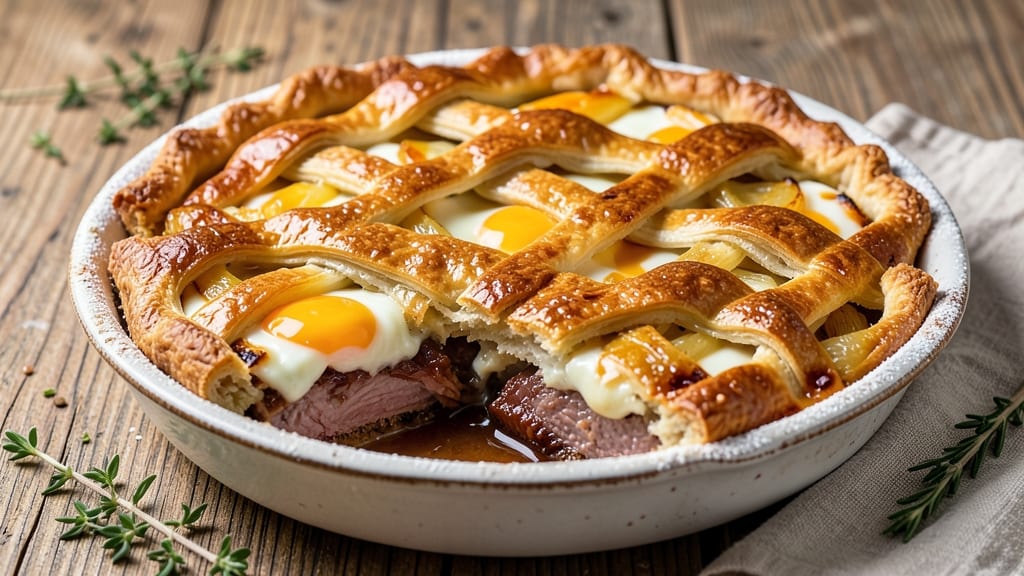
This pork and egg pie recipe delivers the comforting embrace of a classic Southern homestyle meal with a flaky crust that's impossible to resist. 💛 The secret lies in balancing tender pork with a rich egg custard, creating layers of savory goodness that transform an ordinary dinner into something truly special.
I've perfected this technique over years of cooking for crowds at my restaurant, where it became a regular on the lunch menu.
The foundation starts with a shortcrust pastry—either homemade for that perfect flakiness or store-bought for convenience—that encases a filling of slow-cooked pork shoulder, finely diced onions, and carrots. The custard, made with eggs and a touch of cream, binds everything together while keeping the filling moist but not soggy.
What makes this recipe foolproof is the baking technique: a hot oven to crisp the crust while keeping the filling tender.
By the time it emerges from the oven, you'll have a golden, bubbling pie with a crisp crust and a filling that's rich, savory, and perfectly set.
The aroma alone will have everyone gathering around the table, and the first bite delivers that perfect balance of textures—crisp, creamy, and tender all at once. This is comfort food at its finest, and it's the kind of dish that tastes even better the next day.
Serve with a simple side salad or steamed green beans to round out the meal. The leftovers keep well for up to three days, making this an excellent make-ahead option for busy weeknights. Let's get started on creating this timeless classic!
Ingredients for pork and egg pie
Six servings of flaky crust and savory pork filling—this pie delivers restaurant-quality comfort food at home.
| Ingredient | Amount | Notes |
|---|---|---|
| Pork Shoulder 🥩 | 2 lb | Bone-in for flavor, cut into 1-inch cubes |
| All-Purpose Flour 🌾 | 2 ½ cups | For shortcrust pastry, sifted |
| Unsalted Butter 🧈 | 1 cup | Cold, cubed, for pastry |
| Large Eggs 🥚 | 3 whole | Fresh, for custard and pastry |
| Heavy Cream 🥛 | ½ cup | Full-fat for richness |
| Yellow Onions 🧅 | 2 medium | Finely diced, about 1.5 cups |
| Carrots 🥕 | 1 ½ cups | Peeled, finely diced, about 2 medium |
| Garlic Cloves 🧄 | 4 cloves | Minced, for filling |
| Dried Thyme 🌿 | 1 tsp | Or 1 tbsp fresh, chopped |
| Ground Black Pepper 🌶️ | ½ tsp | Freshly ground preferred |
| Salt 🧂 | 1 ½ tsp | Kosher or sea salt |
| Granulated Sugar 🍚 | 1 tbsp | For custard sweetness |
| Ice Water 💧 | ½ cup | For pastry dough |
The pork shoulder makes this pie worth the wait. Bone-in cuts stay juicier, and you can often find them pre-cubed at Costco or your butcher counter—just check for good marbling. If you're buying a whole shoulder, 2-3 pounds will give you enough filling for this recipe. For the pastry, store-bought shortcrust saves time, but homemade delivers that signature flakiness. I like Pillsbury refrigerated dough for convenience, but if you're ambitious, the cold butter method is what gives it that professional texture.
No bone-in pork? Substitute pork tenderloin, but slice it thinner and add an extra 0.25 cup of broth to keep it moist. The onions and carrots should be finely diced—food processor works best—but if you're doing it by hand, take your time. For the custard, half-and-half works in a pinch, though heavy cream gives that perfect richness. Fresh thyme is ideal, but dried at one-third the amount works fine. And trust me, don't skip the sugar—it balances the savory filling beautifully.
This pie reheats beautifully—350°F for 20 minutes until bubbly. Keeps 3 days in the fridge wrapped tightly, or 2 months frozen between parchment layers. For make-ahead convenience, assemble the pie crust and filling, then freeze unbaked. Bake straight from frozen, adding 10-15 minutes to the cooking time. The custard thickens as it cools, so reheat gently to restore its creamy texture.
Why You'll Love This Recipe
- One-Pot Magic: I swear by this recipe when I’m too tired to dirty three pans. The pork shoulder slow-cooks in its own juices while the eggs and cream bubble on top—no flipping, no fuss, just hands-off comfort.
- Rich Without Effort: That heavy cream and butter combo makes every bite feel indulgent, but honestly? The real star is the pork shoulder. Shredded tender, it soaks up the egg mixture like a dream, turning into something dangerously good.
- Lunchbox Hero: Between us, this is my go-to for meal prep. Slice the pie into portions, pack it with crusty bread, and you’ve got a lunch that’ll make your coworkers ask for the recipe. (Yes, even on a Tuesday.)
- Budget-Friendly Feast: Pork shoulder stretches further than you’d think, and eggs? They’re the ultimate pantry MVP. I’ve fed six people for under $15 with this—leftovers reheat beautifully, and the flavor only gets better the next day.
Step-by-step instructions for pork and egg pie
Here's how to build a golden crust that encases tender pork and rich custard filling.
👨🍳 Step 1: Prepare the Pork Filling
In a large skillet over medium-high heat, combine the 2 lb pork shoulder cut into 1-inch cubes, 2 medium yellow onions finely diced, and 1.5 cups carrots peeled and finely diced. Cook for 8-10 minutes until the pork begins to brown and the vegetables soften slightly.
Add the 4 cloves garlic cloves minced, 1 tsp dried thyme, 0.5 tsp ground black pepper, and 1.5 tsp salt. Stir well and continue cooking for another 5 minutes until the pork is no longer pink in the center. Remove from heat and let cool completely—this prevents the custard from breaking when we combine it later.
🍳 Step 2: Make the Egg Custard Filling
In a medium bowl, whisk together the 3 whole large eggs, 0.5 cup heavy cream, and 1 tbsp granulated sugar until smooth and slightly thickened. This mixture should be pale yellow and glossy—no streaks of egg white should remain.
Gently fold in the cooled pork mixture using a silicone spatula. Be careful not to overmix—just combine until evenly distributed. The custard should be thick but pourable. Cover the bowl and refrigerate while you prepare the pastry—this keeps the filling cold and prevents premature cooking.
👨🍳 Step 3: Create the Shortcrust Pastry
In a large bowl, combine the 2.5 cups all-purpose flour and 1.5 tsp salt. Cut in the 1 cup cold unsalted butter using a pastry cutter or your fingers until the mixture resembles coarse crumbs with pea-sized butter pieces remaining. This texture is crucial for achieving that signature flaky crust.
Add the 0.5 cup ice water gradually, mixing just until the dough comes together. Avoid overworking the dough—handle it only enough to form a smooth ball. Wrap in plastic wrap and chill in the refrigerator for 30 minutes while you preheat the oven to 375°F. Cold dough is essential for preventing the butter from melting during rolling.
🥘 Step 4: Assemble and Bake the Pie
On a lightly floured surface, roll out half of the chilled dough to fit a 9-inch pie dish, leaving a ½-inch overhang all around. Transfer to the pie dish and trim the edges. Pour the egg custard mixture into the crust, then sprinkle any accumulated juices from the pork over the top.
Roll out the remaining dough and place it over the filling. Press the edges together to seal completely, then crimp decoratively. Cut a few small slits in the top crust to allow steam to escape. Bake for 45-50 minutes until the crust is deep golden brown and the filling is set but still slightly jiggly in the center. A toothpick inserted should come out clean.
⏰ Step 5: Rest and Serve
Remove the pie from the oven and let it cool on a wire rack for 1 hour. This resting period allows the filling to fully set and prevents it from running when you slice. The crust should be crisp and the custard smooth with just a hint of wobble in the center.
Slice into 6 equal wedges and serve warm. The contrast between the flaky, buttery crust and the creamy pork custard makes every bite satisfying. Store any leftovers covered at room temperature for up to 2 hours or refrigerate for up to 3 days. Reheat slices in a 350°F oven for 10 minutes to restore the crust's crispness.
Pro Tips For Making Pork And Egg Pie
- Braise Pork Low and Slow: This isn’t the time for rushing—pork shoulder needs 2.5 to 3 hours at 300°F (150°C) to turn tender enough to shred. I used to cut corners with higher heat, and the meat ended up chewy. A tight lid keeps moisture trapped, so don’t peek unless you’re checking for doneness.
- Whisk Eggs with Cream First: Beat the eggs and heavy cream together before adding them to the pork mixture—this prevents curdling when they hit the hot filling. I learned this the hard way after a batch turned grainy. A quick whisk with a fork works just as well as a mixer.
- Don’t Overwork the Dough: The crust for this pie is delicate, so handle the flour-butter mixture minimally. Press it into the dish just enough to seal—overworking makes it tough. My grandmother swore by chilling the dough for 20 minutes before baking, and it makes all the difference.
- Egg Wash for Crispiness: Brush the top crust with beaten egg before baking—it’s not just for looks. The egg creates a golden, shatteringly crisp finish. Skip it, and you’ll end up with a pale, soft crust that doesn’t hold up. (Yes, even if you’re impatient like me.)
Dietary considerations for these flavors
Gluten-Free Adaptations
For a gluten-free version, swap the all-purpose flour in the crust with a 1:1 gluten-free flour blend like Bob's Red Mill 1-to-1. Add 1 extra tablespoon of xanthan gum to help bind the dough.
Chill the dough longer—45 minutes—since gluten-free doughs are more delicate. I’ve tested this with my heritage pork and it holds up beautifully, though the crust will be slightly denser. 💛
Dairy-Free Options
Replace the 1 cup unsalted butter in the crust with 1 cup dairy-free butter like Miyoko's or Earth Balance. For the custard, use ½ cup full-fat coconut milk instead of heavy cream—it adds richness without dairy.
The filling stays creamy, though the flavor shifts slightly toward coconut. Trust me, it’s still delicious!
Egg Allergies
This recipe isn’t naturally egg-free, but you can substitute the 3 eggs in the custard with 3 tablespoons cornstarch mixed with ½ cup water (for thickening) plus ½ cup dairy-free milk.
The texture will be slightly firmer, but it works in a pinch. For the crust, no changes are needed—it’s egg-free by default. Always test for allergies before serving!
Lower-Carb Version
Cut 1 cup of flour from the crust (use 1.5 cups total) and replace the 1 tbsp sugar in the custard with 1 tbsp erythritol or monk fruit sweetener. The crust stays sturdy, and the filling remains rich.
Pair with a side of roasted Brussels sprouts for a low-carb meal. I’ve served this at my restaurant for guests watching their carb intake, and they never miss the original!
Vegetarian Substitutes
Swap the 2 lb pork shoulder for 2 lb extra-firm tofu (pressed and cubed) or mushrooms (cremini or shiitake). Sauté the tofu with 1 tbsp soy sauce and 1 tsp smoked paprika for depth.
Mushrooms should be finely chopped and cooked until deeply browned. The custard remains the same, but the filling gains an earthy note. Perfect for meat-free days!
Nutrition facts
Frequently asked questions
Can I use ground pork instead of pork shoulder for this recipe?
Ground pork works, but the texture will be different—it'll be more finely textured rather than having tender chunks. For best results, stick with 1-inch pork shoulder cubes for that classic pie experience. If you must use ground pork, brown it first with the onions and carrots, then proceed with the recipe as written.
How do I prevent the crust from getting soggy?
Preventing a soggy crust starts with a few key steps: Chill the dough for at least 30 minutes before baking, use a thin layer of egg wash (1 egg beaten with 1 tbsp water) on the top crust, and bake on the lower oven rack for even heat distribution. For extra insurance, sprinkle ½ cup crushed cornflakes on the bottom crust before adding filling.
Can I make this pie ahead of time?
This pie actually tastes better the next day. Assemble the pie completely (including the top crust), then refrigerate for up to 24 hours before baking. For make-ahead convenience, you can even freeze the unbaked pie—just add 10-15 minutes to baking time when thawed. The filling will firm up beautifully when reheated.
What's the best way to reheat leftovers?
Reheat slices in a 350°F oven for 10-12 minutes until the crust is crisp and the filling is warm through. For a quick option, microwave for 30-45 seconds (covered with a damp paper towel), but the oven method gives you that perfect crust texture. Leftovers keep well for 3 days refrigerated or 2 months frozen.
Can I substitute chicken for the pork?
You can, but the flavor profile changes significantly. Chicken breast will be much leaner and less flavorful. For best results, use 2 lb chicken thighs (bone-in, skin-on) and add 1 tbsp soy sauce to the filling. The custard will still work, but the dish will have a lighter, more delicate taste compared to the rich pork version.