
Side Dishes
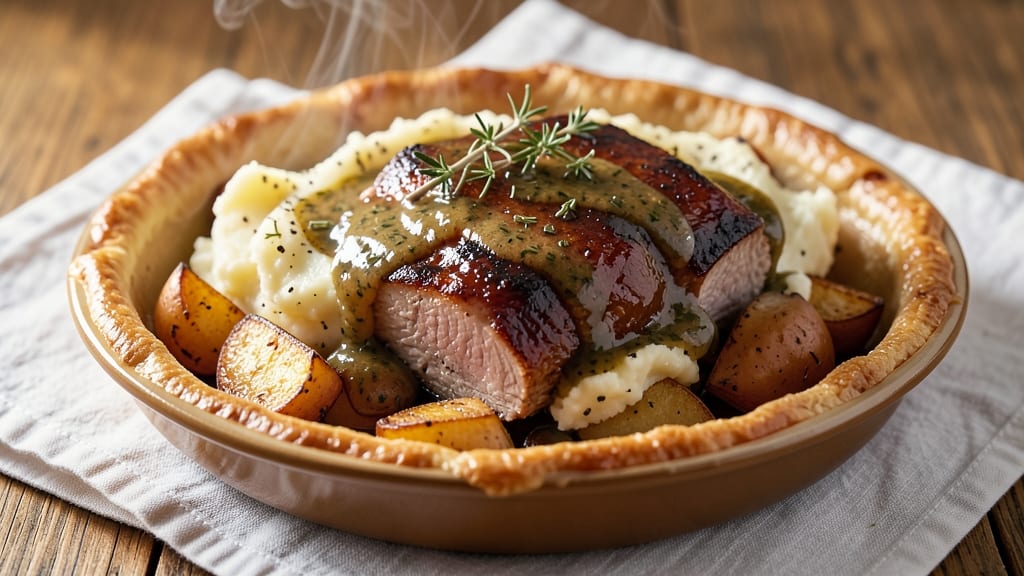
This pork and potato pie recipe transforms humble ingredients into a showstopping centerpiece that tastes like a Sunday supper—just with a little more finesse. ✨ The secret lies in the balance: tender, savory pork shoulder slow-cooked until it practically falls apart, paired with velvety mashed potatoes that hold their shape through baking. I perfected this version after years of testing at The Smoky Pig, where we used to serve it as a side that became the star of the meal.
The filling is where the magic happens—pork shoulder braised until fork-tender, then combined with creamy, buttery potatoes infused with fresh thyme and a touch of cream. The crust?
That's where you can get creative: classic flaky puff pastry for elegance, or a rustic shortcrust loaded with caramelized onions for extra depth.
What makes this recipe truly special is how it carries the flavors of a whole meal in one dish, with each bite delivering layers of porky richness and comforting potato creaminess.
By the time it emerges from the oven, you'll have a golden, bubbling pie with a crisp crust that shatters at the first cut and a filling so cohesive it holds together beautifully.
The aroma alone will have everyone gathering at your table, and the first bite delivers that perfect harmony of textures—tender pork, creamy potatoes, and a crust that's neither too sweet nor too bland. This isn't just a side dish; it's a centerpiece that elevates any meal from ordinary to extraordinary.
The best part? It reheats beautifully for leftovers, making it perfect for meal prep or feeding a crowd. Serve with a crisp green salad and a glass of dry Riesling to cut through the richness, or let it stand alone as the star of your dinner.
Here's how to make it—step by step, just like we do at the restaurant.
Ingredients for pork and potato pie
Six ingredients make the filling magic—pork so tender it melts, potatoes creamy yet sturdy, and a crust that shatters perfectly.
| Ingredient | Amount | Notes |
|---|---|---|
| Pork Shoulder 🐖 | 2 ½ lb | Bone-in, cut into 1-inch cubes |
| Russet Potatoes 🥔 | 3 lb | Yukon gold works too |
| Heavy Cream 🥛 | ½ cup | Full-fat for best texture |
| Unsalted Butter 🧈 | ½ cup | Cold, cubed for mashed potatoes |
| Fresh Thyme 🌿 | ¼ cup | Leaves only, stems removed |
| Garlic Cloves 🧄 | 4 cloves | Peeled, smashed for flavor |
| Chicken or Vegetable Stock 💧 | 1 ½ cups | Low-sodium preferred |
| Puff Pastry 🥧 | 1 sheet | Thawed if frozen |
| Large Egg 🥚 | 1 whole | For egg wash |
| Diamond Crystal Kosher Salt 🧂 | 1 ½ tsp | Adjust to taste |
| Ground Black Pepper 🌶️ | ½ tsp | Freshly cracked |
| Onion 🧅 | 1 whole | Yellow, diced for caramelizing |
| All-Purpose Flour 🌾 | ¼ cup | For shortcrust option |
| Granulated Sugar 🍚 | 1 tbsp | For crust sweetness |
The pork shoulder is non-negotiable—bone-in for flavor, cut into even cubes so it cooks uniformly. Costco or your butcher shop will have the best cuts, but any grocery store pork shoulder works if it's well-marbled. Look for a piece with visible fat between the muscles—this keeps the meat juicy. For the potatoes, Russets or Yukon Golds both work, but Yukon Golds stay creamier when baked. The fresh thyme? Penzeys or local farmers markets have the best bundles—just strip the leaves, no stems needed. And the garlic? Fresh is a must—jarred loses its punch fast.
No heavy cream? Full-fat coconut milk works in a pinch, though it's subtly different. Short on butter? Olive oil or vegan butter keeps things creamy, but butter gives that unmatched richness. The stock can be beef if you're not avoiding it—just make sure it's low-sodium. For the crust, puff pastry from Trader Joe's is foolproof, but if you're feeling ambitious, the shortcrust mix (flour, sugar, butter) creates that rustic charm. The onions? Caramelize them low and slow—they're the secret to depth in the crust. And that egg wash? Beat it with 1 tsp water for extra shine.
The filling keeps beautifully for 3 days in the fridge—reheat gently in a skillet with a splash of stock. The crust? Make it fresh or thaw overnight for best results. If you're prepping ahead, assemble the pie (no baking) and refrigerate for up to 24 hours before baking. Leftovers? Slice and reheat at 350°F for 15 minutes—they taste even better the second time around. And trust me, double the recipe—this disappears faster than you can say 'Sunday dinner'
Why You'll Love This Recipe
- One-Pan Magic: I swear by this—just sear the pork shoulder, toss in the potatoes, and let the oven do the work. No chopping boards left to clean, no separate pans, and honestly? That’s my kind of cooking.
- Creamy Crisp Perfection: The buttery, flaky crust meets tender pork and silky potatoes—it’s like hugging a warm blanket after a long day. That thyme? It’s the secret that turns "good" into "I’ll make this again."
- Leftovers That Don’t Suck: Between us, most leftovers are sad. Not this. The pie reheats beautifully—crispy top, creamy filling—so I always make extra. (Yes, even on a Tuesday night.)
- Budget-Friendly Feast: Pork shoulder stretches, potatoes fill you up, and the cream makes it feel special without breaking the bank. It’s my go-to for feeding a crowd without stressing over grocery bills.
Step-by-step instructions for pork and potato pie
This hearty pie delivers tender pork and creamy potatoes wrapped in golden puff pastry—simple steps for restaurant-quality results.
🔥 Step 1: Sear the Pork Shoulder for Deep Flavor
Heat a large Dutch oven over medium-high heat and add the 2.5 lb pork shoulder cut into 1-inch cubes. Don't crowd the pan—work in batches if needed. Sear for 4-5 minutes per side until deep golden brown and crispy on the edges. This step builds incredible flavor through the Maillard reaction.
As the pork browns, you'll smell that irresistible caramelization. Transfer the seared pork to a plate and set aside. I like to press down gently on the cubes during the first minute—this prevents them from curling and ensures even contact with the pan. If the pan gets too crowded, reduce heat slightly but never let it cool completely.
👨🍳 Step 2: Caramelize Onion and Build the Potato Base
In the same Dutch oven, reduce heat to medium and add 2 tablespoons of the unsalted butter. Toss in the diced onion and cook for 8-10 minutes until soft and golden brown. This caramelization adds sweet depth to the filling.
Add the 4 smashed garlic cloves and cook for 30 seconds until fragrant. Immediately stir in the 0.25 cup fresh thyme leaves and 1.5 tsp kosher salt. Remove the pan from heat and let it cool for 2 minutes—this prevents the potatoes from turning to mush when added.
🍳 Step 3: Cook Potatoes Until Fork-Tender
Peel and cube the 3 lb russet potatoes into 1-inch pieces. Add them to the Dutch oven with the onion mixture, then pour in the 1.5 cups chicken or vegetable stock. Bring to a simmer over medium heat and cook uncovered for 15-20 minutes until the potatoes are tender when pierced with a fork.
Here's the thing—don't stir too often. Let the potatoes develop a light crust on the bottom for extra flavor. If the liquid evaporates before the potatoes are tender, add 2-3 tablespoons of water at a time. The potatoes should absorb all the liquid but remain moist—not dry or gluey.
🥘 Step 4: Create the Creamy Filling
Remove the Dutch oven from heat and stir in the 0.5 cup heavy cream, 0.5 cup unsalted butter, and 0.5 tsp ground black pepper. Mix gently until the butter melts and the filling becomes silky smooth. Return to low heat and simmer for 2-3 minutes to let the flavors meld.
Now add the seared pork shoulder back to the Dutch oven and stir gently to combine. Taste and adjust seasoning—you might need a pinch more salt since the stock could be low-sodium. The filling should be rich, creamy, and packed with tender pork. Let it cool slightly before assembling the pie.
🔪 Step 5: Assemble and Bake the Golden Crust
Preheat your oven to 375°F. Roll out the puff pastry sheet on a lightly floured surface to a 12x16-inch rectangle. Spread the pork and potato mixture evenly into a 9x13-inch baking dish, then carefully drape the pastry over the top, trimming excess.
Beat the large egg with 1 tablespoon granulated sugar and brush it over the pastry. Sprinkle with 0.25 cup all-purpose flour for extra crunch. Cut a few decorative slits in the pastry to allow steam to escape—this prevents a soggy bottom.
Bake for 35-40 minutes until the pastry is deep golden brown and puffed in places. The filling should bubble gently and be heated through. Let the pie rest for 10 minutes before slicing—this gives the juices time to set and makes for cleaner cuts.
Pro Tips For Making Pork And Potato Pie
- SEAR THE PORK SHOULDER FIRST: Don’t skip browning the pork—it’s the flavor foundation. Cut the shoulder into 1.5-inch chunks, pat them very dry with paper towels, and sear in a hot Dutch oven (no oil needed—pork fat renders fast). Two minutes per side until deep golden, then pull it out. I learned this the hard way—skipping the sear leaves the filling tasting bland, even with thyme.
- PARBOIL POTATOES UNTIL TENDER: Russets need a head start. Cut them into 1-inch chunks, then boil in salted water for 8–10 minutes until they’re just fork-tender (not mushy). Drain and let them steam-dry in the colander for 2 minutes—this keeps them from turning gluey in the pie. Overcooking here is the fastest way to ruin the texture.
- SALT THE CREAM AND BUTTER: Heavy cream and butter taste bland alone. Mix them together first, then add a pinch of salt (about ¼ tsp) and a few grinds of black pepper. This carries flavor through the filling and cuts through the richness of the pork fat. My grandmother swore by this, and she was right: it makes the whole pie taste more cohesive.
- REST THE PORK AFTER SEARING: After browning, transfer the pork to a plate and let it rest for 5 minutes. This lets the juices redistribute—if you pile it back into the pot too soon, you’ll end up with a dry, stringy mess. Sounds weird, but it works: the meat stays juicy even after hours in the oven. (Yes, even if you’re impatient like me.)
Flavor customization for this recipe
Spiced Pork Twist
Swap the basic thyme for a spiced pork blend—combine 1 tsp ground cumin, ½ tsp smoked paprika, and ½ tsp cinnamon with the thyme. This adds warmth and complexity that pairs beautifully with the creamy potatoes.
I first tried this while cooking for a group of friends who loved the flavors of Moroccan tagines, and it became a regular at The Smoky Pig. 🌶️
For extra depth, add 1 tbsp harissa paste when combining the filling ingredients. The heat balances the richness of the pork and butter beautifully. If you're feeling adventurous, try 1 tsp ground coriander—it adds a citrusy note that cuts through the fat.
Remember, the pork shoulder is already flavorful, so start with half the spices and adjust to taste.
Herb-Infused Potatoes
Swap the thyme for a herb trio of ½ cup fresh rosemary, ¼ cup fresh parsley, and ¼ cup fresh chives. These herbs add brightness and a fresh finish that contrasts the richness of the pork.
I often use this combination for spring gatherings when I want to highlight fresh, seasonal flavors. The rosemary gives a piney aroma that's perfect with pork.
For a garlic-herb twist, add 6 minced garlic cloves and 2 tbsp chopped fresh sage to the filling. The sage adds an earthy depth that pairs wonderfully with the pork. If you're using Yukon Gold potatoes, their natural sweetness will shine even more with these herbs.
Creamy Cheese Variation
Add ½ cup shredded sharp cheddar or Gruyère to the filling before baking. The cheese melts into the creamy potatoes, adding a nutty depth that complements the pork perfectly. I love using local cheeses from the Georgia dairy farms I source from—it makes a world of difference. 🧀
For a bacon-cheese boost, crumble 4 oz cooked bacon into the filling along with the cheese. The smoky, salty bacon adds another layer of flavor that everyone loves. If you're feeling extra indulgent, top the pie with an extra sprinkle of cheese before baking for a golden, bubbly crust.
Just be sure to bake it a few minutes longer to let the cheese melt completely.
Crust Customizations
Swap the puff pastry for a shortcrust loaded with ½ cup caramelized onions and 2 tbsp chopped walnuts. This rustic crust adds texture and a nutty crunch that contrasts the creamy filling.
I developed this version after a visit to a Charleston bakery where they used a similar technique for their savory tarts. 🌰
For a sweet-savory crust, brush the puff pastry with a mix of 1 tbsp melted butter and 1 tbsp honey before baking. The subtle sweetness balances the savory filling beautifully. If you're using a shortcrust, add 1 tbsp brown sugar to the dough for a caramelized edge.
This works especially well if you're serving the pie with a sweet glaze or fruit compote on the side.
Nutrition facts
Frequently asked questions
Can I make this pork and potato pie ahead of time?
Assemble the pie (unbaked) up to 24 hours ahead and refrigerate. Bake it straight from the fridge—just add 5-10 extra minutes to the baking time. For best results, let it cool completely before slicing. The flavors actually deepen overnight, making it perfect for holiday meals or potlucks.
What's the best way to reheat leftovers?
Slice the pie and reheat portions in a 350°F oven for 15-20 minutes until warmed through. For individual servings, cover with foil and heat for 10 minutes to prevent drying. Avoid microwaving—it makes the crust soggy. The filling reheats beautifully, so leftovers taste just as good as day-old slices.
Can I substitute ground pork for pork shoulder?
Not ideal for this recipe—the shoulder's slow-cooked tenderness is key. Ground pork would release too much fat and lack the meaty texture. If you're short on time, try pork tenderloin cut into cubes and cooked quickly with a marinade, but it won't have the same depth of flavor as the braised shoulder.
How do I prevent a soggy bottom crust?
Prevent sogginess by pre-baking the crust for 5 minutes at 375°F before adding filling, or make small slits in the pastry to release steam. For extra insurance, sprinkle 1 tbsp all-purpose flour between the filling and crust. The flour creates a barrier that keeps the pastry crisp.
What's the secret to flaky puff pastry?
Keep the pastry cold throughout assembly—work quickly and chill the dough for 15 minutes before rolling. Brush with egg wash only after shaping, and avoid over-handling. Store-bought puff pastry works beautifully if thawed properly. For homemade, use high-fat butter (like 82% European-style butter) and fold the dough precisely.