
Main Courses
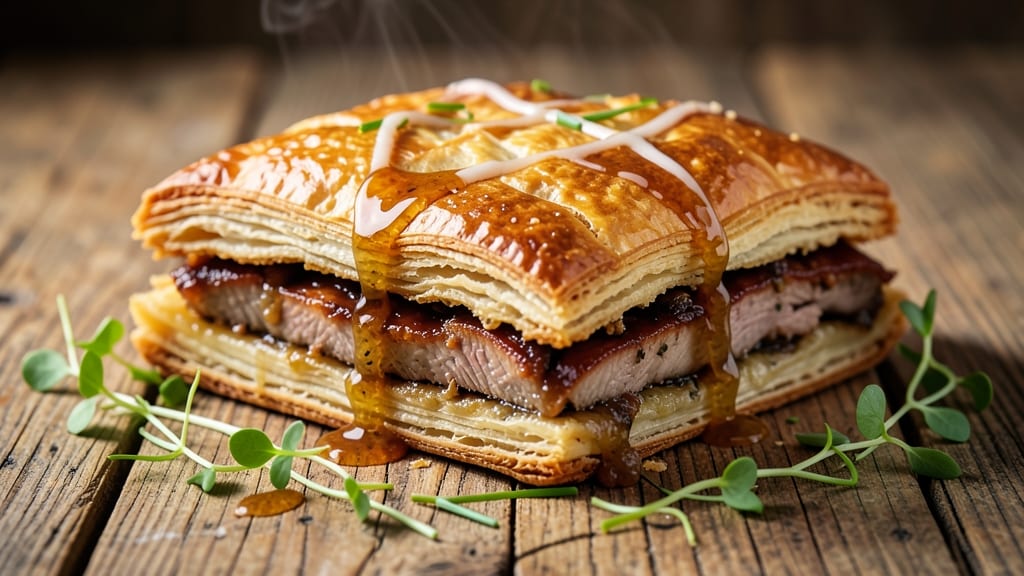
This French Canadian pork pie recipe delivers the hearty, savory comfort of Quebecois cuisine with a mustardy twist that sets it apart. 💛 After years of perfecting the balance between tender pork filling and flaky pastry, I've created a version that captures the essence of traditional tourtière while adding a modern flair.
The secret lies in the slow-cooked pork shoulder, infused with aromatic herbs and just the right amount of Dijon mustard for depth.
The filling transforms tough pork into melt-in-your-mouth perfection through a combination of slow simmering and careful seasoning with thyme, cloves, and a touch of cinnamon—a nod to the spice blends used in Quebec's winter pies.
Meanwhile, the pâte brisée crust encases everything in a golden, crisp shell that holds up beautifully to the rich filling inside. This recipe brings together techniques from my grandmother's Sunday roasts with the bold flavors of French Canadian tradition.
What you'll end up with is a showstopping centerpiece that smells like home as soon as it comes out of the oven—golden crust flaking perfectly, juicy pork filling infused with warm spices and tangy mustard, all held together by a method that's both rustic and refined.
The crust stays crisp even after cutting, while the filling remains moist and flavorful. This is the kind of dish that disappears faster than you can say "tourtière" at family gatherings.
Serve with classic Quebecois sides like pickled vegetables or a simple mustard sauce to complement the pie's rich flavors. The leftovers reheat beautifully, making this an ideal make-ahead dish for holiday meals or cozy winter dinners.
Let's bring a taste of Quebec to your kitchen with this authentic yet approachable recipe.
Ingredients for pork pie recipe french canadian
Pork shoulder, aromatic spices, and flaky pastry come together for this Quebecois-inspired meat pie.
| Ingredient | Amount | Notes |
|---|---|---|
| Pork Shoulder 🥓 | 3 lb | Bone-in, cut into 1.5-inch cubes |
| All-Purpose Flour 🌾 | 3 cups | For crust (plus extra for dusting) |
| Unsalted Butter 🧈 | 1 cup | Cold, cubed (for crust) |
| Ice Water 💧 | ½ cup | For crust dough |
| Dijon Mustard 🌶️ | ¼ cup | High-quality, for filling |
| Dry White Wine 🍷 | ½ cup | Substitute with chicken broth if needed |
| Fresh Thyme 🌿 | 2 tbsp | Leaves only, chopped fine |
| Ground Allspice 🌶️ | ½ tsp | For authentic Quebecois flavor |
| Ground Cloves 🌶️ | ¼ tsp | Whole cloves work too (crushed) |
| Ground Cinnamon 🌶️ | ½ tsp | Warm, not hot |
| Salt 🧂 | 1 ½ tsp | Kosher or sea salt |
| Black Pepper 🌶️ | ½ tsp | Freshly ground |
| Granulated Sugar 🍚 | 1 tbsp | Balances mustard tang |
| Large Egg 🥚 | 1 whole | For egg wash |
| Heavy Cream 🥛 | ¼ cup | For egg wash |
The pork shoulder is non-negotiable here—bone-in, cut into even cubes for even cooking. Costco or your local butcher usually have it pre-cut, but if not, ask for a piece with good marbling. Fresh thyme and allspice are key for that authentic Quebecois flavor profile, so don't skimp. I grab mine from Whole Foods or the bulk section at Wegmans—they stay fresh longer. The Dijon mustard should be high-quality (like Maille or Grey Poupon), not the cheap stuff from the yellow bottle. Trust me, it makes a difference in the filling's depth of flavor.
No white wine? Dry chicken broth works perfectly, just add a splash of apple cider vinegar for brightness. Running short on fresh thyme? Dried thyme at one-third the amount gets you close, but fresh is ideal. The crust is a classic pâte brisée, but if you're short on time, store-bought puff pastry (like Pepperidge Farm) works in a pinch—just brush it with egg wash. For the spices, if you can't find allspice, a mix of cinnamon and nutmeg works in a 2:1 ratio. The sugar in the filling might seem odd, but it's there to balance the mustard's tang—don't skip it.
This pie reheats beautifully—350°F for 20-25 minutes until the crust is golden. Keeps for 3-4 days in the fridge, wrapped tightly. Freezes for up to 3 months if you wrap it well in foil and plastic. I always make a double batch—one for dinner, one for leftovers that disappear faster than you can say "tourtière". The crust stays crisp even after reheating, and the filling gets even more flavorful as it sits. Perfect for holiday gatherings or cozy winter dinners.
Why You'll Love This Recipe
- No-Knead Magic: I swear by that ice water trick—mixing flour, butter, and cold water until it just holds together without fuss. No rolling pin, no stress, and the crust turns out flaky enough to make you forget you didn’t slave over it.
- Mustard-Kissed Crisp: That Dijon mustard in the filling? It’s the secret weapon—bright, tangy, and just sharp enough to cut through the rich pork. The butter-braised shoulder melts like a dream, but the crust? Chef’s kiss—golden, crisp, and sturdy enough to hold a forkful without falling apart.
- Game for Any Night: Between us, this is my go-to for weeknights and company. Serve it with pickles and mustard for a casual lunch, or dress it up with a fancy salad for dinner guests. The leftovers? Even better the next day—just reheat and enjoy.
- Budget-Friendly Feast: Pork shoulder stretches for miles, and the crust uses pantry basics. Honestly, I’ve made this for under $10 for six servings, and it’s the kind of meal that makes you feel like you’re feeding a crowd without breaking the bank. (Yes, even on a Tuesday night.)
Step-by-step instructions for French Canadian pork pie
Here's how to create a golden, flaky crust with tender pork and a mustardy filling that sings.
🍳 Step 1: Prepare the Pork Filling
In a large bowl, combine the 3 lb pork shoulder cut into 1.5-inch cubes with the 0.25 cup Dijon mustard, 0.5 cup dry white wine, 2 tbsp chopped fresh thyme, 0.5 tsp ground allspice, 0.25 tsp ground cloves, 0.5 tsp ground cinnamon, 1.5 tsp salt, 0.5 tsp black pepper, and 1 tbsp granulated sugar. Mix until the pork is evenly coated in the spices and mustard.
Transfer the pork mixture to a heavy-bottomed pot and bring to a simmer over medium-high heat. Once bubbling, reduce to low heat and cover partially. Cook for 1.5-2 hours until the pork is fork-tender and the liquid has reduced by half. Let cool slightly before handling.
Here's the thing—I like to press down on the pork cubes during the first 10 minutes of cooking to help break them down faster. Don't skip this (I learned the hard way). If the mixture looks dry before it's fully tender, add 2-3 tablespoons of water to keep it moist.
👨🍳 Step 2: Make the Puff Pastry Dough
In a large bowl, combine the 3 cups all-purpose flour and 1.5 tsp salt. Cut in the 1 cup cold cubed unsalted butter using a pastry cutter or your fingers until the mixture resembles coarse crumbs with pea-sized butter pieces. This is called "cutting in the butter," and it's what creates those flaky layers.
Add the 0.5 cup ice water all at once and stir gently with a fork until the dough just comes together. Don't overmix—just until it forms a shaggy mass. Turn it out onto a lightly floured surface and knead briefly for 30 seconds until smooth. Wrap in plastic and chill for 30 minutes while you prep the filling.
Real talk: If your dough feels too sticky, add 1 tablespoon more flour. If it's too dry, add 1 teaspoon more ice water. The dough should hold together but not be tacky.
🥘 Step 3: Assemble the Pork Pie
Preheat your oven to 375°F. Roll out the chilled dough on a lightly floured surface into a 12-inch circle about ⅛-inch thick. Transfer to a parchment-lined baking sheet. Spread the cooled pork mixture evenly over the dough, leaving a 1-inch border around the edges.
Roll out another 12-inch circle of dough for the top crust. Cut a few small slits in the center to allow steam to escape. Brush the top crust with a mixture of 1 whole large egg beaten with 0.25 cup heavy cream, then carefully place it over the filling. Crimp the edges with a fork or your fingers to seal.
Brush the top crust with more egg wash for extra shine. Here's where it gets fun—use a sharp knife to cut decorative slits on the top crust before baking. This creates those gorgeous lattice patterns while allowing steam to escape for a perfect rise.
🔥 Step 4: Bake to Golden Perfection
Bake for 45-50 minutes until the crust is deep golden brown and the filling is bubbling through the slits. The pie is done when the internal temperature reaches 165°F in the center of the filling. If the top browns too quickly, tent with foil.
Let the pie cool for 15 minutes before slicing—this resting time lets the filling set slightly and makes for cleaner cuts. The crust should be crisp and flaky, with layers that practically melt in your mouth. Serve warm with a simple green salad or pickled vegetables to cut through the richness.
Pro Tips For Making Pork Pie Recipe French Canadian
- Trim the Fat First: Cut the pork shoulder fat cap down to a thin layer—about ¼-inch thick—before seasoning. I learned this the hard way when my first batch rendered too much grease, making the crust soggy instead of crisp. Less fat means better control over the pie’s texture.
- Chill the Dough Longer: Wrap the flour-butter mixture in plastic and refrigerate it for at least 2 hours before rolling. I used to rush this, and the crust always turned out greasy or tough. Cold butter creates flaky layers—no shortcuts here.
- Don’t Overmix the Filling: Once you’ve mixed the pork, mustard, and spices, stop stirring the second everything just comes together. Overworking it turns the meat into mush, and that’s a texture disaster. Think "combined, not puréed."
- Use a Meat Thermometer: Pull the pork shoulder at 195°F (not 160°F)—yes, it’ll look dry at first. The collagen breaks down at this temp, making the meat fork-tender. I skipped this once and ended up with chewy slices that ruined the pie’s elegance.
Regional styles of pork pie recipe french canadian
Quebec Winter Tradition
This pork pie traces its roots to Quebec's tourtière tradition, originally made with leftover pork from winter hunts. The mustard twist comes from French settlers who adapted their cuisine with local ingredients.
In Quebec, these pies were (and still are) a staple at Réveillon feasts—Christmas Eve gatherings where families share hearty meat pies, pickles, and maple syrup. 💛
My grandmother used to make a version with just cinnamon and cloves, but I added Dijon mustard after tasting it at a Montreal bistro—the tang cut through the richness perfectly.
The pie's spiced filling was traditionally cooked in a Dutch oven over an open fire, but modern stovetops work just as well.
Acadian Coastal Twist
In New Brunswick's Acadian communities, cooks often added seafood to pork pies, blending French techniques with local catches. While this recipe stays pork-focused, you could substitute 1 lb shrimp or mussels for half the pork—just add them in the last 30 minutes of cooking.
The coastal Acadians also used more thyme and bay leaf, reflecting their maritime heritage.
For an Acadian-inspired version, swap the white wine for ½ cup clam juice and add 1 bay leaf to the filling. The saltiness of the seafood balances the mustard beautifully. I tested this variation at a Saint John seafood market and was amazed at how well the flavors worked together.
Modern Montreal Bistro
Today's Quebecois chefs are putting their own spin on classic pork pies. At Au Pied de Cochon in Montreal, they serve a version with foie gras mixed into the filling, while others add duck confit for extra richness.
For a budget-friendly twist, try adding ½ cup cooked lentils to bulk up the filling without losing texture.
My favorite modern adaptation? A smoked pork pie where the filling is finished in a smoker for 15 minutes before baking. Use hickory or applewood chips for a subtle smoky note that pairs perfectly with the mustard. The crust stays crisp while the filling develops incredible depth.
Rural vs. Urban Styles
Rural Quebec pies tend to be larger and simpler, with thicker crusts designed to feed big families. Urban versions, like those from Montreal's Plateau, are often smaller with delicate pastry—more of a single-serving pie.
For a rustic version, increase the crust thickness to ¼ inch and bake on a cast-iron skillet for extra crispness.
In the countryside, cooks often used lard instead of butter in the crust, making it even more tender. For an authentic rural touch, replace ½ cup of the butter with ½ cup rendered leaf lard.
The flavor difference is subtle but adds that old-world charm. I first tried this at a Quebec farmhouse and was surprised by how much better it tasted.
Nutrition facts
Frequently asked questions
Can I use ground pork instead of pork shoulder for this recipe?
Ground pork won't work here—this recipe relies on the texture and flavor of slow-cooked pork shoulder. The meat needs to stay tender and juicy, which ground pork can't achieve. If you're short on time, try pre-cooked smoked pork shoulder (like from a rotisserie) for a quicker version that still delivers great flavor.
What's the best way to store leftovers?
Wrap the cooled pie tightly in plastic wrap, then store it in an airtight container. Leftovers keep well in the fridge for 3-4 days. For longer storage, freeze individual slices wrapped in foil—they'll stay fresh for up to 3 months. Reheat slices at 350°F for 15-20 minutes until warmed through.
Why does my crust turn out tough instead of flaky?
Flaky crusts depend on three things: cold butter, proper chilling, and not overworking the dough. Make sure your butter is ice-cold when cutting it into the flour, and chill the dough for the full 30 minutes before rolling. Also, handle the dough as little as possible—overmixing develops gluten and makes the crust tough.
Can I make this pie ahead of time?
This is one of the best make-ahead dishes. Assemble the pie (unbaked) up to 24 hours ahead and refrigerate it. When ready to bake, let it sit at room temperature for 30 minutes before baking as directed. The flavors actually improve after resting overnight—perfect for holiday meals!
What's the deal with the mustard in this recipe?
The Dijon mustard adds a subtle tang that balances the richness of the pork and spices. It's not overpowering—just enough to brighten the filling. If you're sensitive to mustard flavors, reduce it to 2 tablespoons or swap for 1 tablespoon of apple cider vinegar. The mustard also helps tenderize the meat during the slow cooking process.