
Desserts
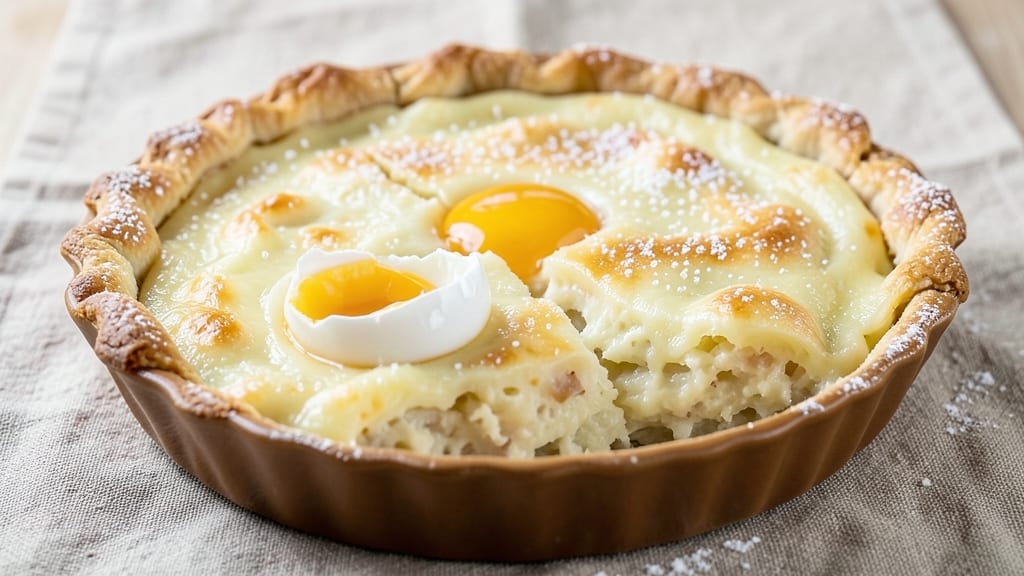
This potato custard pie recipe delivers the perfect balance of creamy, spiced filling and a golden, flaky crust that's become my go-to for holiday gatherings. 💛 The secret lies in tempering the eggs properly and using a pre-baked crust to prevent a soggy bottom—a common pitfall that ruins many homemade pies.
What makes this recipe stand out is the velvety texture of the custard, achieved through slow cooking and precise ingredient ratios. Roasted potatoes add natural sweetness and depth, while warm spices like cinnamon and nutmeg create that comforting aroma that fills every room.
The filling stays perfectly set yet creamy when sliced.
By the time you pull this pie from the oven, you'll have a dessert that looks impressive enough for Thanksgiving but comes together with straightforward techniques. The crust maintains its crispness while the custard holds its shape beautifully, making it ideal for slicing and serving without falling apart.
Serve warm with a dollop of whipped cream or a scoop of vanilla ice cream to enhance the creamy filling. This recipe scales perfectly for feeding a crowd or making ahead for special occasions. Let's get started on creating your perfect potato custard pie.
Ingredients for potato custard pie
Roasted potatoes, velvety custard, and a golden crust—this pie delivers restaurant-quality dessert without the fuss.
| Ingredient | Amount | Notes |
|---|---|---|
| Russet Potatoes 🥔 | 3 lbs | Peeled, cubed evenly (1.5-inch pieces) |
| Unsalted Butter 🧈 | ¾ cup | Cold, cut into small cubes |
| Large Eggs 🥚 | 6 whole | Room temperature, separated |
| Heavy Cream 🥛 | 2 cups | Full-fat, cold |
| Granulated Sugar 🍚 | 1 ½ cups | Light brown preferred |
| All-Purpose Flour 🌾 | ½ cup | Sifted, for thickening |
| Ground Cinnamon 🌿 | 1 ½ tsp | Freshly ground preferred |
| Ground Nutmeg 🌿 | ½ tsp | Freshly grated nutmeg |
| Salt 🧂 | ½ tsp | Diamond Crystal kosher |
| Vanilla Extract 🍯 | 1 tbsp | Pure, high-quality |
| Unbaked Pie Crust 🥧 | 1 whole | 9-inch, pre-baked 15 mins |
| Whole Milk 🥛 | 1 cup | Warm, for tempering |
| Ground Ginger 🌿 | ¼ tsp | Optional, for warmth |
The potatoes are the foundation here. Russets are ideal—they roast perfectly and add natural sweetness. Costco or Trader Joe's usually have them pre-washed, but if you're peeling them yourself, do it after roasting to preserve texture. For the crust, pre-baking is non-negotiable—it prevents that dreaded soggy bottom. I always use Pillsbury pie crust for convenience, but homemade works too if you've got the time. The key is blind-baking it 15 minutes before filling.
No brown sugar? White sugar plus 1 tsp molasses works in a pinch. Fresh nutmeg makes all the difference—Penzeys bulk bins carry it, but a tiny jar at the grocery store suffices. For the custard, room-temperature eggs blend smoother. If your cream isn't cold, chill it 10 minutes before whipping. The vanilla extract should be pure—McCormick or Nielsen-Massey are reliable brands. Want extra depth? Add a pinch of cardamom to the spice mix.
The filling reheats beautifully—just cover with foil and warm at 350°F for 15 minutes. Store leftovers in the fridge for 4-5 days, but honestly, it's best the first day. For make-ahead prep, assemble the pie uncooked, refrigerate overnight, then bake straight from the fridge (add 10 minutes to baking time). Freeze unbaked pies for up to 3 months—thaw overnight in the fridge before baking. The crust stays crisp, and the custard remains perfectly set.
Why You'll Love This Recipe
- No Fuss, No Fail: I swear by this recipe because it’s the kind of dish that forgives mistakes—overcook the potatoes? The custard smooths it out. Burn the crust a little? No one will notice when they’re digging into that creamy, buttery filling.
- Creamy Yet Crisp: That perfect contrast—flaky crust giving way to silky potato custard—is what makes this pie ridiculously satisfying. The heavy cream and eggs turn humble Russets into something rich and velvety, while a touch of sugar balances the earthiness.
- Weeknight or Holiday: Between us, this is my secret weapon for potlucks and lazy Sundays. Make a double batch—one for dinner, one to reheat later. It’s fancy enough for guests but simple enough to throw together when you’re too tired to care.
- Budget-Friendly Luxury: Russets and eggs are cheap, but the result tastes like you spent hours in the kitchen. Leftovers? Even better reheated the next day—just a quick zap in the microwave turns it into a breakfast pie. (Yes, even on a Tuesday night.)
Step-by-step instructions for potato custard pie
Here's how to create a luscious potato custard filling with a perfect golden crust.
🍳 Step 1: Cook the Potato Base to Silky Perfection
Place the 3 lbs peeled, cubed Russet Potatoes in a large pot and cover with cold water by about 1 inch. Add 0.5 tsp Salt and bring to a boil over medium-high heat. Once boiling, reduce to medium heat and simmer for 15-20 minutes until the potatoes are fork-tender with no resistance.
Drain the potatoes thoroughly and return them to the pot. Add 0.75 cup cold, cubed Unsalted Butter and mash until completely smooth. You want a velvety texture with no lumps—this is your custard foundation. Let the mixture cool to room temperature before proceeding. I find using a potato ricer here creates an even smoother texture, but a sturdy masher works too.
👨🍳 Step 2: Whisk the Custard Mixture with Precision
In a large mixing bowl, combine the cooled potato mixture with 2 cups cold Heavy Cream, 1.5 cups Granulated Sugar, 0.5 cup sifted All-Purpose Flour, 1.5 tsp Ground Cinnamon, 0.5 tsp Ground Nutmeg, 0.25 tsp Ground Ginger, and 1 tbsp Vanilla Extract. Whisk vigorously for 3-4 minutes until completely smooth and all flour is dissolved—this prevents lumps in your final custard.
Separate the 6 Large Eggs, placing yolks in a separate bowl. Gently whisk the egg whites to soft peaks, then carefully fold them into the potato mixture last. This layering technique keeps the custard light and airy. The mixture should be thick but pourable—if it's too stiff, whisk in 1-2 tablespoons of Whole Milk to reach the perfect consistency.
🔥 Step 3: Bake the Crust and Prepare for Filling
Preheat your oven to 375°F. Place the unbaked 9-inch Pie Crust on a parchment-lined baking sheet and bake for 15 minutes until lightly golden. This pre-baking step prevents a soggy bottom. While the crust bakes, warm 1 cup Whole Milk in a small saucepan over low heat until steaming but not boiling.
Reduce the oven temperature to 350°F once the crust is ready. Pour the warm milk into the potato mixture while whisking constantly—this tempering step prevents the custard from curdling when it hits the hot oven. The mixture should be smooth and slightly thickened. Pour the custard into the pre-baked crust, filling it completely but not overfilling.
⏰ Step 4: Bake to Golden Perfection with Water Bath
Place the pie on a baking sheet and set it in a large roasting pan. Pour hot water into the roasting pan until it reaches halfway up the sides of the pie dish. This water bath creates gentle, even heat that prevents cracking. Bake for 50-60 minutes until the custard is set but still slightly jiggly in the center.
To test doneness, gently shake the pie—if it wobbles slightly but doesn't spill, it's ready. The edges should be golden brown and the center should reach 165°F internally. Remove from the water bath and let it cool completely on a wire rack before serving. This resting period allows the flavors to meld and the texture to set properly.
Pro Tips For Making Potato Custard Pie
- Boil Potatoes Until Fork-Tender: Russets stay dry if you overcook them, so test at 15 minutes—poke with a fork, not a knife. If it slides in like butter, they’re ready. I learned this the hard way when my first batch turned out gummy because I trusted the recipe’s vague “soft” advice.
- Whisk Eggs Until Ribbon-Thick: The custard won’t set properly if you skip this. Whisk eggs and cream until a slow drizzle from the whisk holds its shape—about 2 minutes. I used to rush it, and the filling would curdle in the oven. (Yes, even if you’re impatient like me.)
- Prevent Curdling with Cold Butter: Warm the heavy cream and milk to body temperature, but fold in cold butter last—it stabilizes the custard. I tried adding it all at once once, and the filling split like a bad friendship. Now I melt it separately and stir it in at the end.
- Bake at 325°F, Not Higher: Custard pies need gentle heat to set evenly. Any hotter, and the top browns before the center cooks. I used 375°F twice and ended up with a rubbery middle—now I set my oven to 325°F and wait the full 50 minutes. Patience pays off.
Regional styles of this potato custard pie
Southern Comfort
In the American South, potato custard pie is a beloved holiday staple, often served at Thanksgiving and Christmas gatherings. The key regional twist is adding a pinch of ground cardamom (about ¼ tsp) alongside the cinnamon and nutmeg for a warm, aromatic depth.
I first discovered this variation at a family reunion in Georgia, where the host swore by it. Southern cooks also frequently use buttermilk biscuit dough as the crust for extra flakiness—just roll it out and press it into the pie dish before baking. 🌶️
New England Classic
Up north, especially in Maine and Vermont, potato custard pie gets a cozy, rustic twist with the addition of dried cranberries (about ½ cup) folded into the filling just before baking. The tartness cuts through the richness beautifully.
New England bakers often use a graham cracker crust for a nutty contrast, which also happens to be gluten-free. I've made this version for fall harvest dinners, and it's always a crowd-pleaser with the apple orchard crowd. 🍁
Midwest Homestyle
The Midwest takes a more hearty approach, incorporating chopped pecans (about ½ cup) into the custard mixture for crunch and texture. Some families even add a layer of vanilla bean pastry cream between the crust and custard for extra decadence.
I remember my grandmother's recipe from Iowa, where she'd serve it with a scoop of homemade maple ice cream—a perfect pairing for the state's maple syrup traditions. 🥜
Pacific Northwest Twist
On the West Coast, particularly in Oregon and Washington, potato custard pie often features local hazelnuts (about ½ cup, toasted and chopped) mixed into the filling. The nuts add a subtle earthiness that complements the potatoes beautifully.
Pacific Northwest bakers also prefer a whole wheat crust for a nuttier flavor profile. I've seen this version at farmers' markets, where it's often paired with local berry compote for a fresh contrast. 🌲
British Influence
For those craving a British-inspired version, swap the cinnamon for ground allspice (about ½ tsp) and add a splash of dark rum (about 1 tbsp) to the custard mixture. The British also traditionally serve this pie with a dollop of clotted cream instead of whipped cream.
I adapted this version for a British-themed dinner party, and it became an instant hit with guests who appreciated the familiar yet unexpected flavors. 🍷
Modern Fusion
For a contemporary take, try adding espresso powder (about ½ tsp) to the custard mixture for a subtle coffee note that pairs perfectly with the sweet potatoes. Top the pie with a layer of dark chocolate ganache before serving for a decadent finish.
This fusion version works beautifully for dessert menus at dinner parties. I first tried this at a trendy dessert café in Portland, and it's since become a favorite for special occasions. 💫
Nutrition facts
Frequently asked questions
Why does my potato custard pie filling look grainy?
Graininess usually means the eggs weren't properly tempered or the flour wasn't fully dissolved. Always whisk the warm milk into the egg mixture slowly while stirring constantly. For extra smoothness, strain the custard through a fine-mesh sieve before pouring it into the crust. Also ensure your butter and cream are cold when mixing.
Can I make this pie without a water bath?
Technically yes, but you risk cracking or uneven baking. The water bath creates gentle heat that prevents sudden temperature shifts. If skipping it, bake at 325°F instead of 350°F and cover the pie loosely with foil for the first 30 minutes to slow cooking. The custard will still set, though the texture may be slightly less perfect.
What's the best way to reheat leftover potato custard pie?
Cover the pie with foil and warm at 350°F for 15-20 minutes until heated through. For individual slices, microwave for 45-60 seconds covered with a damp paper towel. Never reheat to a steaming point—just until warm to prevent a watery texture. The crust stays crispy when reheated this way.
Can I substitute sweet potatoes for regular potatoes?
Yes, but the texture will be slightly different. Sweet potatoes add natural sweetness, so reduce the sugar to 1 cup instead of 1.5 cups. They also require longer cooking time—simmer for 25-30 minutes until fork-tender. The custard will have a deeper orange hue and slightly earthier flavor, which works beautifully with the spices.
How do I prevent the crust from getting soggy?
Pre-bake the crust for 15 minutes at 375°F before adding filling, and use a water bath during baking. For extra insurance, sprinkle 1 tablespoon cornstarch over the pre-baked crust before adding the custard. This creates a barrier that keeps moisture out. The crust should be golden but not browned before filling.