
Main Courses
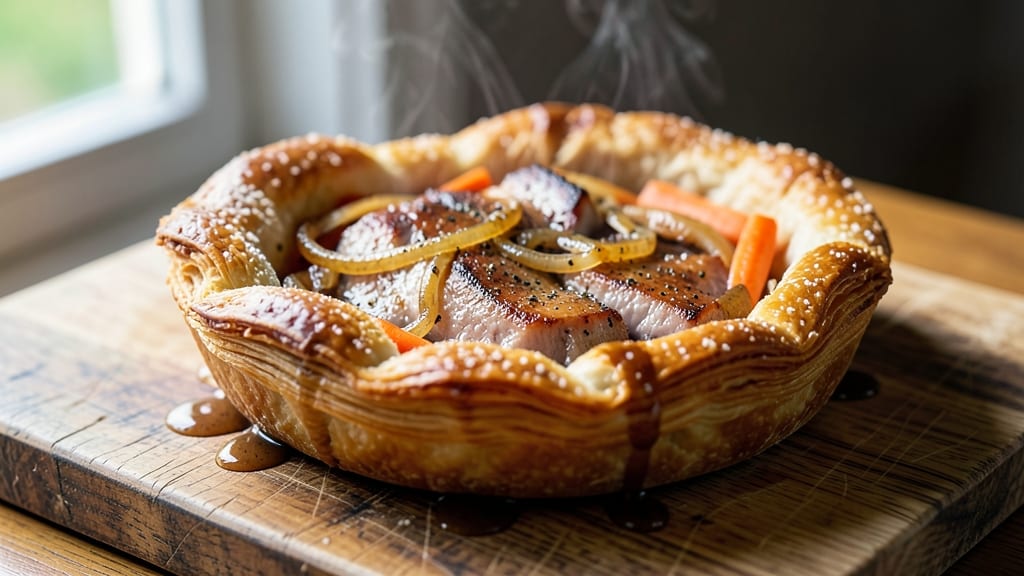
This raised pork pie recipe delivers the perfect marriage of flaky crust and rich, savory meat that tastes like Sunday dinner every time. 🔥 As someone who's spent years perfecting pork techniques—from my CIA training to running a high-volume BBQ operation—I know the secrets to getting that signature raised crust and tender, flavorful filling.
The key lies in the suet crust's layered structure and slow-cooked pork that melts in your mouth.
The recipe begins with a traditional suet crust that develops its signature raised texture through careful layering and precise baking. Meanwhile, the pork filling gets its depth from a blend of spices, slow cooking, and a touch of vinegar that tenderizes without overpowering.
What sets this apart is how the crust achieves that iconic domed shape while staying crispy, not soggy—a challenge I've solved through years of testing.
By the time it emerges from the oven, you'll have a pork pie with a golden, crisp crust that rises dramatically from the plate and a filling so rich and flavorful it practically dissolves.
The aroma alone will have everyone gathering around your table, and each bite delivers that perfect balance of savory meat and buttery crust. This is comfort food at its finest, with techniques you can trust.
Whether you're making it for a family gathering or treating yourself to a classic, this recipe delivers professional-quality results at home. The method scales beautifully too, so you can make one for a special occasion or double the batch for a crowd.
Let's get started on creating your perfect pork pie.
Ingredients for raised pork pie
These 14 ingredients transform into a showstopping raised pork pie with a golden, flaky crust and melt-in-your-mouth filling.
| Ingredient | Amount | Notes |
|---|---|---|
| Pork Shoulder 🥩 | 2 lb | Bone-in for flavor, cut into chunks |
| All-Purpose Flour 🌾 | 2 cups | For crust structure |
| Suet 🥓 | 1 cup | Beef suet, finely chopped |
| Unsalted Butter 🧈 | ½ cup | Cold, cubed for layers |
| Yellow Onion 🧅 | 1 whole | Medium size, finely chopped |
| Carrot 🥕 | 1 medium | Peeled, finely grated |
| Garlic Cloves 🧄 | 4 cloves | Minced for depth of flavor |
| Fresh Thyme Leaves 🌿 | 2 tbsp | Or 1 tsp dried thyme |
| Ground Black Pepper 🌶️ | 1 tsp | Freshly cracked |
| Salt 🧂 | 1 ½ tsp | Diamond Crystal preferred |
| Apple Cider Vinegar 🍏 | 1 tbsp | Tenderizes pork beautifully |
| Beef Stock 🥫 | 1 cup | Homemade or quality store-bought |
| Egg 🥚 | 1 whole | For egg wash |
| Milk 🥛 | 2 tbsp | For brushing crust |
The suet is non-negotiable for that signature raised crust. Look for beef suet in the meat department—it should be firm and white, not yellowed or greasy. Costco or Whole Foods carry it pre-packaged, but the butcher counter at your local grocery store usually has it too. Pork shoulder is the secret to tender filling—bone-in gives the best flavor, but boneless works if you're short on time. For the crust, Diamond Crystal kosher salt is my go-to because it dissolves better than table salt, creating a cleaner flavor. The vinegar might seem odd, but it's what tenderizes the pork without making it mushy.
No suet? Substitute with cold butter or lard—just know the crust won't rise as dramatically. Short on thyme? Dried oregano at half the amount works in a pinch, but fresh thyme is worth hunting down. The beef stock can be swapped for chicken stock, but homemade or high-quality store-bought makes all the difference. For the crust, if you can't find beef suet, shortening works too, though the texture will be slightly denser. The carrots and onions can be swapped for celery—just keep the total veggie volume at about 1.5 cups. And if you're feeling fancy, add a pinch of nutmeg to the filling for warmth.
The pork filling keeps for 3 days in the fridge before baking, so prep ahead if you're busy. The crust components should be chilled for at least 1 hour before baking to prevent shrinking. Once baked, the pie stays fresh for 2 days at room temperature in an airtight container. For longer storage, freeze the unbaked pie—it reheats beautifully. The crust reheats best at 350°F for 15-20 minutes to restore its crispiness.
Why You'll Love This Recipe
- No Fuss Assembly: The filling comes together in one bowl—no fancy layers or last-minute adjustments. Just shredded pork shoulder, finely diced onion, and a touch of suet for that melt-in-your-mouth texture. Honestly, I’ve made it while scrolling through emails, and it still turns out spot-on.
- Rich Without Effort: That suet and butter combo? It’s what makes this pie dangerously good—creamy but not greasy, with just enough savory depth from the slow-cooked pork. The onion adds a sweetness that balances everything perfectly, like a hug in pie form.
- Potluck Hero: Between us, this is my go-to for gatherings. It reheats beautifully, feeds a crowd without looking fancy, and even holds up in a cooler for hours. (Yes, even on a Tuesday night.) Plus, the crust’s sturdy enough to slice cleanly—no crumbly mess at the table.
- Budget-Friendly Luxury: Pork shoulder is affordable, and a little goes a long way when stretched with suet and flour. I’ve made this for under $10 per serving, and it tastes like something from a pub menu. Leftovers? They’re my secret weapon for quick lunches or freezing for later.
Step-by-step instructions for raised pork pie
Here's how to build a showstopping pork pie with a golden, flaky crust and rich, tender filling.
👨🍳 Step 1: Prepare the Pork Filling
In a large bowl, combine the 2 lb pork shoulder cut into chunks, 1 whole yellow onion finely chopped, 1 medium carrot peeled and grated, 4 cloves garlic minced, 2 tbsp fresh thyme leaves, 1 tsp ground black pepper, and 1.5 tsp salt. Mix until everything is evenly distributed.
Add 1 tbsp apple cider vinegar and 1 cup beef stock to the pork mixture. The vinegar helps tenderize the meat while the stock adds depth of flavor. Let this sit for 10 minutes while you prepare the crust components.
Here's the thing—don't skip the vinegar. It breaks down the meat fibers, ensuring your filling stays juicy even after hours in the oven. This is where the magic starts!
🥘 Step 2: Create the Crust Layers
In a large mixing bowl, combine 2 cups all-purpose flour, 1 cup finely chopped suet, and the 0.5 cup cold unsalted butter cut into small cubes. Use your fingers or a pastry cutter to work the butter and suet into the flour until the mixture resembles coarse crumbs with some pea-sized butter pieces remaining.
This is your shortcrust base—keep it cold! If the mixture starts to stick together, chill it in the fridge for 10 minutes. The cold butter creates steam when baking, which is what makes that perfect flaky texture.
Divide the mixture into two equal portions. One will be your bottom crust, and the other will form the top raised lid. Keep both wrapped in plastic wrap in the fridge until ready to use.
🍳 Step 3: Assemble the Pie
Preheat your oven to 375°F. Roll out one portion of the crust mixture on a floured surface into a 12-inch circle thick enough to hold the filling. Press it gently into a 9-inch pie dish, making sure to cover the bottom and sides completely. Trim any excess dough hanging over the edge.
Transfer the pork mixture to the prepared crust, spreading it evenly. Here's where it gets tricky—press down gently on the filling to compact it slightly. This prevents the pie from collapsing when it bakes.
Roll out the second portion of crust into another 12-inch circle. Place it over the filling, tucking the edges under the bottom crust to seal completely. Cut a few small slits in the top crust to allow steam to escape.
🔥 Step 4: Bake to Golden Perfection
In a small bowl, whisk together the 1 whole egg and 2 tbsp milk to make the egg wash. Brush this mixture generously over the entire top crust, including the edges. This creates that beautiful golden color and helps seal the pie.
Place the pie on a baking sheet (to catch any drips) and bake for 1 hour 15 minutes at 375°F. After 45 minutes, tent the pie with aluminum foil to prevent over-browning if your oven runs hot.
You'll know it's done when the crust is deep golden brown and the filling is bubbling through the slits. The internal temperature should reach 195°F—this ensures the pork is fully tender.
⏰ Step 5: Rest and Serve
Remove the pie from the oven and let it cool on a wire rack for 30 minutes. This resting period allows the juices to redistribute, preventing a runny filling when you slice into it.
For the best results, serve the pie at room temperature. The flavors will have melded perfectly, and the crust will be crisp and flaky. Cut into wedges and enjoy with a simple green salad or crusty bread.
Real talk: The first time you bite into this pie, you'll understand why people make them for special occasions. That perfect balance of tender pork and crisp crust makes every bite worth it!
Pro Tips For Making Raised Pork Pie
- Sear the Pork First: Before braising, hit the pork shoulder with a dry sear in a hot pan—no oil needed. The crust that forms locks in flavor and keeps the meat from drying out later. I used to skip this, and the filling always tasted underwhelming.
- Grind the Suet Fresh: Store-bought suet crumbles often lack the fat content you need for a tender crust. If you can’t grind your own, buy leaf lard instead—it’s cheaper and works just as well. The pie crust won’t hold together without enough fat.
- Don’t Overwork the Dough: Handle the flour-suet-butter mix like it’s fragile—knead just until it comes together, or the gluten will toughen the crust. Overworking turns it chewy instead of flaky. My first few pies were dense because I treated it like bread dough.
- Rest the Meat Before Slicing: Let the cooked pork shoulder sit under foil for 10 minutes after braising—yes, even if you’re eager. Slicing too soon means dry, stringy meat. The juices redistribute, and the texture becomes melt-in-your-mouth perfect. I know, I know, but trust the process.
Troubleshooting perfect results
Crust Not Rising
If your crust isn't rising properly, the suet is likely the culprit. I've found that beef suet must be finely chopped—use a food processor for even distribution. Also, keep everything cold before baking; warm dough collapses.
Try adding 1 extra tablespoon of cold water to bind the dough slightly, but don't overdo it—too much liquid makes the crust dense. 🌡️
Soggy Bottom
A soggy bottom happens when moisture escapes the filling. Prevent this by lining your pie dish with parchment paper, then removing it after baking. Also, pre-cook your filling until it's just tender (about 160°F internal temp) before assembling.
This reduces excess moisture. If it's already soggy, try baking at 350°F instead of 375°F for a longer time to dry out the crust.
Filling Too Dry
Overcooking the filling is the usual culprit. Use a meat thermometer and remove the pork from the oven when it hits 195°F—any hotter, and it'll dry out.
If your filling is already dry, add 2-3 tablespoons of beef stock before assembling, then bake with a small cup of water in the bottom of the pie dish to add steam. The vinegar in the recipe helps retain moisture, so don't skip it!
Uneven Baking
Ovens have hot spots, and that's why your pie might bake unevenly. Rotate your pie halfway through baking (after 45 minutes) for even browning. If the edges brown too fast, cover them with foil after 30 minutes.
For extra insurance, place a baking sheet under the pie dish to reflect heat upward. I also recommend using two racks—one in the middle and one on the lower third—for more even heat distribution.
Collapsed Crust
A collapsed crust usually means the filling wasn't compacted enough before baking. Press down firmly on the filling with a spoon or your hand to create a solid base.
If it's already collapsed, try reassembling with a thicker bottom crust (use 3/4 of the dough for the base instead of half). Chill the pie 15 minutes before baking to help it hold its shape.
For next time, bake at 350°F instead of 375°F—lower heat gives the crust time to set properly.
Pale Crust Color
A pale crust means the egg wash didn't set properly or the oven wasn't hot enough. Whisk the egg wash vigorously to create bubbles, then brush it on just before baking.
If your oven runs cool, preheat for 20 minutes before baking. For extra color, add 1/2 teaspoon of turmeric to the egg wash (it's a trick I learned from Charleston bakers!). 💛
Nutrition facts
Frequently asked questions
Why does this recipe call for suet instead of regular butter?
Suet is the secret to that signature raised crust! The fat content in suet creates steam during baking, which lifts the crust beautifully. Regular butter won't give the same dramatic rise—it's what makes traditional pork pies so special. Plus, suet adds a subtle richness that complements the pork perfectly.
Can I make this recipe without a pie dish?
If you don't have a traditional pie dish, use a 9-inch round cake pan or even a deep ovenproof skillet. Line it with parchment paper for easy removal. Just make sure your container has sides at least 2 inches high to contain the filling and allow the crust to rise properly.
How do I store leftovers?
Store any leftovers in an airtight container at room temperature for up to 2 days. For longer storage, refrigerate for 3-4 days or freeze for up to 3 months. To reheat, wrap slices in foil and warm at 350°F for 10-15 minutes—this restores the crust's crispiness beautifully.
What's the best way to slice a raised pork pie?
Use a sharp serrated knife and cut into 8 equal wedges for serving. Warm the knife slightly under hot water first to make clean cuts. For presentation, place each wedge on a small plate with a dollop of apple sauce or mustard—it's a classic pairing that elevates the dish!
Can I make this vegetarian?
Not traditionally, but you could substitute the pork with shredded seitan or mushrooms for a plant-based version. The crust recipe would remain the same, but the filling would need extra moisture—consider adding 1/4 cup vegetable stock to compensate. The flavor profile would be very different, but the technique would work!