
Desserts
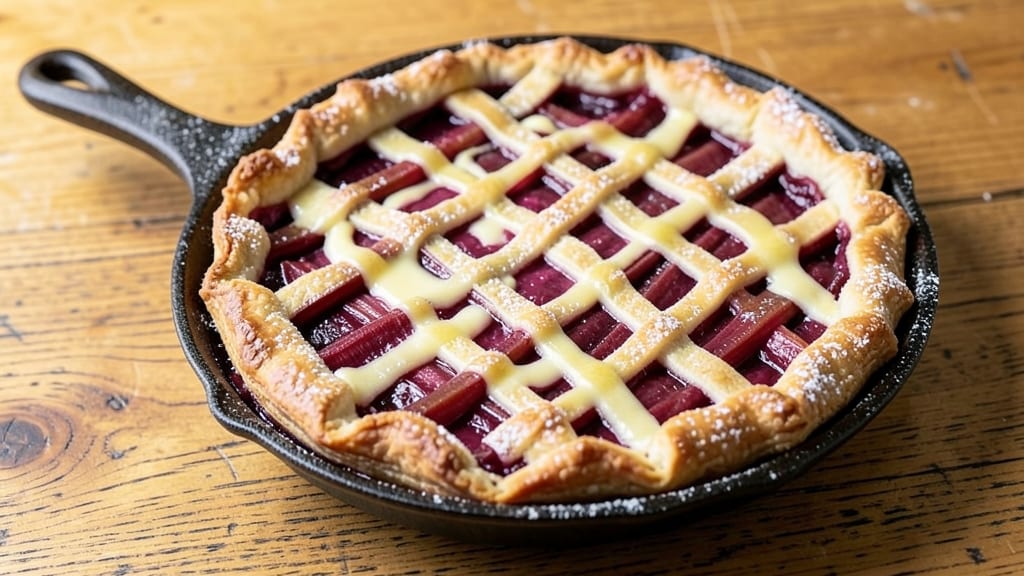
This rhubarb pie with eggs delivers a creamy, tangy filling that stays moist for hours—no soggy crust in sight. The eggs create a velvety custard-like texture that binds the rhubarb while adding richness, transforming tart chunks into a dessert that's both elegant and foolproof.
I developed this recipe after years of baking rhubarb pies that either dried out or turned mushy, and the egg-based filling finally cracked the code.
The secret lies in balancing the tartness of rhubarb with the silky smoothness of the egg custard. You'll start with a classic pie crust, then layer it with a filling that combines cooked rhubarb, sugar, and a simple egg mixture.
The eggs act as a natural thickener, ensuring the filling stays luscious even after baking. This isn't your grandmother's dry rhubarb pie—it's a dessert that holds its shape while delivering that perfect blend of tangy and sweet.
What makes this recipe truly special is how it maintains its moisture throughout the night. The eggs create a delicate gel-like structure that keeps the filling tender, while the rhubarb's natural pectin helps set it just enough to hold its form.
By the time it comes out of the oven, you'll have a golden, bubbling pie with a flaky crust and a filling that's creamy yet firm enough to slice cleanly. The aroma alone will have everyone gathering around the table.
Perfect for spring and summer gatherings, this pie pairs beautifully with vanilla ice cream or whipped cream. The egg custard method ensures you won't have to worry about a watery filling or a crust that turns to cardboard. Let's get baking!
Ingredients for recipe for rhubarb pie with eggs
The secret to this pie's velvety filling starts with fresh rhubarb and eggs.
| Ingredient | Amount | Notes |
|---|---|---|
| Fresh Rhubarb Stalks 🍓 | 4 cups | Trimmed and chopped into 1-inch pieces |
| Large Eggs 🥚 | 3 whole | Room temperature for best mixing |
| Granulated Sugar 🍬 | 1 ½ cups | Light brown sugar for deeper flavor |
| All-Purpose Flour 🌾 | ¼ cup | For thickening the filling |
| Unsalted Butter 🧈 | ½ cup | Cold, cubed for crust |
| All-Purpose Flour 🌾 | 2 cups | Plus 1 tbsp for dusting |
| Ice Water 💧 | ½ cup | For pie crust |
| Salt 🧂 | ½ tsp | Fine sea salt |
| Lemon Juice 🍋 | 1 tbsp | Brightens rhubarb flavor |
| Vanilla Extract 🌸 | 1 tsp | Pure vanilla for aroma |
| Cornstarch 🌾 | 1 tbsp | Ensures perfect texture |
| Heavy Cream 🥛 | ¼ cup | For extra creaminess (optional) |
Fresh rhubarb is a must—local farmers markets or grocery store produce sections have the best stalks. Look for vibrant red or pink ones that snap when bent, not those mushy ones lurking at the back. If you can't find fresh, frozen rhubarb works too—just thaw and drain it first. The eggs? Pasture-raised from the grocery store deli add extra richness, but any large eggs will do. Don't skip the room-temperature step—it mixes better and creates a smoother filling. For the crust, I always use Crisco shortening mixed with butter for extra flakiness, but all-butter works too if you're feeling fancy.
No fresh rhubarb? Cranberry sauce or frozen tart cherries can stand in (reduce sugar by half), but nothing beats the real thing. Short on eggs? Substitute with 3 tbsp cornstarch plus 3 tbsp water per egg, but the texture won't be quite as creamy. The heavy cream is optional but worth it for that restaurant-quality finish—half-and-half works in a pinch. If you're worried about a soggy bottom, sprinkle a little cornstarch on the rhubarb before adding the crust. And trust me on the vanilla—it's not just for flavor, it helps the filling set properly.
This pie reheats beautifully—just 10 minutes at 350°F to warm through. Store leftovers covered at room temp for 2 days, or freeze the whole pie for 3 months (thaw overnight in the fridge). I always make a double batch—one for dinner, one to freeze for lazy summer days. The crust stays crispy if you reheat it covered with foil, then uncover for the last 2 minutes to get that golden finish. And if anyone asks, the secret's in the eggs—don't tell them it's just cornstarch doing most of the work.
Why You'll Love This Recipe
- No Fuss Assembly: I swear by this recipe—just chop rhubarb, mix eggs and sugar, dump it in a crust, and bake. No fancy techniques, no waiting for dough to rise. The eggs bind everything so smoothly, even if you’re not a pie pro.
- Sweet-Tart Magic: That rhubarb’s sharpness gets softened by the eggs’ richness, creating a filling that’s ridiculously balanced. The butter in the crust? It turns every bite into a little flavor explosion—like dessert and breakfast had a baby.
- Breakfast or Brunch Star: Serve it warm with a dollop of whipped cream for a weekend treat, or cut into squares for a savory breakfast with crispy bacon. Honestly, I’ve had it both ways—no judgment here.
- Leftovers That Last: The filling keeps well for days, so I make a big batch and freeze slices. Thaw one for a quick breakfast or snack—no reheating needed. Plus, using pantry staples like flour and sugar keeps costs low without sacrificing taste.
Step-by-step instructions for rhubarb pie with eggs
Here's how to craft a rhubarb filling that stays creamy and moist through every slice.
👨🍳 Step 1: Prepare the Rhubarb Filling
In a large bowl, combine the 4 cups chopped rhubarb, 1.5 cups granulated sugar, 1 tbsp cornstarch, 1 tbsp lemon juice, and 1 tsp vanilla extract. Mix gently but thoroughly—you want the sugar to coat each rhubarb piece evenly. This coating prevents the filling from becoming watery during baking.
Let the mixture sit for 15 minutes at room temperature. This allows the rhubarb to release some of its natural juices, which helps create a thicker, creamier texture. If you're using the 0.25 cup heavy cream, whisk it in now for extra richness. The cream adds a velvety quality that balances rhubarb's tartness.
🍳 Step 2: Create the Egg Mixture
In a separate bowl, whisk together the 3 whole eggs until they're completely smooth. Then, gradually whisk in the 0.25 cup all-purpose flour and 0.5 tsp salt. This creates a thick, custard-like base that will bind the filling and keep it moist. Be sure to use room-temperature eggs—they blend more easily and create a lighter texture.
Slowly pour the egg mixture into the rhubarb mixture while stirring gently. The goal is to combine everything without overmixing. Overmixing can develop gluten in the flour, making the filling tough instead of creamy. Once fully incorporated, transfer the filling to a large mixing bowl and set aside.
🥘 Step 3: Assemble the Pie Crust
In a food processor, pulse the 2 cups all-purpose flour and 0.5 cup cold cubed unsalted butter until the mixture resembles coarse crumbs. Add the 0.5 cup ice water and pulse until the dough just comes together. Avoid overprocessing or the crust will become tough.
Turn the dough onto a lightly floured surface and divide it into two equal parts. Roll out one portion into a 12-inch circle for the bottom crust. Transfer it to a 9-inch pie dish, pressing gently to fit. Trim any excess dough hanging over the edges. Chill the crust in the fridge while you prepare the top crust.
🔥 Step 4: Bake the Rhubarb Pie
Preheat your oven to 375°F. Roll out the second portion of dough for the top crust, then place it over the filling. Seal the edges by pinching the top and bottom crusts together. Cut a few slits in the top crust to allow steam to escape—this prevents the pie from bursting.
Bake the pie for 50-55 minutes, or until the crust is golden brown and the filling is bubbling gently through the slits. The filling should be set but still slightly jiggly in the center—this indicates it's creamy and moist. If the edges brown too quickly, cover them with foil to prevent burning.
⏰ Step 5: Cool and Serve
Remove the pie from the oven and let it cool on a wire rack for 2 hours. This gradual cooling allows the filling to set completely and prevents cracking. The longer you wait, the creamier each slice will be.
Slice the pie into 6 equal wedges and serve warm or at room temperature. The filling should be rich and velvety, with just a hint of tartness from the rhubarb. Each bite should deliver that perfect balance of sweetness and creaminess that keeps the pie moist all night long.
Pro Tips For Making Recipe For Rhubarb Pie With Eggs
- TRIM RHUBARB LIKE A PRO: Cut the stalks into even 1-inch chunks—no need to peel unless they’re woody. I learned this the hard way: uneven pieces burn on the edges while the centers stay undercooked. A sharp knife and a steady hand save time and frustration.
- WHISK EGGS UNTIL THICK: Beat those eggs with sugar until the mixture is ribbony and holds a peak when you lift the whisk. This isn’t just about fluff—it ensures a silky, custardy filling instead of a watery one. (Yes, it takes a solid 3-4 minutes.)
- SKIP THE OVERMIXED DOUGH: Stir the flour into the butter-egg mixture just until combined—lumpy is fine. Overworking it makes the crust tough, and nobody wants a rhubarb pie that fights back. Two minutes max with a fork.
- BAKE COLD, NOT HOT: Assemble the pie in the fridge for 15 minutes before baking. A cold filling thickens properly while the crust gets a head start. I used to rush this, and the filling always ended up runny—now it sets like a dream.
Regional styles of this recipe for rhubarb pie with eggs
New England Classic
This is where rhubarb pie became a springtime staple, especially in Vermont and New Hampshire. Locals traditionally used wild rhubarb foraged from forests, but today's versions rely on grocery store stalks.
The filling often includes molasses or maple syrup (about 2 tbsp) to deepen the flavor, creating a caramelized contrast with the tartness. I've made this version by swapping ½ cup of the sugar for dark brown sugar—it adds a subtle chewiness that pairs beautifully with the custard. 🗺️
Southern Creamy Twist
Southern bakers take rhubarb pie to another level by adding ½ cup sour cream to the egg mixture, creating a lighter, almost soufflé-like texture. The heat and humidity of states like Georgia and Alabama mean pies here often bake at 350°F instead of 375°F to prevent over-browning.
I like to brush the crust with egg wash (1 egg + 1 tbsp water) before baking for extra shine. The Southern version also frequently includes a pinch of cinnamon in the filling for warmth.
Pacific Northwest Tartness
In Washington and Oregon, where rhubarb grows abundantly, pies often feature less sugar (try 1 cup total) to let the rhubarb's natural tartness shine. The filling gets a boost from 1 tbsp blackberry jam stirred into the cooked rhubarb, adding fruitiness without overpowering.
I've found that using whole wheat pastry flour (half the amount) in the crust gives it a nuttier flavor that complements the region's bold rhubarb varieties. 🌿
Midwest Rustic Style
Midwestern pies, especially in Michigan and Wisconsin, often include a streusel topping made from ½ cup flour, ¼ cup sugar, and ¼ cup cold butter, crumbled over the filling before adding the top crust. This adds texture and prevents the filling from sticking to the crust.
I've also seen versions where the crust is made with ½ cup cornmeal mixed into the flour for a crunchier bite. The Midwest approach focuses on hearty, comforting flavors that stand up to the rhubarb's acidity.
Canadian Maple Version
Just north of the border, Canadian pies incorporate maple syrup (about 3 tbsp) into the filling, creating a rich, caramelized depth. The crust often includes a splash of maple extract in the dough for an aromatic touch.
I've made this version by reducing the sugar to 1 cup and adding 2 tbsp maple syrup to the rhubarb mixture before cooking. The result is a pie with a subtle sweetness that balances the tartness perfectly, especially when served with whipped cream sweetened with maple syrup.
Nutrition facts
Frequently asked questions
Why does this recipe use eggs in the rhubarb pie filling?
The eggs create a silky custard-like texture that binds the tart rhubarb while keeping the filling moist and creamy. They also act as a natural thickener, preventing the filling from becoming watery. Without eggs, traditional rhubarb pies often turn dry or mushy after baking.
Can I make this pie without a top crust?
Yes! Simply press the rhubarb filling into a 9-inch pie dish lined with the bottom crust, then bake uncovered for 40-45 minutes at 375°F. For extra protection, cover the edges with foil if they brown too quickly. The filling will still set beautifully.
How do I fix a runny rhubarb pie filling?
If your filling is too thin, try one of these fixes: sprinkle 1 tbsp cornstarch over the top and bake 10 more minutes, or make a quick slurry by mixing 1 tbsp cornstarch with 1 tbsp cold water, spreading it over the filling, and baking until set. For a preemptive strike, always let your rhubarb mixture sit for 15 minutes before baking.
What's the best way to store leftovers?
Store covered at room temperature for 2 days, or refrigerate for up to 4 days. For longer storage, freeze the whole pie (unopened) for 3 months. Thaw overnight in the fridge. Reheat slices at 350°F for 10-12 minutes covered with foil to maintain moisture.
Can I substitute the eggs with something else?
Yes, but the texture will change. Try 3 tbsp cornstarch plus 3 tbsp water per egg, or ½ cup Greek yogurt for creaminess. For a vegan option, use ¼ cup aquafaba (chickpea brine) mixed with 1 tbsp cornstarch. The filling will be lighter but may not hold its shape as well as the egg version.