
Main Courses
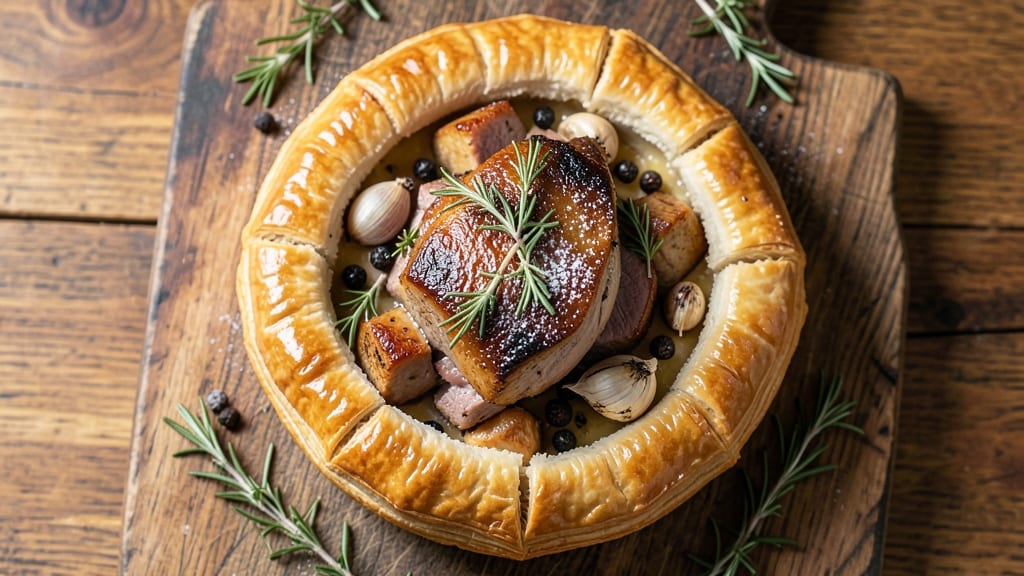
This roast pork pie recipe delivers the perfect marriage of tender, slow-roasted pork and a golden, flaky crust that makes every bite worth waiting for.
Growing up in small-town Georgia, I learned that a well-made pork pie transforms a simple meal into something truly special—rich gravy pooling beneath layers of crisp pastry.
The key lies in the technique: roasting the pork until fall-apart tender, then encasing it in a buttery crust that bakes to a perfect golden brown.
What sets this recipe apart is the balance between tradition and approachability. While British roast pork pies often feature a more delicate shortcrust, this version uses a sturdy puff pastry that holds up beautifully while still delivering that signature flakiness.
The secret to the crust? Chilling the dough thoroughly before baking—it ensures layers of crispiness without sacrificing tenderness in the filling. And don’t skip the gravy; it’s what ties everything together, turning a simple pie into a showstopper.
The result is a pie with a crisp, golden crust that shatters slightly when cut, revealing moist pork infused with savory flavors and a rich gravy that coats every bite. The aroma alone—warm pork, buttery pastry, and herbs—will have your kitchen smelling like a classic Southern dinner table.
This is the kind of dish that feels like a hug in food form, perfect for family gatherings or when you want to impress without fuss.
Whether you're serving it at a holiday feast or a weeknight dinner, this roast pork pie delivers restaurant-quality results at home. The technique is straightforward, but the payoff is undeniable: tender pork, flaky pastry, and gravy so rich it’ll have everyone asking for seconds.
Let’s get started—your taste buds will thank you.
Ingredients for roast pork pie
Six ingredients make this Southern pork pie unforgettable—tender meat, buttery crust, and gravy that steals the show.
| Ingredient | Amount | Notes |
|---|---|---|
| Boneless Pork Shoulder 🥩 | 4 lb | Cut into 1.5-inch chunks |
| All-Purpose Flour 🌾 | 1 cup | For gravy thickening |
| Unsalted Butter 🧈 | 1 cup | Cold, cubed for crust |
| Puff Pastry Sheets 🥧 | 2 sheets | Store-bought or homemade |
| Fresh Thyme 🌿 | ½ cup | Stems removed, chopped |
| Fresh Rosemary 🌿 | ¼ cup | Finely chopped |
| Garlic Cloves 🧄 | 6 cloves | Peeled and smashed |
| Beef Broth 💧 | 2 cups | Low-sodium preferred |
| Whole Milk 🥛 | 1 cup | For gravy richness |
| Salt 🧂 | 2 tbsp | Kosher preferred |
| Black Pepper 🌶️ | 1 tbsp | Freshly ground |
| Apple Cider Vinegar 🍎 | 1 tbsp | For gravy tang |
| Egg 🥚 | 1 whole | For egg wash |
The pork shoulder is non-negotiable here—it's what gives you that melt-in-your-mouth texture. Look for well-marbled cuts at Whole Foods or your local butcher shop, and ask for it cut into 1.5-inch chunks (or do it yourself with a meat mallet). Fresh herbs make all the difference: grab organic thyme and rosemary from the grocery store's produce section—they'll have more flavor than the dried stuff. For the puff pastry, Pepperidge Farm sheets are my go-to (they're foolproof), but if you're feeling ambitious, homemade works too. Just make sure to chill the dough for at least 30 minutes before rolling—this is what creates those signature flaky layers.
No beef broth? Chicken broth with a splash of soy sauce works in a pinch, but the umami depth is worth tracking down. Running low on milk? Heavy cream at half the amount gives you a richer gravy, though regular milk keeps it classic. Apple cider vinegar is key for that tangy depth—if you don't have it, white vinegar or lemon juice will do. The egg wash is crucial for that golden crust, but if you're vegan, plant-based milk + a pinch of salt works just as well. For the herbs, dried will work at one-third the amount, but fresh is always better if you've got it. And trust me on the cold butter—it's what makes the crust flaky, not greasy.
Pork keeps 3-4 days in the fridge before cooking, but the pie itself reheats beautifully—just cover with foil and warm at 350°F for 15 minutes. The gravy can be made ahead and reheated on the stove, but add a splash of milk to loosen it up. Store leftovers in an airtight container, and the pie reheats best at 300°F for 20 minutes—just tent it with foil so the crust doesn't dry out. I always make a double batch of gravy because it disappears fast, and it freezes perfectly for up to 3 months. The crust stays crispy for about 2 days if you keep it wrapped tightly.
Why You'll Love This Recipe
- Puff Pastry Shortcut: I’ve made this pie with store-bought puff pastry for years—no rolling, no fuss. Just unfold, fold, and bake. The flaky layers melt in your mouth while keeping everything warm and golden.
- Thyme-Infused Magic: That fresh thyme tucked into the pork shoulder? It’s the secret. The aroma alone makes my kitchen smell like a Sunday roast, and every bite carries that bright, herby punch without overpowering the tender pork.
- Weeknight Feast: Between us, this is my go-to when I need to feed a crowd but don’t want to slave over a holiday meal. The pie reheats beautifully for lunch the next day, and the leftovers? Even better cold, sliced thin for sandwiches.
- Budget-Friendly Luxury: Pork shoulder is affordable, and a single pie stretches across multiple meals. I’ll be real: I’ve stretched this into four lunches, and no one complains. It’s comfort food that doesn’t break the bank.
Step-by-step instructions for roast pork pie with savory gravy
Here's how to create a showstopping pork pie with melt-in-your-mouth pastry and rich, aromatic filling.
Prepare the Pork and Herb Mixture
Cut the 4 lb boneless pork shoulder into 1.5-inch chunks and place them in a large bowl. Add the 0.5 cup fresh thyme, 0.25 cup fresh rosemary, 6 cloves garlic cloves (smashed), 2 tbsp salt, and 1 tbsp black pepper. Mix thoroughly until every piece of pork is well-coated with the herbs and seasoning. This ensures maximum flavor infusion during cooking.
Let the pork mixture sit at room temperature for 30 minutes while you prepare the pastry. This step is crucial—cold meat releases less moisture during cooking, preventing a watery filling. If you're short on time, you can skip this resting period, but the flavor will be even better if you wait.
Assemble the Pork Pie
Preheat your oven to 375°F. Roll out one of the puff pastry sheets on a floured surface to create a 12x16-inch rectangle. Transfer the seasoned pork mixture to the center of the pastry, spreading it out evenly in a single layer. The pastry should extend about 2 inches beyond the pork on all sides.
Roll out the second puff pastry sheet to the same size and carefully place it on top of the pork. Press the edges together firmly to seal, then use a fork to crimp the edges decoratively. Brush the top of the pastry with the 1 whole egg beaten with 1 tablespoon water for a golden finish. Place the pie on a parchment-lined baking sheet.
Bake the Pork Pie
Bake the pie in the preheated oven for 1 hour 15 minutes, or until the pastry is deep golden brown and the internal temperature of the pork reaches 195°F. The pastry should be puffed and crispy, with no soft spots. If the pastry browns too quickly, tent it loosely with foil to prevent burning.
Here's the thing—don't open the oven door during the first 45 minutes of baking. Every time you peek, you release heat and steam, which can cause the pastry to deflate. Patience here ensures that perfect flaky texture you're aiming for.
Prepare the Gravy
While the pie bakes, prepare the gravy by melting the 1 cup unsalted butter in a large skillet over medium heat. Once melted, sprinkle in the 1 cup all-purpose flour and whisk continuously for 2-3 minutes until the mixture forms a smooth, golden roux. This should smell nutty and rich—your foundation for the gravy.
Gradually whisk in the 2 cups beef broth and 1 cup whole milk, stirring constantly to prevent lumps from forming. Add the 1 tablespoon apple cider vinegar and bring the mixture to a gentle simmer. Let it cook for 5-7 minutes until it thickens enough to coat the back of a spoon. Season with additional salt and pepper if needed.
Rest and Serve
Remove the pork pie from the oven and let it rest for 15 minutes before serving. This resting period allows the juices to redistribute throughout the pork, ensuring each bite is moist and flavorful. Use a sharp knife to cut through the pastry and serve warm slices with the homemade gravy spooned over the top.
For the ultimate presentation, garnish with extra chopped fresh thyme and rosemary. The contrast of the flaky, golden pastry with the rich, savory filling and velvety gravy makes this pie a true centerpiece. Enjoy immediately—this dish tastes best fresh out of the oven!
Pro Tips For Making Roast Pork Pie
- Blanch the Puff Pastry: I used to skip this, but brushing the puff pastry with a thin layer of water or milk before baking makes all the difference—it creates a golden, crisp finish instead of a dull, soggy top. Just pat it dry first, then use a pastry brush for even coverage.
- Salt the Pork Twice: Season the pork shoulder generously before browning, then salt it again after it’s roasted but before assembling the pie. The second layer of salt penetrates deeper while the meat rests, ensuring every bite is flavorful—not just the surface.
- Don’t Overwork the Dough: When making the pie crust from all-purpose flour, mix just until the dough comes together. Over-kneading develops gluten, which can make the crust tough. Keep it loose and cold—this keeps it flaky and tender.
- Rest the Pork Properly: After roasting, let the pork shoulder rest under foil for at least 15 minutes before slicing. Skipping this step means juices will pool out when you cut into it, leaving you with dry meat. Trust me, the wait is worth it.
Dietary considerations for this dish
Gluten-Free Adaptations
For a gluten-free version, swap the puff pastry for a gluten-free puff pastry alternative like Caulipower or Schär brand sheets. These store-bought options mimic the flaky texture beautifully.
If making from scratch, use a gluten-free flour blend (like King Arthur Measure for Measure) with xanthan gum for structure in your crust. Just remember, gluten-free pastry tends to be more delicate—handle it gently when assembling to avoid tearing. 🥧
Dairy-Free Options
To make this pie dairy-free, replace the unsalted butter in the crust with vegan butter (like Miyoko's or Earth Balance).
For the gravy, use olive oil or vegan butter instead of dairy butter, and thicken with a cornstarch slurry (1 tbsp cornstarch + 2 tbsp cold water) instead of flour.
The whole milk can be swapped for unsweetened almond milk or oat milk, though the gravy will be slightly lighter. Trust me, the flavor stays rich and satisfying!
Lower-Carb Modifications
Cutting carbs? Replace the puff pastry with a cauliflower crust—I like Caulipower's pre-made mix, which bakes up crispy and holds together well. For the filling, keep the pork as-is but reduce the gravy by using half the flour (or a xanthan gum slurry) and low-carb beef broth.
Serve with a side of roasted Brussels sprouts or sautéed green beans to keep the meal balanced. The crust might not puff as dramatically, but it delivers big on flavor.
Allergen-Friendly Notes
Watch for egg allergies—the egg wash can be replaced with aquafaba (chickpea brine) or plant-based milk + a pinch of salt for binding. If someone has a soy allergy, avoid soy-based substitutes in the gravy (like soy sauce in broth).
For nut allergies, stick to oat milk or coconut milk instead of almond milk. Always double-check labels on store-bought puff pastry for hidden allergens like wheat, dairy, or eggs. When in doubt, homemade crusts give you full control over ingredients! 🌱
Protein Alternatives
For a non-pork version, swap the pork shoulder for chicken thighs (bone-in for moisture) or turkey breast, both of which work beautifully in this pie. If you're vegetarian, mushrooms (like shiitake or cremini) or lentils (cooked with herbs and garlic) make great fillings.
For a vegan option, use tofu (extra-firm, pressed and cubed) or jackfruit for a meaty texture. The key is ensuring your alternative has enough fat or moisture to mimic the richness of pork—don’t skip the herbs and garlic!
Nutrition facts
Frequently asked questions
Can I use shortcrust pastry instead of puff pastry for this recipe?
Shortcrust creates a more delicate, tender crust that’s perfect for traditional British-style pork pies. Simply replace the puff pastry with 2 sheets of shortcrust pastry (about 1/8-inch thick each) and reduce the egg wash to 1 tablespoon mixed with water to avoid sogginess. Bake at 375°F for 45-50 minutes until golden—shortcrust needs less time to crisp up.
How do I prevent the pie crust from getting soggy?
Prevent soggy bottoms with these pro tips: First, blind-bake the bottom crust for 8-10 minutes at 375°F before adding the filling. Second, pat the pork dry thoroughly with paper towels before seasoning—moisture is the enemy of crisp pastry. Finally, brush the top crust with egg wash after baking for extra shine and protection.
Can I make this pork pie ahead of time?
This pie actually tastes better the next day! Assemble and bake as directed, then cool completely. Store in an airtight container at room temperature for 2 days or refrigerate for 4 days. Reheat at 350°F for 20 minutes—cover loosely with foil to keep the crust crisp. The gravy can be reheated separately on the stove, adding a splash of milk to loosen it.
What’s the best way to cut into a hot pork pie?
Use a hot knife (dip in boiling water, then wipe dry) to slice through the pastry cleanly. Start by cutting a small slit in the center, then work outward in 1-inch slices. For extra presentation, arrange slices on a platter with gravy spooned over the top. Pro tip: Let the pie rest 10 minutes after baking to set the filling—this makes slicing much easier!
Can I substitute beef broth with chicken broth?
Yes, but the flavor will be slightly lighter. For best results, use chicken broth with 1 teaspoon soy sauce (or Worcestershire sauce) to add depth. If you’re avoiding soy, a splash of red wine (about 1/4 cup) works beautifully. The herbs and garlic in the filling will still shine through—just expect a milder umami profile.