
Main Courses
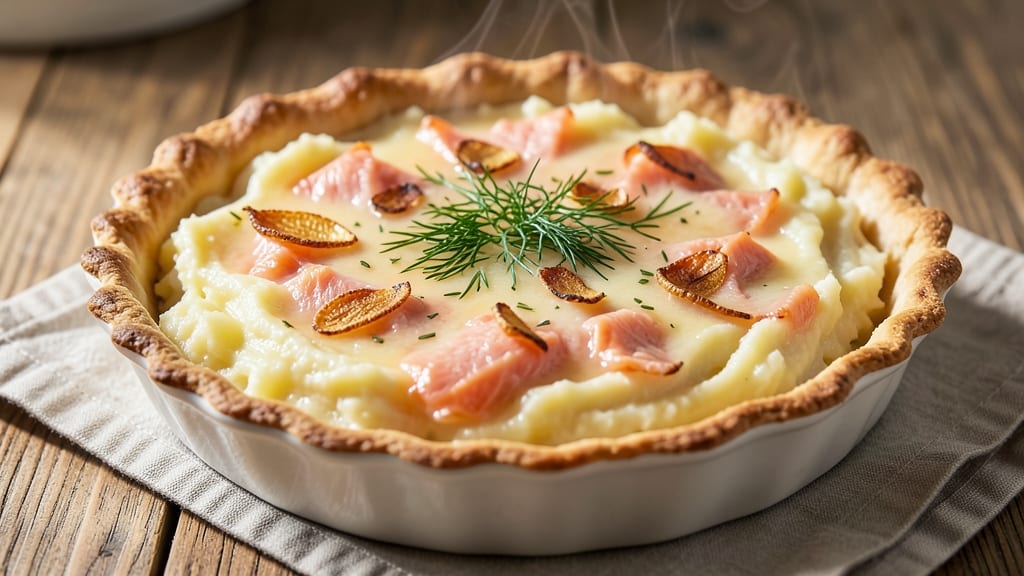
This salmon pie recipe with canned salmon transforms humble pantry staples into a comforting, restaurant-worthy dish that’s surprisingly simple to assemble. 💛 What started as Nana Mae’s way of stretching ingredients on busy weeknights became my go-to for pescatarian dinners—creamy mashed potato crust meets flaky fish filling in one golden, satisfying package.
The beauty of this recipe lies in its clever use of canned salmon, which delivers that signature flakiness without the fuss of fresh fillets. My method ensures the crust stays creamy and cohesive while the filling remains tender, thanks to a precise balance of seasonings and a gentle baking approach.
The result? A pie that’s hearty enough for a family meal but quick enough for weeknights.
By the time it emerges from the oven, you’ll have a dish with a flaky top crust, a velvety potato base, and pockets of buttery, herbed salmon filling—each bite a perfect harmony of textures and flavors.
The best part? It’s easily adaptable for dietary needs, whether you swap in gluten-free flour or add fresh herbs for extra brightness.
Pair it with a simple green salad or roasted asparagus to round out the meal. Here’s how to bring this comforting classic to your table—no shortcuts, just smart techniques that deliver professional results every time.
Ingredients for salmon pie recipe with canned salmon
Humble pantry staples meet restaurant-worthy texture in this salmon pie.
| Ingredient | Amount | Notes |
|---|---|---|
| Canned Salmon 🐟 | 2 cans | High-quality, drained well |
| Russet Potatoes 🥔 | 2 lbs | Yukon gold works too |
| Unsalted Butter 🧈 | ¾ cup | Cold, cut into chunks |
| Heavy Cream 🥛 | ½ cup | Full-fat for creaminess |
| Milk 🥛 | ¼ cup | Whole milk preferred |
| All-Purpose Flour 🌾 | ½ cup | For crispy crust |
| Eggs 🥚 | 2 whole | Large, room temperature |
| Dried Dill 🌿 | 1 tbsp | Or 1 tbsp fresh chopped |
| Dried Parsley 🌿 | 1 tbsp | For fresh flavor |
| Salt 🧂 | 1 ½ tsp | Kosher or sea salt |
| Black Pepper 🌶️ | ½ tsp | Freshly ground preferred |
| Lemon Juice 🍋 | 1 tbsp | Freshly squeezed |
| Green Onions 🧅 | 2 whole | Chopped, for garnish |
| Sour Cream 🥛 | ¼ cup | Optional for extra creaminess |
The salmon makes this pie shine, so pick the good stuff—look for brands like Wild Planet or Vital Choice for rich, flaky texture. Drain it well (pat dry with paper towels) to avoid a soggy crust. For the potatoes, Russet or Yukon gold work best—they mash smoother. I always grab organic potatoes from Trader Joe's when I can, but store-bought is fine too. The butter should be cold and chunky for flaky layers, not melted. If you're in a rush, microwave it 40 seconds to soften slightly—just don't melt it completely.
No heavy cream? Full-fat Greek yogurt works in a pinch—it's tangier but still creamy. Fresh dill and parsley are ideal, but dried at half the amount gets you close. The flour is key for that crispy top crust—all-purpose is best, but gluten-free blends work if needed. For extra richness, swap half the milk for half-and-half. The lemon juice brightens everything up, so don't skip it. If you're short on green onions, chives or regular onions work too. Want it even creamier? Add that 1/4 cup sour cream—it's worth the extra minute to mix it in.
This pie reheats beautifully—just cover with foil and warm at 350°F for 15 minutes. Store leftovers in the fridge for 3-4 days, or freeze portions for up to 3 months. I always make a double batch because it disappears fast. For make-ahead prep, assemble the pie (without baking) and refrigerate for up to 24 hours before baking. The crust stays crispy, and the filling keeps its texture perfectly.
Why You'll Love This Recipe
- Pantry Magic: I swear by this recipe when I’m staring at a half-empty fridge. Canned salmon? Already flaked and ready. Potatoes? Just peel and cube. The heavy cream and milk blend into a velvety sauce that feels indulgent—no whisking skills required.
- Creamy Crisp Contrast: That buttery, golden crust on top? It’s my favorite part. The flaky salmon peeks through, while the inside stays rich and tender. Honestly, it’s the kind of dish where the first bite makes you pause—like, this is what comfort food should taste like.
- Lunchbox Hero: Between us, this is my go-to for meal prep. Slice it up, pack it in containers, and it reheats beautifully. My kids grab it for school lunches, and honestly? They devour it faster than anything I’ve ever packed.
- Budget Luxe: Heavy cream and butter might sound fancy, but they stretch further than you’d think. A single can of salmon feeds four, and the potatoes are cheap as chips. It’s the kind of recipe that makes me feel like I’m serving something special without breaking the bank.
Step-by-step instructions for creamy salmon pie
Here's the straightforward method for that perfect creamy crust and flaky filling.
🍳 Step 1: Make the Creamy Mashed Potato Crust
Peel the 2 lbs russet potatoes and cut them into even chunks. Boil them in salted water for 15-20 minutes until fork-tender. Drain well and return to the pot. Add 0.75 cup unsalted butter, 0.5 cup heavy cream, 0.25 cup milk, 1.5 tsp salt, and 0.5 tsp black pepper. Mash until completely smooth—no lumps allowed.
Here's the thing—this isn't your average mash. You want it ultra-smooth and creamy. I like to use a potato ricer for this step if I have one, but a hand masher works too. The texture should be like thick pudding, not chunky. Stir in 1 tbsp dried dill and 1 tbsp dried parsley while still warm. Let it cool slightly before assembling.
🍳 Step 2: Prepare the Flaky Salmon Filling
Drain the 2 cans canned salmon thoroughly, pressing between paper towels to remove all excess liquid. In a mixing bowl, combine the salmon with 2 whole eggs, 1 tbsp lemon juice, and 0.25 cup sour cream. Mix gently—just until everything is evenly distributed. You want the salmon to stay flaky, not mushy.
Real talk: don't overmix. The flakes should still be visible in the mixture. This is where the texture magic happens. The lemon juice brightens the salmon while the sour cream adds that extra creaminess promised in the title. Set this mixture aside while you preheat your oven to 375°F.
🥘 Step 3: Assemble the Pie
Grease a 9-inch pie dish lightly with butter. Spread half of your mashed potato crust evenly across the bottom, creating a smooth layer. This forms the creamy base that'll hold everything together. Then spoon the salmon mixture evenly over the potato layer, spreading it out to the edges.
Here's the moment that matters: sprinkle 0.5 cup all-purpose flour evenly over the salmon. This creates a crispy barrier between the filling and the top crust. Then add the remaining mashed potato crust on top, spreading it out smoothly. The flour ensures that top layer stays flaky instead of soggy.
🔥 Step 4: Bake to Golden Perfection
Bake the pie at 375°F for 45-50 minutes until the top is golden brown and the filling is set. You'll know it's done when the center doesn't jiggle anymore and the crust has a beautiful golden hue. If the top browns too quickly, tent it with foil after 30 minutes to prevent burning.
Don't walk away during the last 10 minutes—this is when the magic happens. The pie should smell amazing when it comes out of the oven. Let it rest for 10 minutes before slicing. This resting period ensures the filling sets properly and the crust holds its shape. Garnish with chopped 2 whole green onions before serving.
Pro Tips For Making Salmon Pie Recipe With Canned Salmon
- Drain and rinse salmon: That salty canned salmon flavor sneaks up on you—literally. Drain it in a colander, then rinse under cold water for 30 seconds. You’re not just cutting salt; you’re keeping the cream from curdling later. Trust me, your first bite will taste like you actually cooked fresh fish.
- Boil potatoes until fork-tender: I used to pull them out when they looked "done," but that’s how you end up with a mushy pie. Boil the russets until a knife slides in like butter—about 12-15 minutes. Cold water bath after? Yes, but only after they’ve fully cooked. No one wants a pie where the potatoes fight back.
- Mix cream and milk first: Sounds basic, but I see people dumping cold cream into hot butter all the time. Warm the heavy cream and milk together (just until steaming, not boiling), then whisk in the butter. This keeps the sauce silky instead of separating like a bad divorce. Your pie’s texture will thank you.
- Press pie weights (or crumpled foil): Skipping weights? Your crust will puff up like a sad balloon. Use pie weights, dried beans, or even crumpled foil covered in parchment. Press them down firmly—this isn’t a test of your strength, it’s about preventing a soggy bottom. (Yes, even if you’re impatient like me.)
Creative variations of this salmon pie recipe with canned salmon
Southern-Style Twist
Add ½ cup shredded sharp cheddar and ¼ cup cooked and crumbled andouille sausage to the salmon filling for a Cajun-inspired version. I first tried this after a visit to a Louisiana roadside diner where they served a similar dish.
The sausage adds smoky depth while the cheese melts into the filling, creating pockets of gooey goodness. Serve with hot sauce on the side for those who like their heat. 🌶️
Herb-Infused Variations
Swap the dried herbs for fresh ones if you're feeling fancy. Use 2 tbsp chopped fresh dill, 2 tbsp chopped fresh parsley, and 1 tbsp chopped chives> for a brighter flavor profile. I always keep a small herb garden on my windowsill—it makes all the difference.
For an extra kick, add ½ tsp smoked paprika> to the salmon filling. The herbs should be finely chopped so they distribute evenly throughout the pie.
Gluten-Free Adaptation
Replace the all-purpose flour with a 1:1 gluten-free flour blend> like Bob's Red Mill or King Arthur. For the crust, use a gluten-free flour mix that includes xanthan gum to help bind the filling. I've tested this version with my gluten-sensitive friends, and they swear it's just as flaky.
Just make sure to press the crust firmly into the pie dish to prevent cracks during baking. The texture stays creamy, just without the gluten.
Vegetable-Inspired Filling
For a lighter take, mix in ½ cup finely diced zucchini> or ½ cup chopped asparagus> with the salmon. These veggies add moisture and a subtle sweetness that pairs beautifully with the fish. I often use whatever's fresh at the Austin farmers market.
The veggies should be cooked until tender but still hold their shape—overcooking turns them mushy. This version works especially well if you're watching your calorie intake but still want that rich pie experience.
Spicy Kick Option
Add ½ tsp cayenne pepper> or 1 tbsp hot sauce> to the salmon filling for a spicy version. I love using Penzeys Louisiana Hot Sauce> for its smoky heat. For a milder kick, add ½ tsp smoked paprika> instead.
The heat should be balanced by the creamy potato crust, so don't go overboard. This variation is a crowd-pleaser at family gatherings—everyone gets to adjust their own spice level. 🔥
Nutrition facts
Frequently asked questions
Can I use fresh salmon instead of canned?
Fresh salmon works beautifully—just flake 1.5 lbs cooked salmon (poached or baked) and mix it with 2 tbsp lemon juice and 1 tbsp butter to mimic the canned texture. The key is keeping the flakes intact for that signature pie experience.
Why does my crust turn out soggy?
Soggy crusts usually happen when the filling is too wet or the flour barrier is skipped. Always drain canned salmon thoroughly and pat it dry. The 0.5 cup flour between layers is critical—it creates a crispy barrier. If your crust still feels damp, bake for 5-10 extra minutes covered with foil.
How do I make this gluten-free?
Replace the all-purpose flour with a 1:1 gluten-free blend like Bob's Red Mill. For the crust, use a gluten-free flour with xanthan gum to help bind the filling. Press the crust firmly into the pie dish to prevent cracks. The texture stays creamy, just without gluten.
Can I prep this ahead of time?
Yes! Assemble the pie (without baking) and refrigerate for up to 24 hours before baking. For longer storage, freeze the unbaked pie for up to 3 months. Thaw overnight in the fridge before baking. The crust stays crispy, and the filling keeps its texture perfectly.
What’s the best way to reheat leftovers?
Cover with foil and warm at 350°F for 15 minutes. For a crispy top, remove the foil for the last 5 minutes. Microwave reheating works too—just cover with a damp paper towel for 1-2 minutes on medium power. The texture stays creamy, just like fresh out of the oven!