
Desserts
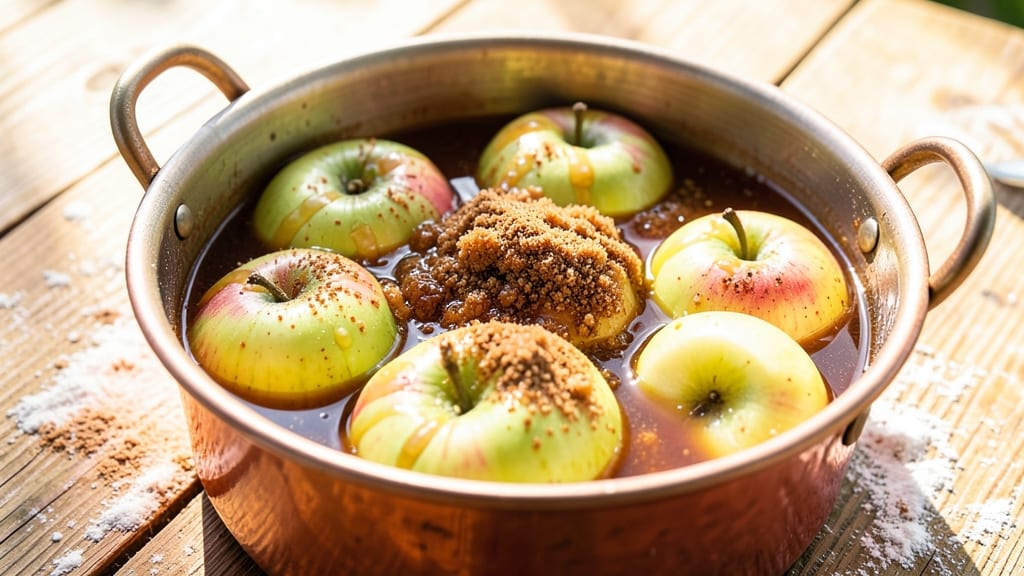
This small batch apple pie moonshine recipe transforms autumn's finest apples into a rich, caramelized spirit that captures pie filling's warmth in every sip. 🍏 The process begins with carefully selected apples—Granny Smiths for tartness, Honeycrisp for sweetness—mashed and simmered with cinnamon and brown sugar until thick and fragrant.
What starts as a simple mash becomes a complex, boozy elixir through fermentation and distillation, preserving that cozy apple pie essence in a handheld glass.
Safety and precision are critical when crafting moonshine, so we'll walk through each step—from sanitizing equipment to monitoring fermentation temperatures—to ensure a smooth, legal, and delicious result.
The recipe yields about 1 quart of finished spirit, perfect for small batches or gifting, with clear instructions for aging and proofing to achieve the ideal balance of sweetness and spice.
Every element, from the apple selection to the final bottle, is designed to deliver that nostalgic apple pie flavor in a sophisticated, sippable form.
Once distilled and aged, this moonshine becomes a versatile cocktail base—try it in a spiced apple cider cocktail or as a boozy ice cream topping for a dessert that tastes like fall in a glass.
The caramelized notes from the simmered filling create depth, while the cinnamon and vanilla add warmth. Whether you're a home distiller refining your craft or a cocktail enthusiast seeking unique flavors, this recipe delivers a foolproof method for turning apples into something extraordinary.
Remember: responsible consumption and adherence to local laws are essential. Store your finished moonshine in a cool, dark place and always label it clearly. With this recipe, you're not just making a drink—you're capturing the essence of apple pie in a way that's as elegant as it is delicious.
Let's get started on your small-batch masterpiece.
Ingredients for small batch apple pie moonshine
Four pounds of apples and a few pantry staples transform into boozy pie essence.
| Ingredient | Amount | Notes |
|---|---|---|
| Granny Smith Apples 🍏 | 2 lb | Peeled, cored, chopped small |
| Honeycrisp Apples 🍏 | 2 lb | Peeled, cored, chopped small |
| Brown Sugar 🍚 | 1 cup | Packed, light brown preferred |
| Ground Cinnamon 🌿 | 2 tbsp | Freshly ground for warmth |
| Pure Vanilla Extract 🌸 | 1 tbsp | High-quality, no alcohol |
| Lemon Juice 🍋 | ¼ cup | Freshly squeezed |
| Turbinado Sugar 🍚 | 2 cups | For fermentation feed |
| Active Dry Yeast 🍞 | ¼ oz | Or 1 packet champagne yeast |
| Distilled Water 💧 | 4 cups | Filtered or spring water |
| Cornmeal 🌾 | ¼ cup | For fermentation vessel |
| Unsalted Butter 🧈 | 2 tbsp | For aging flavor infusion |
| Star Anise 🌶️ | 2 whole | Optional for depth |
| Cloves 🌿 | 4 whole | Optional for warmth |
| Apple Pie Spice Blend 🍃 | 1 tbsp | Homemade or store-bought |
The apples are non-negotiable—Granny Smiths bring tartness, while Honeycrisp adds sweetness. Grab them at Whole Foods or your local orchard in season for peak flavor. The brown sugar should be packed—light brown has just the right caramel notes. Penzeys carries excellent spices if you want to splurge on the cinnamon, but the grocery store stuff works fine. For the yeast, champagne yeast creates a cleaner fermentation, but active dry yeast is perfectly fine. The star anise and cloves? Only if you're feeling fancy—they add subtle depth that's worth the extra effort.
No Granny Smiths? Fuji or Pink Lady apples work in a pinch, but they won't have that same bright acidity. Running low on vanilla extract? Vanilla bean paste at half the amount gives you those little specks. The turbinado sugar can be swapped for white sugar, but it adds a nice crunch to the finished product. For the fermentation, use a sanitized glass carboy—I like the 5-gallon size from Home Depot for small batches. If you're distilling at home, make sure your equipment is properly sanitized to avoid contamination. The butter during aging is optional but adds a luxurious richness—use European-style butter if you can find it.
Store your apples in the fridge until ready to use—they'll keep for up to 2 weeks this way. The yeast and spices? Keep them in a cool, dark place for up to a year. Once fermented, your moonshine should age for at least 2 weeks in a cool, dark place before bottling. I like to use amber glass bottles from Amazon to protect it from light. Label everything clearly—this isn't just a drink, it's a small-batch masterpiece that deserves respect. The finished product keeps indefinitely, but it'll only get better with time.
Why You'll Love This Recipe
- No Peel Required: Honestly, I just halve and core those Granny Smiths—no fuss, no peeling. The Honeycrisp stays firm enough to slice thick, so you’re not stuck with mush after 10 minutes of chopping.
- Honeycrisp-Cinnamon Magic: That crisp-tart Honeycrisp with the caramelized brown sugar? It’s like biting into a hug—warm, sweet, but still bright. The cinnamon hits just right, and the vanilla? It’s the cherry on top, tying everything together without overpowering.
- Weeknight Crowd-Pleaser: Between us, this is the go-to when I have friends over and need to leave the kitchen. Small batches mean you can make two or three without stress, and it’s the kind of thing people actually finish—no sad leftovers here.
- Shelf-Stable Comfort: The moonshine’s got that deep, spiced flavor that lingers, so it’s perfect for gifting or stashing in your freezer. I’ll make a double batch, bottle it, and hand them out at holiday parties—everyone thinks I’m fancy, but it’s just apples and time.
Step-by-step instructions for crafting apple pie moonshine
Transform classic apple pie flavors into boozy magic with this precise fermentation method.
🍳 Step 1: Create the Apple Pie Mash Base
In a large stockpot, combine the 2 lb Granny Smith apples and 2 lb Honeycrisp apples that you've already peeled, cored, and chopped small. Add the 1 cup packed brown sugar, 2 tbsp ground cinnamon, 1 tbsp pure vanilla extract, and 0.25 cup freshly squeezed lemon juice. Stir well until all ingredients are evenly distributed.
Cook over medium heat for 15-20 minutes, stirring occasionally, until the apples break down into a thick, chunky mash. You'll know it's ready when the mixture resembles classic apple pie filling—thick enough to coat the back of a spoon but still with some texture. The lemon juice will help balance the sweetness while preserving the apples' natural tartness. Taste as you go; you want that perfect pie-filling flavor profile that will shine through in your final moonshine.
🍳 Step 2: Prepare the Fermentation Vessel
While the apple mixture cooks, create your fermentation vessel by mixing 4 cups distilled water with 0.25 cup cornmeal in a clean, sanitized fermentation bucket or large glass jar. This cornmeal mixture creates a protective layer that prevents contamination while allowing the yeast to do its work. Add the 0.25 oz active dry yeast (or 1 packet champagne yeast) and 2 whole star anise and 4 whole cloves if using, stirring until fully dissolved.
Once your apple mixture is ready, let it cool to room temperature (about 70-75°F). Then carefully pour it into the fermentation vessel, mixing gently to incorporate. The apple pie spice blend can be added now—sprinkle in the 1 tbsp apple pie spice blend and stir thoroughly. This is where all the familiar apple pie flavors will develop their boozy complexity.
⏰ Step 3: Initiate Fermentation
Cover the fermentation vessel with a breathable lid or fermentation lock to allow gases to escape while keeping contaminants out. Place it in a warm, dark location (around 70-75°F) for 5-7 days, stirring gently once daily. You'll see bubbles forming and a foamy head developing—this is the yeast doing its magic and converting sugars into alcohol.
After 5 days, taste the mixture. It should be developing a sweet, spiced apple flavor with just a hint of alcohol. If it's still very sweet, continue fermenting for another 2 days. The goal is to let the yeast consume most of the fermentable sugars while preserving the rich apple pie character. Don't rush this step—patience ensures a well-balanced final product that won't be overly harsh or underdeveloped.
🍳 Step 4: Feed and Age the Moonshine
Once fermentation slows (bubbles decrease significantly), it's time to feed your moonshine. In a separate container, mix 2 cups turbinado sugar with 2 tbsp unsalted butter and 0.5 cup additional distilled water to create a slurry. Pour this mixture back into your fermentation vessel, stirring well to incorporate. The sugar provides additional food for the yeast to ferment, while the butter adds a rich, creamy quality that complements the apple pie flavors.
Cover again and let ferment for another 3-5 days. The alcohol content will continue to rise, and the flavors will deepen. When you taste it again, you should detect complex notes of caramelized apples, warm spices, and a smooth, balanced alcohol presence. This is where your apple pie moonshine starts to reveal its true potential—like sipping liquid dessert with a boozy kick.
🥃 Step 5: Bottle and Age for Complexity
After the final fermentation period, carefully siphon the liquid into sanitized glass bottles, leaving any sediment behind. Seal tightly and store in a cool, dark place for at least 4 weeks, but preferably 2-3 months for optimal flavor development. The aging process allows the flavors to meld and mellow, creating a smoother, more complex spirit that captures all the warmth of apple pie.
When ready to enjoy, pour into small glasses and savor the unique combination of familiar apple pie flavors with the smooth warmth of alcohol. The result should be a handheld glass of liquid nostalgia—rich, spiced, and perfectly balanced between sweet and boozy. Cheers to turning pie into something even more special!
Pro Tips For Making Small Batch Apple Pie Moonshine
- Peel Apples Partially: Granny Smiths and Honeycrissps bruise easily—leave the skin on the bottom half of each slice for structure while peeling the tops. I learned this the hard way when my filling turned to mush after 20 minutes in the oven.
- Brown Sugar First: Warm your brown sugar in a dry pan for 2 minutes before mixing it into the apples. The caramelized bits cling to the fruit and deepen the flavor—no one will guess you skipped the extra step.
- Skip the Crowd: Don’t pack the apples tightly in the moonshine mold. Leave a ½-inch gap between layers so the alcohol can circulate evenly—crowding just makes the first batch come out weak.
- Toast the Cinnamon: Bloom your cinnamon in the same pan you caramelized the sugar—just 30 seconds until fragrant. It cuts through the tartness of Granny Smiths and makes the vanilla sing without overpowering. (Yes, even if you’re impatient like me.)
Common mistakes when making this recipe
Overlooked Sanitation
Skipping proper sanitation is the #1 way to ruin your batch or worse—contaminate it with harmful bacteria. Before handling apples, sterilize your cutting board and knife with hot soapy water and 70% isopropyl alcohol.
Your fermentation vessel must be completely sanitized using Star San or a bleach solution (1 tsp bleach per gallon of water, rinsed thoroughly). I once rushed this step and ended up with a funky, vinegary mess—don’t make my mistake! 💦
Temperature Neglect
Fermentation is a delicate balance, and temperature swings can kill your yeast or create off-flavors. Keep your mash and fermentation vessel between 70-75°F—any hotter, and the yeast will work too fast, producing harsh alcohol; too cold, and fermentation stalls.
Use a fermentation thermometer (like the Fermenter Pro) to monitor temps. I’ve had batches turn sour because I left them in a drafty garage—consistency is key!
Rushing Fermentation
Pushing through fermentation too quickly leads to an unbalanced, overly sweet (or bitter) spirit. The 5-7 day initial fermentation should be followed by 3-5 more days after feeding—this ensures the yeast fully converts sugars without leaving residual sweetness.
I’ve tasted batches where impatient distillers stopped early, and they tasted like apple cider with a weak buzz. Patience here makes all the difference!
Skipping the Feed
Forgetting to add the turbinado sugar and butter feed after initial fermentation means your yeast won’t have enough nutrients to finish the job. Without this step, your alcohol content will be low, and the flavors won’t develop properly.
The butter isn’t just for richness—it also helps emulsify flavors during aging. Trust me, your moonshine will thank you for the extra effort. 🧈
Improper Aging Conditions
Light and temperature fluctuations during aging can turn your smooth moonshine into something harsh or oxidized. Store your finished spirit in amber glass bottles in a cool, dark place (like a pantry or cellar).
I once left a bottle in direct sunlight, and it developed a nasty, chemical-like taste. If you’re aging for 2-3 months, consistency is everything—no heat lamps or sunny windowsills!
Distillation Mistakes
If you’re distilling at home, cutting corners here can be dangerous. Never distill at over 190°F—ethanol boils at 173°F, and higher temps can produce toxic methanol. Use a high-quality still (like the Stainless Steel Pot Still) and monitor temps with a digital thermometer.
I’ve seen home distillers get sloppy, and it’s a recipe for disaster. Safety first—always! ⚡
Nutrition facts
Frequently asked questions
Can I use frozen apples instead of fresh?
Fresh apples are ideal for this recipe, as they provide the best texture and flavor. However, if you must use frozen, thaw them completely first and drain any excess liquid to prevent a watered-down mash. The flavor will be slightly muted compared to fresh, but it's better than skipping the recipe entirely.
How do I know when fermentation is complete?
Fermentation is done when bubbles significantly slow (after 7-10 days total) and the liquid tastes mostly dry with minimal sweetness. Use a hydrometer to check—when the reading stabilizes around 0.990-0.995, fermentation is complete. Never rush this step, as under-fermented moonshine will taste harsh and unfinished.
What's the legal status of homemade moonshine?
Laws vary by state/country—always check local regulations before distilling. In the U.S., federal law prohibits home distillation unless you have a federal fuel alcohol permit or state-issued distillery license. Many states also have personal use exemptions (typically 100 proof or less), but enforcement varies. When in doubt, research your jurisdiction or consider purchasing legal spirits with similar flavors.
Can I make this without a still?
No—this recipe requires distillation to achieve the proper alcohol concentration and remove impurities. Without a still, you'll end up with a low-proof, potentially unsafe apple cider-like beverage. If you're new to distilling, start with a small pot still (like the Stainless Steel Pot Still) and follow safety protocols carefully. Never attempt distillation without proper equipment.
How should I serve this moonshine?
Serve chilled in small glasses (like a 2-ounce pour) over ice for a refreshing sip. For cocktails, mix with apple cider or ginger beer—try the "Pie in a Glass" cocktail: 1.5 oz moonshine, 4 oz spiced cider, and a cinnamon stick garnish. For dessert, drizzle over vanilla ice cream or pair with caramel sauce for a boozy twist on apple pie.