
Desserts
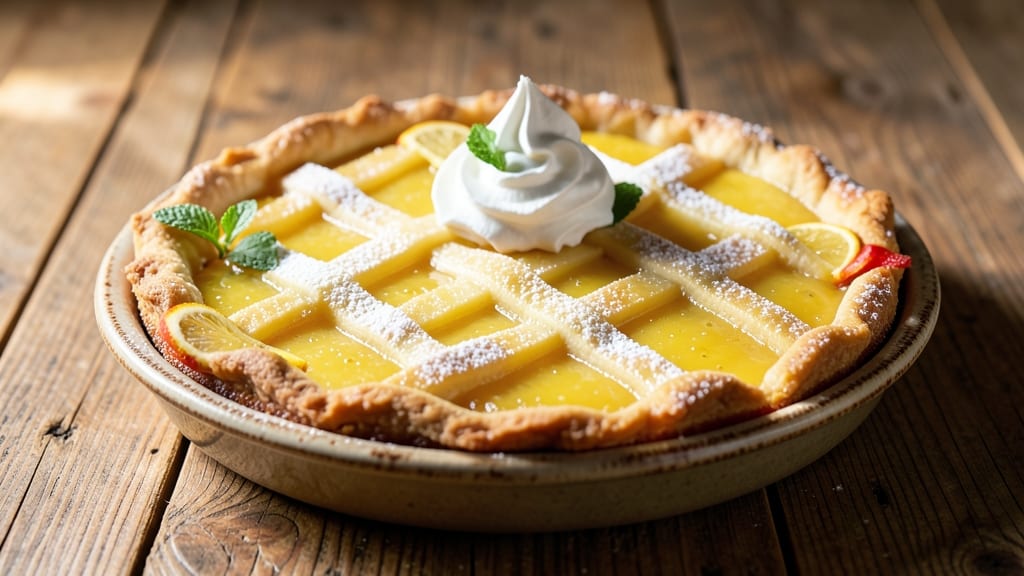
This Amish lemon pie recipe brings the warmth of a Pennsylvania farmhouse to your kitchen with its signature buttery crust and bright, tangy filling. 💛 The secret lies in a handmade pastry that flakes perfectly and a lattice crust that adds both beauty and texture—just like Grandma used to make.
What sets this apart is the balance of sweetness and acidity, achieved through careful measurement and traditional techniques that have been passed down through generations.
The recipe begins with a classic all-butter crust, rolled out and fitted into the pie dish with precision. The filling combines fresh lemon juice, eggs, and sugar to create a custard that's smooth yet vibrant, with just the right amount of zest to keep it from being overly sweet.
Baking at a steady temperature ensures the filling sets properly while maintaining that signature Amish tang. The lattice topping isn't just for looks—it creates a delicate crisscross pattern that adds a satisfying crunch with every bite.
By the time you serve this pie, you'll have a dessert that's as much about tradition as it is about taste.
The crust will be golden and flaky, the filling will be silky yet firm, and the lattice will add an elegant touch that makes it perfect for holidays or family gatherings.
Each slice delivers a perfect balance of buttery, citrusy, and slightly sweet flavors that will have everyone asking for seconds. This is the kind of pie that feels like a hug in dessert form.
Whether you're baking for a special occasion or simply craving a taste of Amish homestyle cooking, this recipe delivers restaurant-quality results with a touch of nostalgia. The best part?
It's achievable with simple ingredients and techniques that any home cook can master. Let's get started on creating a pie that tastes like home.
Ingredients for amish lemon pie
The heart of Amish lemon pie: buttery crust, tangy filling, and that perfect lattice crunch.
| Ingredient | Amount | Notes |
|---|---|---|
| All-Purpose Flour 🌾 | 2 ½ cups | Sifted for light texture |
| Unsalted Butter 🧈 | 1 cup | Cold, cubed for flaky crust |
| Granulated Sugar 🍚 | ¼ cup | Plus 2 tbsp for lattice |
| Ice Water 💧 | ½ cup | Plus 1 tbsp for dough |
| Salt 🧂 | ½ tsp | Fine sea salt preferred |
| Fresh Lemon Juice 🍋 | 1 ½ cups | From 6-8 lemons (no substitutes) |
| Large Eggs 🥚 | 4 whole | Room temperature for smooth filling |
| Granulated Sugar 🍚 | 1 ½ cups | For filling (plus extra for lattice) |
| Lemon Zest 🍋 | 2 tbsp | From 2-3 lemons, finely grated |
| All-Purpose Flour 🌾 | ½ cup | For lattice strips (plus extra) |
| Powdered Sugar 🍚 | 2 tbsp | For dusting lattice |
The butter is non-negotiable here—European-style unsalted butter (like Plugrá) gives the flakiest crust. Look for blocks, not tubs, and keep it cold when cutting into cubes. Most grocery stores carry it, but Whole Foods or Wegmans have the best selection. The flour should be King Arthur or Gold Medal—these brands bake consistently. For the lattice, use a pizza cutter to slice even strips, or roll them out thin with a rolling pin. The secret? Chill the dough between layers to prevent shrinking—freeze it 15 minutes if you're nervous about handling.
No fresh lemons? Meyer lemons are sweeter and more forgiving, but regular lemons work too—just add 1 tbsp extra sugar to the filling. No zest? Use bottled lemon juice with 1 tsp extra zest (or 1/2 tsp citric acid if you're desperate), but fresh is always better. The eggs must be room temperature—cold eggs make the filling lumpy. For the lattice, skip the extra sugar if you're not sweet-toothed, but trust me—it balances the tartness perfectly. If your dough cracks, patch it with extra butter between layers. And if you mess up the lattice? Bake it solid—it'll still taste amazing.
Store the pie at room temperature for up to 4 hours before serving—this lets the flavors meld. Once cut, keep it covered in the fridge for 3-4 days. Freeze slices wrapped in plastic for up to 3 months—thaw overnight in the fridge. The crust stays crisp even after reheating, but warm slices in the oven for 5 minutes to revive that fresh-baked magic. Leftovers? Turn them into lemon curd—just blend with extra cream and sugar. This pie gets better overnight, so make it a day ahead if you can.
Why You'll Love This Recipe
- No-Fuss Crust: I swear by that ice water trick—just mix flour, butter, and ice until it clumps like magic. No food processor, no overworking, and the crust turns out flaky every single time. Even my kids can handle it.
- Tart-Sweet Magic: That balance of sugar and lemon? It’s like sunshine in a pie. The crust stays buttery while the filling sings with bright citrus—no weird aftertaste, just pure, happy flavor.
- Weeknight or Holiday: Same dough, same filling, but it works for potlucks or a quiet Sunday. Serve it warm with vanilla ice cream, or slice it cold for a picnic—no stress, just deliciousness.
- Budget-Friendly Staples: Flour, butter, sugar—ingredients you already own. No fancy lemons or specialty tools. The leftovers? They disappear fast, but even better, the cost per serving is laughably cheap.
Step-by-step instructions for Amish lemon pie
Here's how to make this classic pie with a flaky crust and tangy lemon filling that'll wow your family.
👨🍳 Step 1: Make the Buttery Crust
In a large bowl, combine the 2.5 cups all-purpose flour and 0.5 tsp salt. Cut in the 1 cup cold cubed unsalted butter using a pastry cutter or your fingers until the mixture resembles coarse crumbs with pea-sized butter pieces. This ensures flaky layers later.
Add 0.25 cup granulated sugar and 0.5 cup ice water, mixing just until the dough comes together. Avoid overmixing—this creates tough crust. Divide the dough in half, flatten into discs, wrap in plastic, and chill for at least 1 hour (or up to 2 days). The cold dough prevents shrinking when baked.
🍳 Step 2: Prepare the Lemon Filling
In a medium saucepan, whisk together the 1.5 cups fresh lemon juice, 1.5 cups granulated sugar, and 2 tbsp lemon zest. Bring to a boil over medium-high heat, then reduce to a simmer and cook for 10-12 minutes until slightly thickened. You're looking for a consistency like heavy cream—it should coat the back of a spoon.
Remove from heat and let cool for 10 minutes. While it cools, beat the 4 room-temperature eggs in a separate bowl until frothy. Slowly whisk the hot lemon mixture into the eggs, then strain the filling through a fine-mesh sieve to remove any seeds or zest bits. This ensures a silky-smooth texture.
🥘 Step 3: Assemble the Pie
Preheat your oven to 375°F. Roll out one dough disc on a floured surface into a 12-inch circle. Transfer to a 9-inch pie dish, trim the edges, and crimp the crust. Roll out the remaining dough for the lattice top—cut 12 strips (about 1-inch wide) and 12 strips (about ½-inch wide).
Pour the lemon filling into the crust, leaving a ½-inch border. Arrange the lattice strips in a herringbone pattern, brushing the strips with 1 tbsp ice water to help them stick. Sprinkle the 2 tbsp powdered sugar evenly over the lattice for a delicate finish. This classic Amish pattern creates beautiful contrast while allowing the filling to breathe.
🔥 Step 4: Bake to Golden Perfection
Bake for 45-50 minutes until the crust is deep golden brown and the filling is bubbling gently at the edges. If the crust starts browning too quickly, tent loosely with foil. The filling should be set but still slightly jiggly in the center—it'll firm up as it cools.
Let the pie cool completely on a wire rack for at least 2 hours before slicing. This resting time allows the filling to fully set and prevents a runny pie. Serve chilled with whipped cream or vanilla ice cream for the ultimate Amish homestyle treat!
Pro Tips For Making Amish Lemon Pie
- Chill the Butter Blocks: Take the unsalted butter out of the fridge 15 minutes before mixing—it should soften just enough to cut into the flour easily. I learned this the hard way when my crust turned greasy and fell apart because I used cold butter straight from the fridge.
- Use Ice Water Sparingly: Add ice water one tablespoon at a time when forming the dough—too much makes it tough, too little makes it dry. My grandmother swore by this: "Dough should hold together but not stick to your fingers like glue."
- Blind-Bake the Crust: Prick the crust all over with a fork, then cover it with parchment and pie weights (or dried beans) before baking. This prevents puffing and guarantees a crisp bottom—no soggy surprises when the lemon filling goes in.
- Skip the Overmixing: Cut the butter into the flour with a pastry cutter or your fingers until it resembles coarse crumbs—no need to overwork it. I was skeptical until I tried it: the crust stays flaky instead of turning into a dense wall.
Wine and beer pairings for these flavors
Citrus-Forward Whites
The bright acidity of this pie pairs beautifully with crisp, citrus-forward white wines that mirror its lemon notes. A Sauvignon Blanc from New Zealand—like Kim Crawford or Cloudy Bay—is my go-to choice. The grape's natural zing and herbal undertones complement the pie's tangy filling without overpowering it.
For something lighter, try a Pinot Grigio from Italy's Alto Adige region—its delicate floral notes and crisp finish provide perfect contrast. 🍷
Sparkling Pairings
When you want to cut through the richness of the buttery crust, nothing beats a glass of sparkling wine. A Prosecco from Italy (such as La Marca or Bisol) adds effervescence that cleanses your palate between bites.
For something more substantial, try a German Riesling Kabinett—its slight sweetness and acidity balance the pie's tartness beautifully. Serve chilled to enhance the refreshing experience.
Honey-Infused Beers
Beer lovers will appreciate a Belgian witbier—like Hoegaarden or Stella Artois—for its citrusy coriander and orange peel notes. The subtle sweetness from honey malts bridges the gap between the pie's tart filling and buttery crust.
For a stronger option, try a German Hefeweizen—its banana and clove notes add unexpected depth that pairs surprisingly well. Serve slightly chilled to preserve the beer's crispness.
Creamy Dessert Wines
If you prefer something richer, a Moscato d'Asti—like Saracco or G.D. Vajra—offers a lightly sweet, fizzy profile that complements the pie's creamy texture. For a more robust option, a late-harvest Riesling from Germany or Washington State provides enough sweetness to balance the lemon's acidity.
These wines work especially well when served slightly warmer than chilled.
Non-Alcoholic Options
Don't overlook sparkling lemonade or San Pellegrino Aranciata—its blood orange and lemon flavors echo the pie's citrus notes. For something more substantial, try a sparkling ginger beer**—the spicy kick enhances the lemon's brightness.
Serve over ice with a lemon wedge for an extra burst of freshness that ties back to the pie's filling.
Nutrition facts
Frequently asked questions
Can I make this pie without a lattice top?
If lattice feels too challenging, you can cover the filling with a single rolled-out dough disc, cut a few slits for steam to escape, and brush it with egg wash for a golden finish. For extra flair, add a simple crisscross pattern with a fork before baking. The flavor won't suffer—just the visual appeal!
Why does my filling look curdled after baking?
This usually happens when the eggs are too cold or the hot lemon mixture is added too quickly. Always use room-temperature eggs and temper the hot filling by whisking it slowly into the eggs. If it happens, don't panic—just strain the filling before baking to remove any lumps.
How do I store leftover lemon pie?
Keep the pie covered at room temperature for up to 4 hours, then refrigerate for 3-4 days. For longer storage, wrap individual slices in plastic and freeze for up to 3 months. Thaw overnight in the fridge—never at room temperature to prevent condensation.
What's the secret to a flaky crust?
The key is cold butter and minimal handling. Cut the butter into small cubes and keep everything chilled until rolling. Work quickly when shaping the crust, and avoid overmixing the dough. The butter should stay in pea-sized pieces for maximum flakiness!
Can I use bottled lemon juice instead of fresh?
You can, but fresh lemon juice gives the best flavor. If using bottled, add 1 extra tablespoon of sugar and ½ teaspoon of citric acid to mimic fresh lemon's brightness. For zest, fresh is non-negotiable—bottled zest lacks the aromatic oils that make this pie truly special.